

The Intertwined Tapestry: Exploring the Connection Between Mind and Language
The human experience is fundamentally shaped by two profound capacities: the ability to think and the ability to communicate. At the heart of our understanding of ourselves and the world lies the intricate, often inseparable, connection between the Mind and Language. Far from being mere tools the mind employs, language actively shapes our thoughts, structures our perceptions, and forms the very foundation upon which Knowledge is built and shared. This article delves into this essential philosophical nexus, exploring how our inner world of consciousness is both expressed and constructed through the symbolic architecture of language.
The Mind's Inner Architect: Structuring Reality
Our Mind is a boundless arena where perceptions coalesce into concepts, experiences are cataloged, and abstract ideas take form. Before any utterance, there is the internal landscape of thought – a complex interplay of sensation, memory, and reasoning. From the raw data of our senses, the mind abstracts, categorizes, and organizes, seeking patterns and meaning. This process of forming coherent thoughts, however, is not a silent, pre-linguistic void for long. Indeed, many philosophers from the Great Books tradition have argued that even our most nascent thoughts are already reaching for a linguistic framework, for it is through this framework that they gain clarity, definition, and the potential for shared understanding. Without language, the sophisticated structures of human thought—logic, ethics, metaphysics—would remain largely inchoate, a cacophony of individual, fleeting impressions.
Language: The Crucible of Thought and Expression
Language is more than just a means of transmitting pre-formed ideas; it is a dynamic force that actively shapes our cognitive processes. Consider how the very grammar and vocabulary of a language influence the way its speakers perceive time, space, or even emotion. The categories we use to describe the world are often inherited through our linguistic tradition, guiding our attention and framing our understanding.
- Structuring Thought: Language provides the conceptual scaffolding upon which complex thoughts are built. It allows us to move beyond immediate experience to generalize, hypothesize, and reason abstractly.
- Externalizing the Internal: It is through language that the private world of the mind becomes public, allowing us to articulate our feelings, share our insights, and engage in collective inquiry.
- Cognitive Development: For individuals, the acquisition of language is inextricably linked to cognitive development, expanding the capacity for memory, problem-solving, and self-reflection.
Philosophers like those in the Aristotelian tradition recognized that the very act of defining terms and constructing propositions was essential for logical thought and the pursuit of truth. Language, in this view, is not merely a label for reality, but a lens through which reality is perceived and analyzed.
From Sign to Symbol: The Architecture of Knowledge
The journey from a simple perception to profound Knowledge often hinges on our ability to transform raw data into meaningful Sign and Symbol. A sign typically has a direct, often causal, relationship to what it signifies (e.g., smoke is a sign of fire). A symbol, however, operates on a deeper, more abstract level, deriving its meaning from convention, shared understanding, and cultural context.
| Feature | Sign | Symbol |
|---|---|---|
| Relation | Direct, often natural or causal | Arbitrary, conventional, culturally bound |
| Meaning | Fixed, immediate, often universal | Flexible, contextual, open to interpretation |
| Function | Indicates existence or occurrence | Represents abstract concepts, values, ideas |
| Example | A dark cloud (sign of rain) | A dove (symbol of peace) |
Human language is overwhelmingly symbolic. Words themselves are not the things they represent, but rather agreed-upon Symbols that stand for objects, actions, qualities, and abstract concepts. This symbolic capacity allows us to discuss things that are absent, imagine futures, reflect on the past, and delve into purely conceptual realms. Without this symbolic bridge, the transmission of Knowledge across generations and cultures would be impossible. Every textbook, every philosophical treatise, every piece of shared wisdom relies on the robust symbolic power of language to encode and decode meaning, enabling the collective accumulation of human understanding.
The Great Books and the Unifying Force
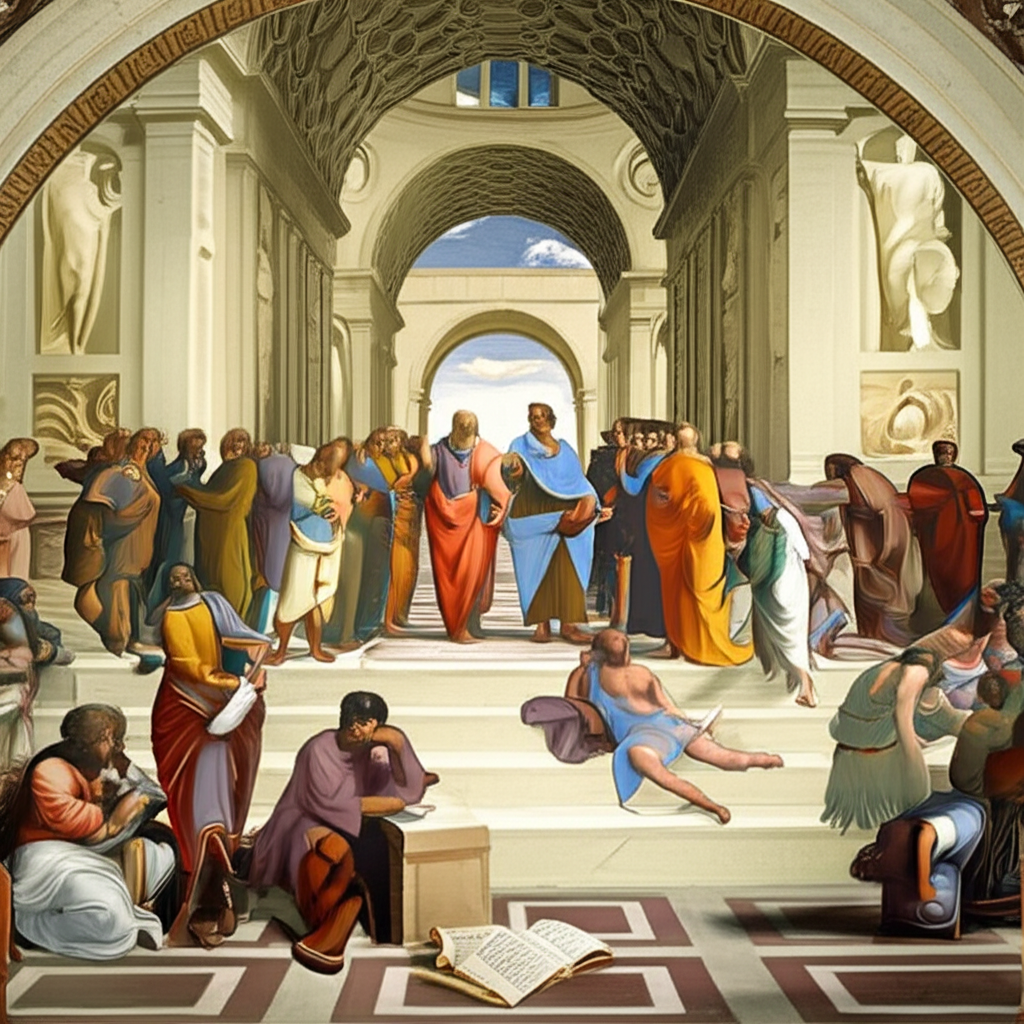
Throughout the Great Books of the Western World, the profound relationship between Mind and Language emerges as a central theme. From Plato's exploration of how language relates to the Forms, to Aristotle's meticulous analysis of logic and categories of thought embedded in language, to the later philosophical inquiries into the nature of ideas and their expression, this connection is foundational. These thinkers understood that our ability to articulate, define, and debate through language is not merely a social convenience, but a critical mechanism for the Mind to grasp truth, construct ethical frameworks, and build ordered societies. Language, in essence, is the primary medium through which we collectively make sense of existence, transforming individual insights into shared Knowledge and guiding the trajectory of human civilization.
The inseparable nature of the Mind and Language is not a mere academic curiosity; it is a fundamental aspect of what it means to be human. Language provides the structure for our thoughts, the vehicle for our consciousness, and the bridge for our shared understanding. It allows us to move beyond the immediate, to abstract, to hypothesize, and to transmit the vast ocean of human Knowledge across time and space. To truly understand the Mind, we must also understand the Language that shapes it, and vice versa.
YouTube Video Suggestions:
-
📹 Related Video: PLATO ON: The Allegory of the Cave
Video by: The School of Life
💡 Want different videos? Search YouTube for: ""Plato Cratylus language philosophy" for discussions on the origin and nature of names and language"
2. ## 📹 Related Video: KANT ON: What is Enlightenment?
Video by: The School of Life
💡 Want different videos? Search YouTube for: ""Wittgenstein private language argument explained" for a more modern, yet deeply relevant, take on the social nature of language and thought"