

The Indissoluble Yet Contested Connection: Law and Justice
The relationship between Law and Justice is one of philosophy's most enduring and complex inquiries. While often conflated, they are distinct concepts, intimately bound yet frequently at odds. At its core, this article explores the profound connection between the codified rules of a State – its laws – and the elusive ideal of fairness, equity, and moral rightness that we call Justice. We will delve into how philosophers throughout the ages, from the ancient Greeks to the Enlightenment thinkers, have grappled with this dynamic, revealing that while law aspires to embody justice, it often falls short, necessitating a constant re-evaluation of its principles and application.
Defining the Terms: Law, Justice, and the State
Before dissecting their intricate dance, it's crucial to establish a working understanding of our core concepts:
- Law: In its most fundamental sense, law refers to a system of rules created and enforced by a society or State to regulate the actions of its members. These rules are generally binding, prescriptive, and backed by the authority of the governing body. They dictate what is permissible, what is forbidden, and the consequences of transgressions.
- Justice: More abstract than law, justice embodies the moral and ethical principle of fairness and righteousness. It concerns the proper ordering of society, the equitable distribution of goods and burdens, the impartial resolution of disputes, and the rectification of wrongs. Justice is often seen as an ideal, a standard against which laws and actions are measured.
- The State: The political organization or body that holds sovereign power over a defined territory and its people. The State is the primary architect and enforcer of laws, and ideally, its very purpose is to secure justice and the common good for its citizens.
The inherent connection lies in the aspiration: the State promulgates laws with the intention that they will serve, promote, and ultimately embody justice. Yet, history and philosophy are replete with examples where this intention goes awry, leading to unjust laws and systems.
The Philosophical Pursuit: Great Books on Law and Justice
The Great Books of the Western World offer an unparalleled lineage of thought on the connection between law and justice, illustrating both their ideal harmony and their perennial tension.
Ancient Foundations: Ideal States and Natural Law
- Plato (c. 428–348 BCE): In The Republic, Plato posits that justice in the State is analogous to justice in the individual: a harmonious balance of its constituent parts. For Plato, laws should reflect this ideal order, guiding citizens towards virtue and the good life. An unjust law, therefore, is one that disrupts this harmony and fails to lead to the ultimate good. The connection is absolute – true law is just.
- Aristotle (384–322 BCE): Expanding on Plato, Aristotle, particularly in Nicomachean Ethics and Politics, distinguishes between different forms of justice:
- Distributive Justice: Concerns the fair allocation of wealth, honors, and goods according to merit.
- Corrective Justice: Aims to rectify wrongs, restoring balance between individuals through punishment or compensation.
Aristotle viewed law as a practical instrument for achieving these forms of justice within the State. He argued that law, being reason unaffected by desire, is essential for the common good, but it must be grounded in an understanding of what is truly just.
- Cicero (106–43 BCE): A Roman orator and philosopher, Cicero, in works like On Duties and On the Republic, champions the concept of natural law. He argued that true law is right reason in agreement with nature, universal, eternal, and unchangeable. This divine or natural law is the ultimate standard against which human laws must be measured. An unjust human law is not, in fact, a law at all, as it violates this fundamental, inherent justice.
Medieval Synthesis: Divine Order and Human Statutes
- Thomas Aquinas (1225–1274): In his Summa Theologica, Aquinas masterfully synthesized classical philosophy with Christian theology. He proposed a hierarchy of laws:
- Eternal Law: God's rational governance of the universe.
- Natural Law: Humanity's participation in the eternal law through reason, discerning good from evil.
- Divine Law: Revealed by God (e.g., the Ten Commandments).
- Human Law: Particular ordinances for the common good, derived from natural law.
For Aquinas, the connection is clear: human laws are just only insofar as they align with natural law and ultimately eternal law. An unjust law, one that contradicts reason or divine will, is not morally binding.
Modern Perspectives: Social Contracts and Rights
- Thomas Hobbes (1588–1679): In Leviathan, Hobbes presented a stark view. In the "state of nature," life is "solitary, poor, nasty, brutish, and short." To escape this, individuals form a social contract, surrendering some freedoms to a powerful sovereign (the State) in exchange for security. For Hobbes, justice is simply adherence to the covenants and laws established by this sovereign. The connection here is functional: law creates order, and order is justice in a practical sense.
- John Locke (1632–1704): Countering Hobbes, Locke, in Two Treatises of Government, argued that individuals possess inherent natural rights (life, liberty, property) even in the state of nature. The purpose of the State and its laws is not to abolish these rights but to protect and uphold them. Justice, therefore, is the recognition and enforcement of these natural rights. An unjust law is one that infringes upon these fundamental entitlements.
- Jean-Jacques Rousseau (1712–1778): In The Social Contract, Rousseau posited that legitimate laws arise from the "general will" of the people, aiming for the common good. When laws truly reflect this collective will, they are inherently just, as they are laws the people have, in effect, made for themselves. The connection is democratic and communal.
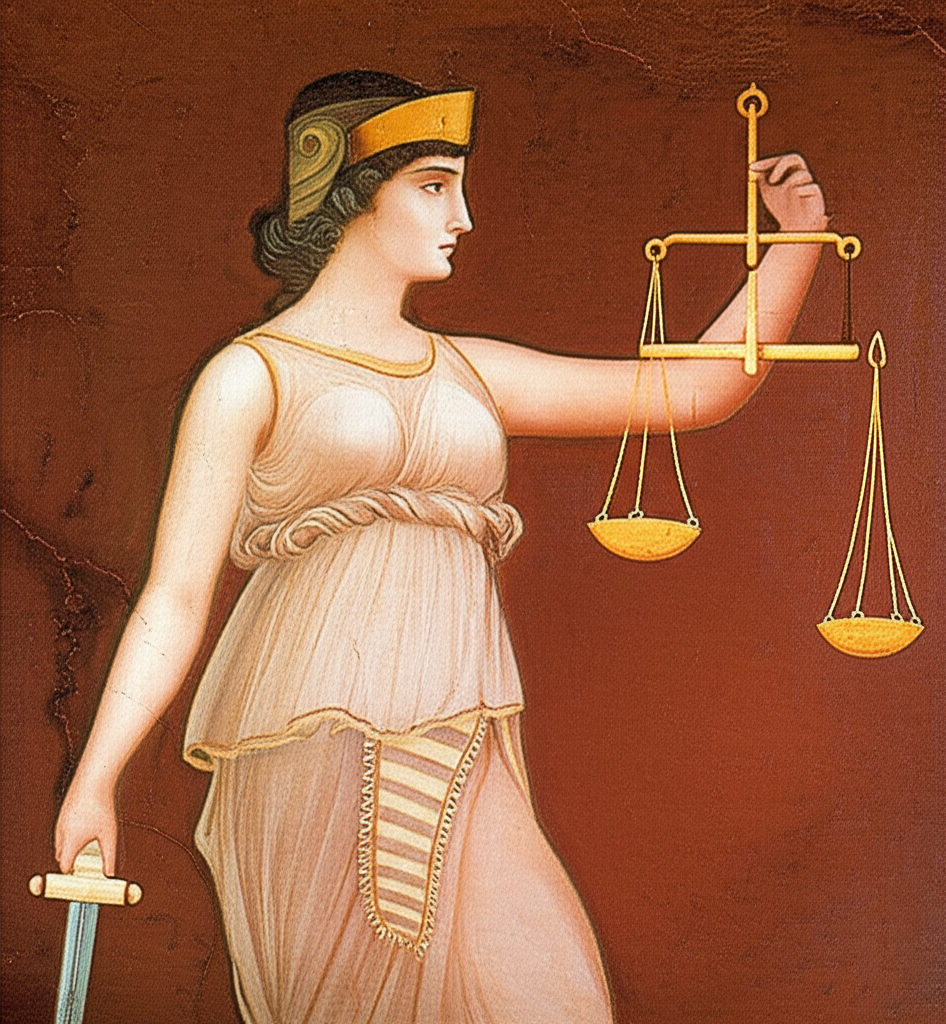
The Enduring Tension: When Law and Justice Diverge
Despite the philosophical ideal of their unity, the connection between law and justice is often strained. This tension manifests in several critical areas:
- Positive Law vs. Natural Law:
- Positive Law refers to human-made laws, statutes, and decrees.
- Natural Law refers to universal moral principles inherent in nature or discoverable by reason.
The conflict arises when positive laws are perceived to violate natural law, as seen in historical struggles against slavery, apartheid, or totalitarian regimes. Is a law that is legally enacted but morally repugnant still a "law" in the fullest sense?
- The Problem of Unjust Laws: From Sophocles' Antigone, where Antigone defies Creon's law to bury her brother, to modern civil rights movements, the question of whether one is morally obligated to obey an unjust law remains a profound philosophical and practical dilemma. When the State's laws actively perpetuate injustice, the connection breaks down, demanding civil disobedience or reform.
- Evolving Concepts of Justice: What constitutes justice is not static. Societal values, scientific understanding, and ethical insights evolve, leading to shifts in what is considered fair or equitable. Laws, by their nature, can be slow to adapt, creating a lag between the prevailing sense of justice and the established legal framework.
The Role of the State in Bridging the Gap
The State plays a pivotal, albeit often imperfect, role in mediating the connection between law and justice.
- Legislation: The State has the power to create laws that aim to embody justice. This includes establishing fair procedures, protecting rights, and providing remedies for wrongs.
- Enforcement: Through its institutions (police, courts, prisons), the State enforces laws, ideally impartially, to ensure that justice is administered.
- Interpretation: The judiciary, as an arm of the State, interprets laws, often infusing them with contemporary understandings of justice and equity.
- Reform: Democratic states, in particular, provide mechanisms for legal reform, allowing citizens to advocate for changes to laws that are perceived as unjust.
Ultimately, the legitimacy of the State often rests on its perceived commitment to justice through its laws. When this connection is severed, the social contract itself comes into question.
Conclusion: A Perpetual Dialogue
The connection between Law and Justice is not a simple equation but a dynamic, often fraught, relationship that lies at the heart of political philosophy and human societies. From the foundational inquiries of Plato and Aristotle to the nuanced theories of Aquinas and Locke, thinkers have consistently grappled with how the pragmatic need for order (law) can be reconciled with the transcendent aspiration for fairness (justice). The State, as the primary instrument for generating and enforcing laws, bears the immense responsibility of ensuring that its legal framework serves, rather than subverts, the pursuit of justice.
This ongoing dialogue compels us to critically examine our legal systems, to question when laws deviate from justice, and to strive continually for a society where the two are not merely connected, but deeply interwoven. The quest for justice through law is, and always will be, a defining characteristic of human civilization.
📹 Related Video: PLATO ON: The Allegory of the Cave
Video by: The School of Life
💡 Want different videos? Search YouTube for: ""Plato's Republic Justice" and "John Locke Natural Rights Philosophy""