

The relationship between law and justice stands as one of philosophy's most enduring and complex inquiries. While often used interchangeably in common discourse, law represents the codified rules, regulations, and statutes established by a society and enforced by the State, whereas justice embodies a profound, often elusive, ideal of fairness, equity, moral rightness, and desert. This article delves into their intricate connection, revealing how law fundamentally aspires to manifest justice, yet frequently falls short, prompting continuous re-evaluation of the State's role in bridging this fundamental, and often contentious, gap.
The Distinctive Natures: Law and Justice
To understand their connection, we must first delineate their individual characteristics.
-
Law (Lex):
- Definition: A system of rules that a society or government develops to deal with crime, business agreements, and social relationships. It is a tangible, enforceable framework.
- Origin: Human decree, legislative bodies, historical precedent.
- Enforcement: Backed by the coercive power of the State, through institutions like courts, police, and prisons.
- Purpose: To maintain order, resolve disputes, protect rights, and regulate behavior.
- Characteristics: Specific, written, subject to amendment, often pragmatic.
-
Justice (Iustitia):
- Definition: The quality of being fair and reasonable; the administration of deserved punishment or reward. It is a moral concept, an ideal.
- Origin: Philosophical principles, ethical reasoning, natural rights, divine command, social consensus.
- Enforcement: Primarily through moral conviction, societal pressure, and individual conscience, though laws attempt to institutionalize it.
- Purpose: To ensure fairness, correct wrongs, distribute benefits and burdens equitably, and uphold moral rectitude.
- Characteristics: Abstract, aspirational, universal (in some theories), often contested in its application.
The core of their connection lies in the idea that law, at its best, is the practical instrument through which justice is sought to be realized in the human realm.
The Inherent Connection: Law as the Pursuit of Justice
From the earliest philosophical inquiries, thinkers have grappled with how to construct a society where laws not only maintain order but also embody justice. The very legitimacy of the State often hinges on its ability to enact and enforce laws that citizens perceive as just.
- Law as a Framework for Justice: Laws provide the structure for distributing resources, resolving conflicts, and punishing transgressions in a way that aims for fairness. Without law, justice would remain an abstract ideal, difficult to apply consistently or universally.
- Justice as the Guiding Principle for Law: Philosophers often argue that laws derive their true authority not merely from the power of the State, but from their alignment with principles of justice. An unjust law, as many have contended, loses its moral claim to obedience.
- The Social Contract: Thinkers like Hobbes, Locke, and Rousseau, whose works are foundational in the Great Books of the Western World, explored how individuals consent to surrender certain freedoms to a sovereign State in exchange for the order and protection of law, implicitly assuming these laws would serve a greater good, or a form of justice. For Locke, the State's primary purpose is the protection of natural rights, which is inherently a concept of justice.
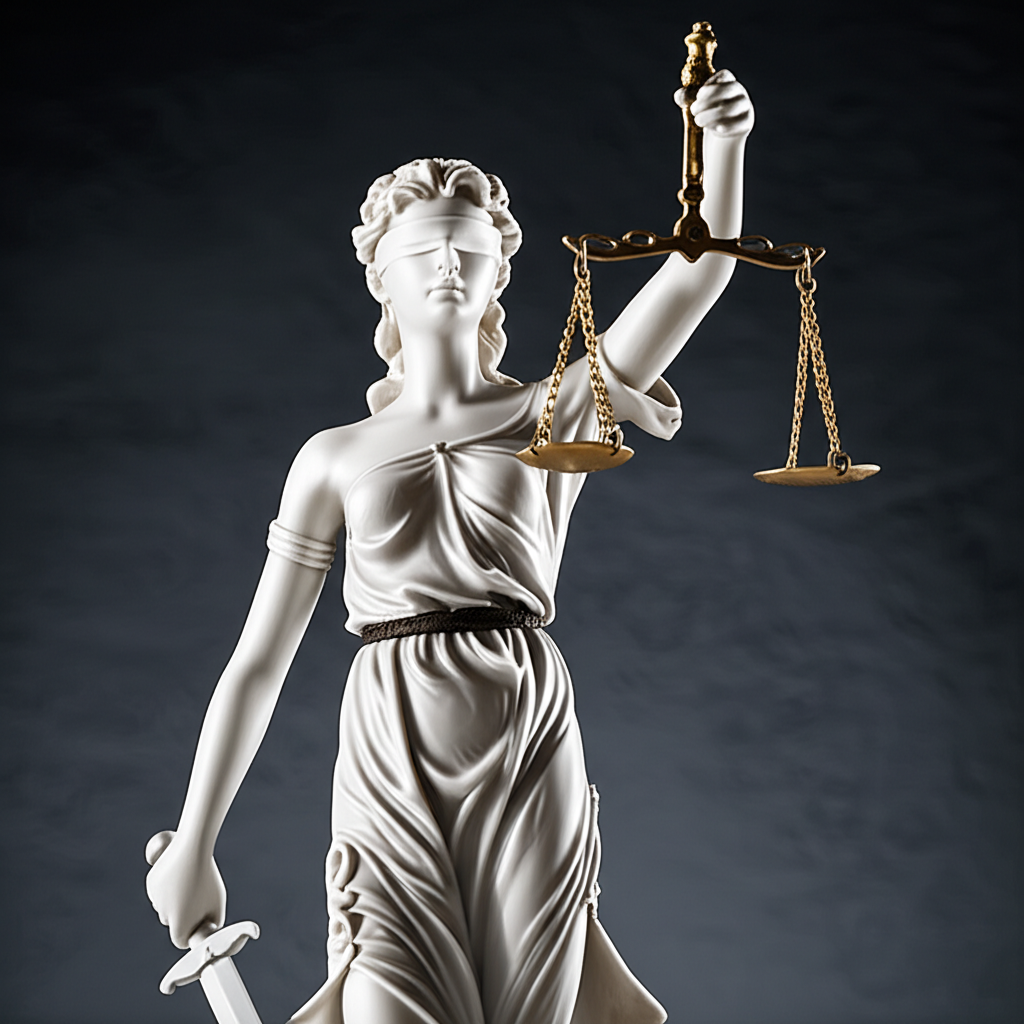
Philosophical Perspectives on Law and Justice
The Great Books of the Western World offer a rich tapestry of thought on this fundamental connection:
- Plato (c. 428–348 BCE): In The Republic, Plato explores justice not merely as a legal concept but as the proper harmony and balance within the individual soul and the polis (city-state). For Plato, the laws of the ideal State would be crafted to cultivate this internal and external justice, leading to a virtuous citizenry.
- Aristotle (384–322 BCE): In Nicomachean Ethics and Politics, Aristotle dissects justice into various forms: distributive (fair allocation of goods and honors), corrective (rectifying wrongs), and reciprocal (fair exchange). He famously stated that "law is reason unaffected by desire," positioning it as an impartial tool for achieving justice, a virtue essential for a flourishing society.
- Cicero (106–43 BCE): Roman orator and philosopher, heavily influenced by Stoicism, Cicero argued for the existence of a natural law—a universal, eternal, and unchangeable law inherent in nature and accessible by human reason. Human laws, he contended, derive their legitimacy from their conformity to this higher natural law. An unjust human law is thus a perversion, not a true law.
- Thomas Aquinas (1225–1274): In his Summa Theologica, Aquinas developed a comprehensive theory of law, distinguishing between eternal law (God's divine plan), natural law (human participation in eternal law through reason), divine law (revealed scripture), and human law (positive laws enacted by the State). For Aquinas, human law is just and binding only if it aligns with natural law, which in turn reflects eternal law. This establishes a profound moral connection where justice is paramount.
- Social Contract Theorists (17th-18th Centuries):
- Thomas Hobbes (1588–1679): In Leviathan, Hobbes argued that the purpose of law, enforced by an absolute sovereign State, is primarily to escape the "state of nature"—a war of all against all. While his focus was on order, this order was a prerequisite for any semblance of justice or societal progress.
- John Locke (1632–1704): In Two Treatises of Government, Locke argued that individuals possess natural rights (life, liberty, property) even in a state of nature, and the State's laws are legitimate only insofar as they protect these rights, thus serving justice.
- Jean-Jacques Rousseau (1712–1778): In The Social Contract, Rousseau posited that legitimate laws arise from the "general will" of the people, aiming for the common good. Such laws, by definition, serve the collective justice of the community.
The Enduring Tension: When Law and Justice Diverge
Despite the ideal of their seamless connection, history and contemporary experience are rife with instances where law and justice diverge.
- Unjust Laws: Laws can be enacted that are discriminatory, oppressive, or serve the interests of a select few rather than the whole. Examples range from historical segregation laws to contemporary legislation perceived as inequitable.
- Flawed Implementation: Even just laws can be applied unjustly due to corruption, bias, or systemic failures within the legal system.
- Moral Dilemmas: Situations arise where strict adherence to the letter of the law might lead to an outcome that feels morally wrong or unjust. This often sparks debates about judicial discretion, equity, and the need for legal reform.
The philosophical maxim, Lex injusta non est lex ("An unjust law is no law at all"), attributed to Augustine and later echoed by Aquinas, highlights this tension. It suggests that laws devoid of justice lose their moral authority and may not command legitimate obedience. This principle underscores the profound moral connection between the two concepts and the constant imperative for the State to strive for laws that are not only orderly but also fundamentally fair.
Conclusion
The connection between law and justice is not merely a theoretical construct but a vital, dynamic relationship at the heart of any functioning society. Law provides the concrete, enforceable framework, while justice offers the moral compass and aspirational ideal. The State, as the primary architect and enforcer of law, bears the weighty responsibility of ensuring that its legal system consistently strives to embody and uphold principles of justice. This ongoing pursuit, marked by both progress and persistent challenges, remains a testament to humanity's enduring quest for a societal order that is both lawful and fundamentally fair.
Further Exploration
-
📹 Related Video: PLATO ON: The Allegory of the Cave
Video by: The School of Life
💡 Want different videos? Search YouTube for: "Plato's Republic Justice explained"
-
📹 Related Video: KANT ON: What is Enlightenment?
Video by: The School of Life
💡 Want different videos? Search YouTube for: "Natural Law Theory Aquinas lecture"