

The Unfolding Tapestry: The Connection Between History and Change
The human experience, when viewed through the lens of philosophy, reveals an undeniable and profound connection between history and change. Indeed, to speak of one is invariably to invoke the other. History is not merely a chronicle of past events; it is the grand narrative of transformation, the record of how everything – ideas, societies, individuals – has been in a perpetual state of flux across the vast expanse of time. Understanding this intrinsic connection is fundamental to grasping the very nature of existence and our place within its ceaseless flow.
The Inescapable Flow of Time and Change
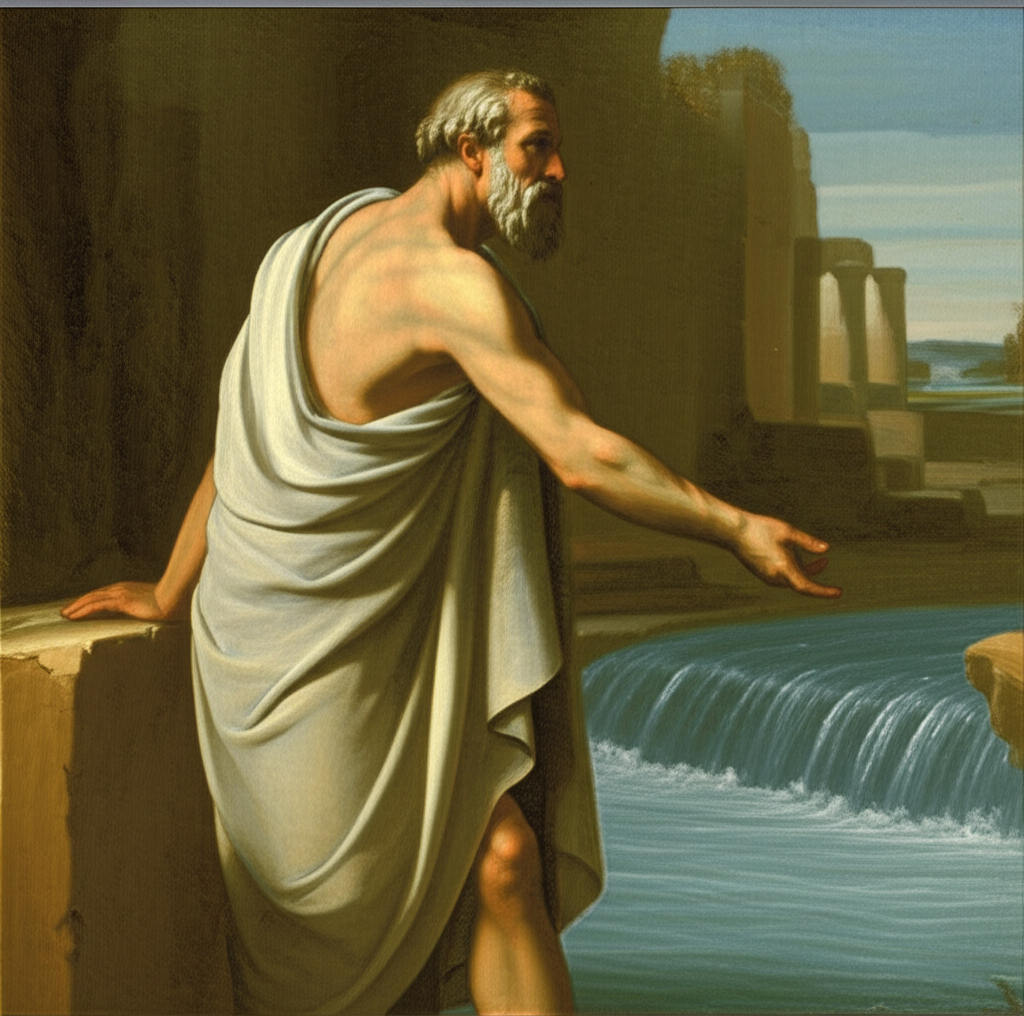
From the earliest philosophical inquiries, thinkers have grappled with the nature of change. Heraclitus, the pre-Socratic philosopher, famously declared that "Panta Rhei" – everything flows. His assertion that one cannot step into the same river twice encapsulates the radical idea that constant change is the only constant. This ancient insight, echoed through millennia, posits that all phenomena are in a state of becoming, never truly static.
Time, then, serves as the very medium through which change manifests. It is the canvas upon which the brushstrokes of transformation are laid. Without the progression of time, there would be no change, and consequently, no history to record it. The connection is symbiotic: time enables change, and change fills time with meaning and sequence, giving rise to history. The very fabric of reality, as perceived by many philosophers in the Great Books of the Western World, is one of dynamic evolution rather than static being.
History as the Record of Transformation
If change is the fundamental process, then history is its meticulous, albeit often contested, account. It is the discipline that seeks to understand the causes and effects of these transformations over time. History is not just a collection of dates and names; it is the study of how societies adapt, how power shifts, how ideas evolve, and how human understanding of the world is perpetually remade.
Consider the development of political thought, from Plato's ideal Republic to the social contracts debated by Rousseau and Locke. Each successive theory represents a change in perspective, often spurred by historical events and societal needs. The history of philosophy itself is a testament to this constant intellectual change, with each new paradigm building upon, critiquing, or rejecting its predecessors. The past, therefore, is not a dead letter but a living repository of transformations that continue to shape the present and future.
Philosophical Perspectives on Historical Change
The ways in which philosophers have understood the connection between history and change are as varied as the epochs they inhabited. These perspectives often shape our understanding of progress, destiny, and the very purpose of human existence.
-
Cyclical vs. Linear Views:
- Ancient philosophies, particularly some Greek traditions, often viewed history as cyclical, with empires rising and falling in predictable patterns, mirroring the cycles of nature. Change was seen as a return to an earlier state, a cosmic recurrence.
- In contrast, Judeo-Christian thought, profoundly influential in the Western tradition, introduced a linear conception of time and history, moving from creation towards a definitive end or fulfillment. Here, change has a direction and a purpose. St. Augustine, for instance, articulated a linear divine plan unfolding through history.
-
Dialectical Change and Progress:
- Georg Wilhelm Friedrich Hegel offered a powerful framework for understanding historical change through his concept of the dialectic. For Hegel, history progresses through a series of conflicts and resolutions: a thesis encounters an antithesis, leading to a new synthesis that incorporates elements of both, thereby driving intellectual and societal change forward. This process, driven by the evolving "Spirit" or "Idea," shows history as a rational, progressive unfolding.
- Karl Marx, building upon Hegel but inverting his idealism, proposed a materialist conception of history. For Marx, change is driven by economic forces and class struggle. Each historical epoch is characterized by specific modes of production, and contradictions within these modes inevitably lead to revolutionary change, propelling society towards new stages.
These diverse perspectives from the Great Books highlight that change is not random but often follows discernible patterns or is driven by specific forces, making the study of history a vital philosophical endeavor.
| Philosophical Viewpoint | Primary Driver of Change | Nature of Historical Flow | Key Thinkers (Examples) |
|---|---|---|---|
| Cyclical | Natural cycles, fate | Repetitive, recurring | Some early Greek thinkers |
| Linear (Theological) | Divine plan, moral progress | Directed, purposeful | St. Augustine |
| Dialectical Idealism | Conflict of ideas, Spirit | Progressive, rational | G.W.F. Hegel |
| Dialectical Materialism | Economic forces, class struggle | Revolutionary, progressive | Karl Marx |
The Human Element: Agency and Adaptation
While grand philosophical theories describe the overarching currents of change in history, it is crucial to remember the role of human agency. Individuals and societies are not merely passive recipients of historical forces; they are active participants in shaping them. Our choices, our innovations, our struggles, and our adaptations all contribute to the ongoing narrative of change.
The connection between history and change is therefore not just an abstract philosophical concept but a lived reality. Understanding past transformations allows us to better navigate present challenges and anticipate future shifts. It teaches us about the resilience of the human spirit, the fragility of institutions, and the enduring power of ideas to reshape the world over time.
Embracing the Dynamic Connection
Ultimately, the connection between history and change is unbreakable. History is the memory of change, and change is the engine of history. To deny one is to misunderstand the other. As Daniel Fletcher, I find immense value in continually revisiting these fundamental concepts, drawing from the rich tapestry of thought provided by the Great Books. By doing so, we gain a deeper appreciation for the dynamic nature of existence and our own capacity to be both products and architects of the continuous unfolding of time and transformation.
YouTube Video Suggestions:
-
📹 Related Video: What is Philosophy?
Video by: The School of Life
💡 Want different videos? Search YouTube for: "Heraclitus Philosophy of Change"
-
📹 Related Video: ARISTOTLE ON: The Nicomachean Ethics
Video by: The School of Life
💡 Want different videos? Search YouTube for: "Hegel Marx Dialectical Materialism Explained"