

The Enduring Connection Between History and Change
The tapestry of human existence is woven from two inseparable threads: history and change. To speak of one without the other is to miss the very essence of their profound and symbiotic connection. History is not merely a static record of past events; it is the dynamic chronicle of change across time, while change itself is the engine that propels history forward, constantly reshaping societies, ideas, and individuals. This article delves into how these fundamental concepts are intertwined, drawing insights from the rich intellectual tradition preserved in the Great Books of the Western World.
The Inevitable Flow: Heraclitus and the River of Time
From the earliest philosophical inquiries, the concept of change has been recognized as a fundamental aspect of reality. Heraclitus, the pre-Socratic philosopher, famously declared that "No man ever steps in the same river twice, for it's not the same river and he's not the same man." This ancient observation perfectly encapsulates the continuous flux that defines existence. Every moment is distinct, carrying with it the residue of the past and the seeds of the future.
- Change as the Primal Force: Before any narrative can be constructed, there must be something different to narrate. Change is the raw material from which history is forged.
- Time as the Medium: Time is the dimension in which this continuous transformation unfolds. Without the passage of time, there would be no sequence of events, no before and after, and thus no history.
Philosophical Perspectives on History and Change
The understanding of how history and change interact has evolved significantly throughout philosophical thought, often reflecting the prevailing worldviews of their respective eras.
Early Views: Cyclical vs. Linear History
Ancient civilizations often viewed history as cyclical, a recurring pattern of rise and fall, birth and decay. Thinkers like Plato and Aristotle, while not explicitly detailing a philosophy of history, implicitly suggested a repetitive nature in political forms and human affairs. This perspective often saw change as a return to an original state or a predictable oscillation.
| Viewpoint | Key Characteristic | Implications for Change |
|---|---|---|
| Cyclical | Repetitive patterns, eternal recurrence | Change is predictable, ultimately returns to a starting point |
| Linear | Unfolding narrative, progression towards a goal | Change is transformative, often irreversible, purposeful |
With the advent of Judeo-Christian thought, particularly exemplified by St. Augustine in The City of God, a linear conception of history emerged. This view posited a unique, non-repeating narrative beginning with creation and moving towards a definitive end, often guided by divine providence. Here, change is meaningful, leading towards a specific telos or purpose.
The Enlightenment and the Idea of Progress
The Enlightenment era brought a renewed emphasis on human reason and the possibility of societal improvement. Philosophers like Condorcet championed the idea of progress, seeing history as a continuous upward trajectory of human advancement through cumulative knowledge and moral refinement. Change was largely viewed as beneficial, leading humanity to ever-greater states of perfection. This period underscored the connection between human agency and the direction of historical change.
Dialectical Change: Hegel and Marx
The 19th century saw profound developments in understanding the mechanics of change within history.
-
Hegel's Dialectic: Georg Wilhelm Friedrich Hegel, a towering figure in philosophy, proposed a dialectical model where history progresses through the clash of opposing ideas (thesis and antithesis), leading to a synthesis. For Hegel, change is driven by the self-unfolding of the Absolute Spirit, moving towards self-realization and freedom. The entire sweep of history is a rational process of change in ideas and consciousness.
-
Marx's Historical Materialism: Karl Marx, influenced by Hegel but inverting his idealism, argued that history is primarily driven by material conditions and class struggle. For Marx, change is revolutionary, arising from the contradictions inherent in economic systems. History is thus the history of class struggles, and societal change is the result of these material forces over time.
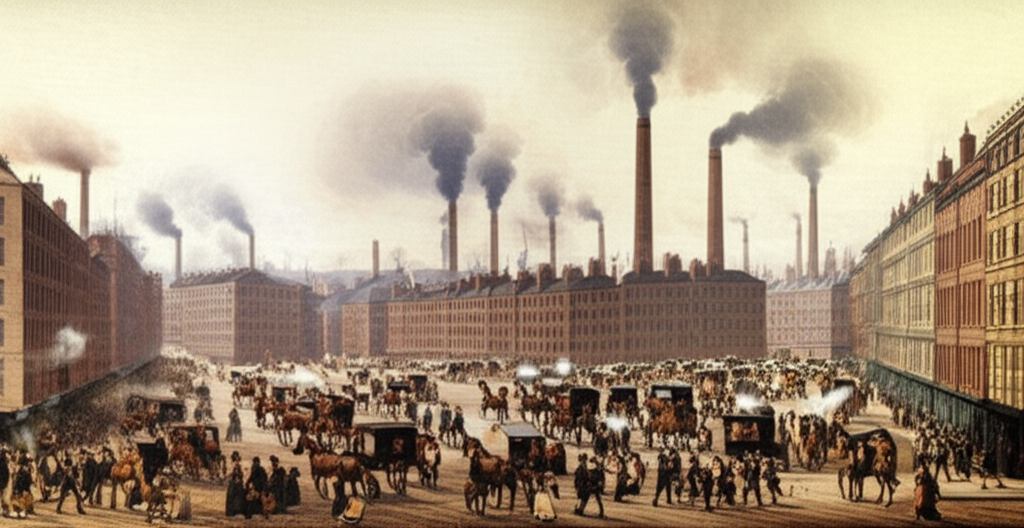
The Symbiotic Relationship: How They Shape Each Other
The connection between history and change is not merely one of sequential occurrence but of mutual shaping.
-
History as the Record of Change: Every historical event, every epoch, every civilization is defined by the transformations that occurred within it. The rise and fall of empires, the advent of new technologies, shifts in philosophical paradigms, or evolutions in social structures are all manifestations of change that form the narrative of history. Without these changes, history would be an inert, uneventful continuum.
-
Change Informed by History: While change is constant, its direction and nature are often profoundly influenced by the past. History provides the context, the precedents, and the lessons that shape future transformations. Societies often react to past injustices, build upon previous innovations, or consciously deviate from historical patterns. The study of history allows us to understand the forces that drive change, anticipate potential outcomes, and perhaps even guide its course. For instance, Thucydides' History of the Peloponnesian War offers timeless insights into political behavior and conflict, suggesting patterns of change in human affairs that recur across time.
-
Time: The Indispensable Dimension: Crucially, time is the fabric upon which both history and change are woven. It provides the linearity for historical narratives and the duration over which change can manifest. We measure change across time, and history is inherently a temporal sequence. The very concept of "progress" or "decline" is meaningless without the passage of time.
Conclusion: An Unbreakable Bond
The connection between history and change is undeniable and foundational to our understanding of the world. History is the grand narrative of transformations, while change is the ceaseless force that writes its chapters. From the ancient insights of Heraclitus to the complex dialectics of Hegel and Marx, philosophers have consistently grappled with this dynamic interplay. To comprehend our present and anticipate our future, we must recognize that history is not just what happened, but the story of how everything came to be different, and that change is the eternal river flowing through the landscape of time, constantly carving new paths for the human journey.
YouTube Video Suggestions:
-
📹 Related Video: What is Philosophy?
Video by: The School of Life
💡 Want different videos? Search YouTube for: ""Heraclitus philosophy change river""
2. ## 📹 Related Video: ARISTOTLE ON: The Nicomachean Ethics
Video by: The School of Life
💡 Want different videos? Search YouTube for: ""Hegel Marx dialectic history explained""