

The Indispensable Link: Education and the March of Progress
Summary: The enduring quest for human betterment, both individually and collectively, hinges fundamentally on the pursuit and dissemination of knowledge through education. This article explores how education is not merely a means to personal advancement, but the very engine of societal progress, fostering critical thought, innovation, and the development of a just and thriving State. Drawing upon the timeless insights found within the Great Books of the Western World, we uncover the philosophical bedrock that inextricably links learning with the evolution of civilization.
The Philosophical Bedrock: Defining Education and Progress
To fully grasp the profound connection between education and progress, we must first establish a clear understanding of these pivotal concepts. For Grace Ellis, education transcends the mere accumulation of facts or the completion of formal schooling. It is, at its heart, the cultivation of the mind, the rigorous training of intellect that equips individuals not just to absorb knowledge, but to critically evaluate, synthesize, and apply it. This process involves:
- Intellectual Development: Sharpening the faculties of reason, logic, and inquiry.
- Moral Formation: Instilling virtues, ethical understanding, and a sense of civic responsibility.
- Creative Capacity: Fostering innovation, problem-solving, and imaginative thought.
Progress, in this context, is far more than technological advancement or economic growth. It encompasses the holistic betterment of humanity: moral, social, scientific, and artistic. It is the continuous striving towards a more enlightened, equitable, and flourishing existence. The bridge between these two realms is knowledge – the accumulated wisdom, discoveries, and insights that education transmits across generations and empowers individuals to expand upon. Without the systematic pursuit and transmission of knowledge, progress would be an impossible dream, a ship without a rudder.
From Individual Enlightenment to Collective Advancement
The transformative power of education radiates outward, beginning with the individual and extending to the entire fabric of society.
The Educated Individual: A Pillar of Progress
An educated individual is not merely a recipient of information, but an active participant in the world's unfolding narrative. They possess:
- Critical Thinking Skills: The ability to discern truth from falsehood, to question assumptions, and to formulate independent judgments. This echoes the Socratic method, urging individuals to examine their own beliefs and the world around them.
- Empowerment and Autonomy: Knowledge grants freedom – freedom from ignorance, freedom to make informed choices, and freedom to shape one's own destiny.
- Capacity for Contribution: Equipped with skills and understanding, educated individuals are better poised to contribute meaningfully to their communities, professions, and the broader human endeavor.
Societal Progress: The Collective Harvest of Knowledge
When education becomes widespread and deeply valued, its effects ripple through the collective, driving societal progress in myriad ways:
- Innovation and Discovery: From the scientific breakthroughs that eradicate disease to the artistic movements that inspire new ways of seeing, education fuels the very intellectual curiosity that leads to groundbreaking discoveries. The scientific method itself is a testament to structured inquiry and the systematic pursuit of knowledge.
- Social Justice and Ethical Development: A well-educated populace is more likely to challenge injustice, advocate for human rights, and engage in thoughtful discourse about ethical dilemmas. Knowledge of history, philosophy, and diverse cultures broadens empathy and fosters a more inclusive society.
- A Robust and Informed State: The stability and effectiveness of any State depend crucially on its citizenry. An educated populace is better able to participate in democratic processes, hold leaders accountable, and make informed decisions about public policy, thereby ensuring the State's long-term progress.
Echoes Through Time: Education's Role in Shaping Civilizations
The philosophical tradition, as preserved in the Great Books of the Western World, consistently underscores the intrinsic link between education and progress.
Consider Plato's Republic, where the ideal State is meticulously designed around a rigorous system of education for its citizens, particularly for its philosopher-kings. For Plato, the journey from the shadows of the cave to the illumination of truth is an educational one, essential for both individual enlightenment and the just governance of the State. Without proper education, individuals remain in ignorance, incapable of contributing to genuine progress.
The Enlightenment thinkers, such as John Locke and Jean-Jacques Rousseau, further emphasized the role of education in shaping free and moral individuals, capable of self-governance. Locke's concept of the mind as a tabula rasa (blank slate) implied that knowledge and understanding are acquired through experience and education, rather than being innate. This placed immense importance on the environment and the learning process in developing rational citizens essential for a progressive State. The very act of compiling and studying the Great Books is, in itself, an act of education, a transmission of the foundational knowledge upon which subsequent progress is built.
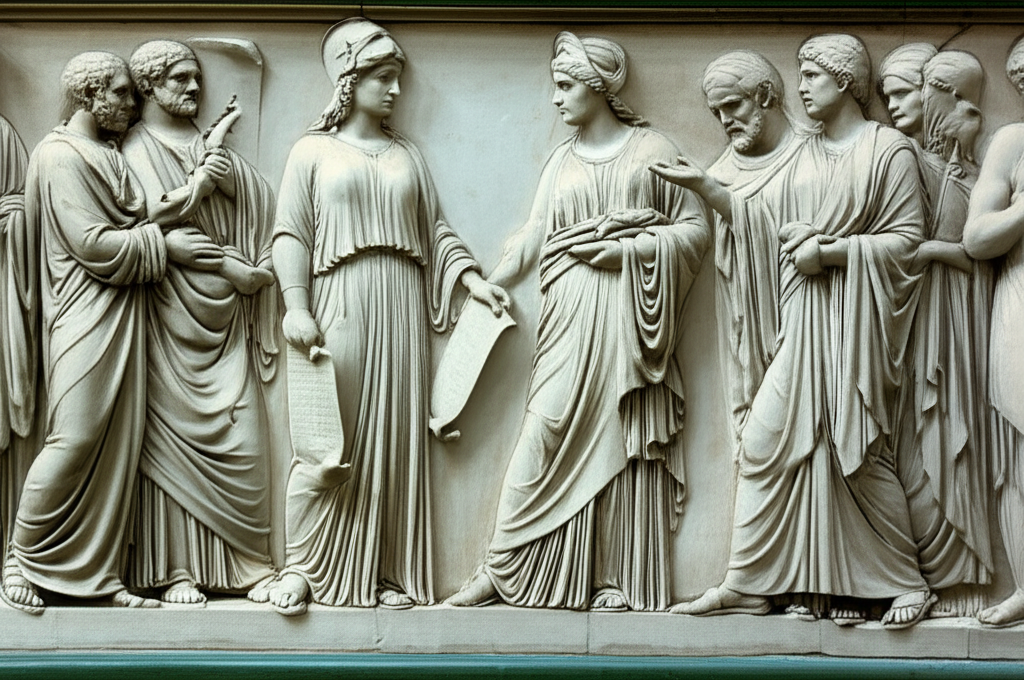
The State's Mandate: Nurturing the Seeds of Progress
Given its pivotal role, education is not merely a private good but a public imperative. The State has a profound responsibility to foster and support comprehensive educational systems, from foundational literacy to advanced research. This commitment is not an expense, but an investment – an investment in the intellectual capital, moral fiber, and future progress of its people.
A State that neglects education does so at its peril. It risks:
- Stagnation: A decline in innovation and economic competitiveness.
- Social Fragmentation: Increased inequality and decreased social cohesion.
- Vulnerability: A citizenry susceptible to misinformation and manipulation, undermining democratic processes.
Conversely, a State that champions education lays the groundwork for sustained progress. It empowers its citizens to adapt to change, solve complex problems, and contribute to a more vibrant and resilient society. This commitment to knowledge ensures that the State itself evolves, guided by reason and informed by the collective wisdom of its people.
The Unending Journey
The connection between education and progress is not a linear path with a definitive end, but rather a continuous, reciprocal journey. Each step of progress reveals new horizons of knowledge to be explored, new challenges demanding innovative solutions, and thus, new imperatives for education. As Grace Ellis observes, the human spirit's drive to understand, to improve, and to transcend its current limitations is eternally fueled by the spark of learning. To deny education is to halt progress; to embrace it is to unlock humanity's boundless potential.
📹 Related Video: PLATO ON: The Allegory of the Cave
Video by: The School of Life
💡 Want different videos? Search YouTube for: "Plato's Philosophy of Education: An Introduction"
📹 Related Video: KANT ON: What is Enlightenment?
Video by: The School of Life
💡 Want different videos? Search YouTube for: "The Enlightenment and the Pursuit of Knowledge"