

The Unbreakable Thread: Education, Knowledge, and the March of Progress
The relationship between education and progress is not merely correlative; it is fundamentally causal. History, illuminated by the enduring wisdom found in the Great Books of the Western World, reveals that the advancement of humanity, whether intellectual, moral, or technological, hinges upon the systematic cultivation and dissemination of knowledge. Without robust education, the very idea of progress remains an elusive dream, a society trapped in stasis or worse, regression. This article explores how education serves as the indispensable engine driving societal evolution, shaping individuals and the State alike towards a more enlightened future.
The Genesis of Progress: Cultivating Knowledge
At its core, progress is the movement from a less desirable to a more desirable state. But what fuels this movement? It is the acquisition and application of knowledge. From the ancient Greek philosophers who sought to understand the cosmos and human nature, to the Enlightenment thinkers who championed reason and empirical observation, the pursuit of understanding has always been the precursor to significant leaps forward.
- Individual Enlightenment: Education liberates the individual mind, fostering critical thinking, challenging assumptions, and expanding horizons. It transforms passive recipients of information into active participants in the ongoing dialogue of human experience.
- Collective Wisdom: When individuals are educated, the collective intelligence of a society rises. This shared intellectual capacity allows for collaborative problem-solving, innovation, and the development of new paradigms across all fields.
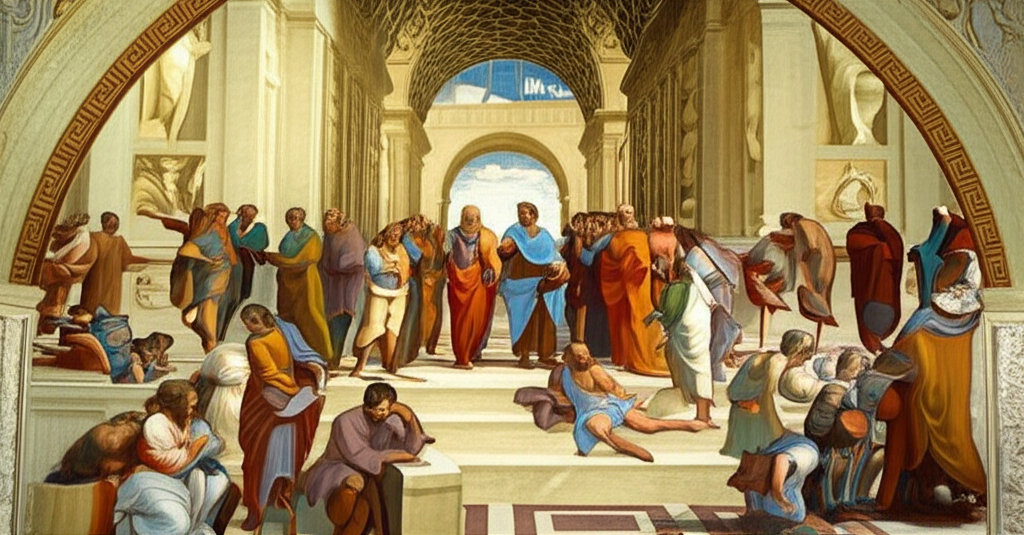
Education as the Engine of Societal Evolution
Progress is not an automatic phenomenon; it requires deliberate effort and investment. Education acts as the primary catalyst for this societal evolution across various domains:
Intellectual and Scientific Advancement
The most evident link between education and progress lies in the realm of intellectual and scientific discovery. Universities, academies, and schools are not just places of learning but crucibles where new ideas are forged and old ones are rigorously tested.
| Era | Educational Impact | Resulting Progress |
|---|---|---|
| Ancient Greece | Philosophical discourse, Socratic method | Foundations of logic, ethics, political theory |
| Medieval Scholasticism | Preservation of texts, systematic theological inquiry | Development of universities, scholastic method |
| Renaissance/Enlightenment | Humanism, scientific method, public discourse | Scientific revolution, democratic ideals, modern philosophy |
| Modern Era | Universal literacy, specialized research | Technological revolution, global communication, medical breakthroughs |
Moral and Ethical Development
Beyond technical skills, education plays a crucial role in shaping moral character and fostering ethical understanding. Thinkers like Aristotle emphasized the cultivation of virtue through habit and reasoned deliberation. A well-educated populace is more likely to engage in thoughtful ethical discourse, leading to more just laws and a more compassionate society. It enables citizens to discern right from wrong, to understand the implications of their actions, and to participate meaningfully in the moral progress of their community.
Political and Civic Engagement
For the State to thrive, its citizens must be informed and engaged. Education equips individuals with the knowledge necessary to understand complex political issues, to critically evaluate leaders, and to participate constructively in democratic processes. From Rousseau's ideas of civic education to John Stuart Mill's advocacy for the educated individual as the cornerstone of a free society, the philosophical tradition underscores the necessity of an informed citizenry for stable and progressive governance.
The State's Mandate: Investing in Minds
The profound connection between education and progress imposes a significant responsibility on the State. A government that genuinely seeks the betterment of its people must prioritize and invest in comprehensive educational systems.
- Universal Access: Ensuring that all citizens, regardless of background, have access to quality education is not merely an act of benevolence but a strategic investment in the nation's future. It unlocks potential that might otherwise remain dormant, contributing to a more dynamic and innovative society.
- Curriculum Development: The State must foster curricula that promote critical thinking, creativity, and a broad understanding of human knowledge, rather than mere rote memorization. This encourages individuals to question, to innovate, and to contribute to meaningful progress.
- Support for Research: Beyond basic schooling, the State's support for higher education and scientific research is vital. This is where the frontiers of knowledge are pushed, leading to breakthroughs that benefit all of humanity.
The Enduring Pursuit
The journey of progress is unending, and its primary guide will always be education. It is the torch that illuminates the path forward, dispelling the shadows of ignorance and superstition. As we navigate the complexities of the modern world, the timeless insights from the Great Books remind us that true societal advancement is inextricably linked to the continuous pursuit of knowledge and the unwavering commitment to intellectual growth for all. To neglect education is to abandon progress itself.
📹 Related Video: PLATO ON: The Allegory of the Cave
Video by: The School of Life
💡 Want different videos? Search YouTube for: ""Plato's Republic Education Philosophy" and "John Locke on Education and Government""