

The Unbreakable Link: Education as the Engine of Progress
The intricate relationship between education and progress is not merely a modern construct but a timeless philosophical inquiry. At its core, this connection posits that the systematic acquisition and dissemination of knowledge are the fundamental drivers of human advancement, both individually and collectively. Without a commitment to education, societal progress stagnates, leaving communities vulnerable to ignorance, injustice, and inefficiency. This article delves into how education, by cultivating knowledge and fostering critical thought, serves as the indispensable catalyst for a flourishing society and a truly enlightened State.
Defining the Pillars: Education, Knowledge, and Progress
To fully appreciate their connection, we must first understand these concepts philosophically. Education is more than just schooling; it is the process of acquiring or imparting general knowledge, developing the powers of reasoning and judgment, and preparing oneself or others intellectually for mature life. It is the deliberate cultivation of the mind. Knowledge, the direct outcome of education, is the justified true belief, the understanding gained through experience or study. It is the raw material with which progress is built. Finally, Progress refers to the advancement toward a better, more complete, or more sophisticated state. It implies movement away from a less desirable condition towards improvement, whether in scientific understanding, moral development, social justice, or economic prosperity. The profound insight, explored by many thinkers in the Great Books of the Western World, is that genuine progress is inconceivable without the foundational bedrock of education and the knowledge it bestows.
Echoes Through Time: Great Thinkers on Cultivating the Mind
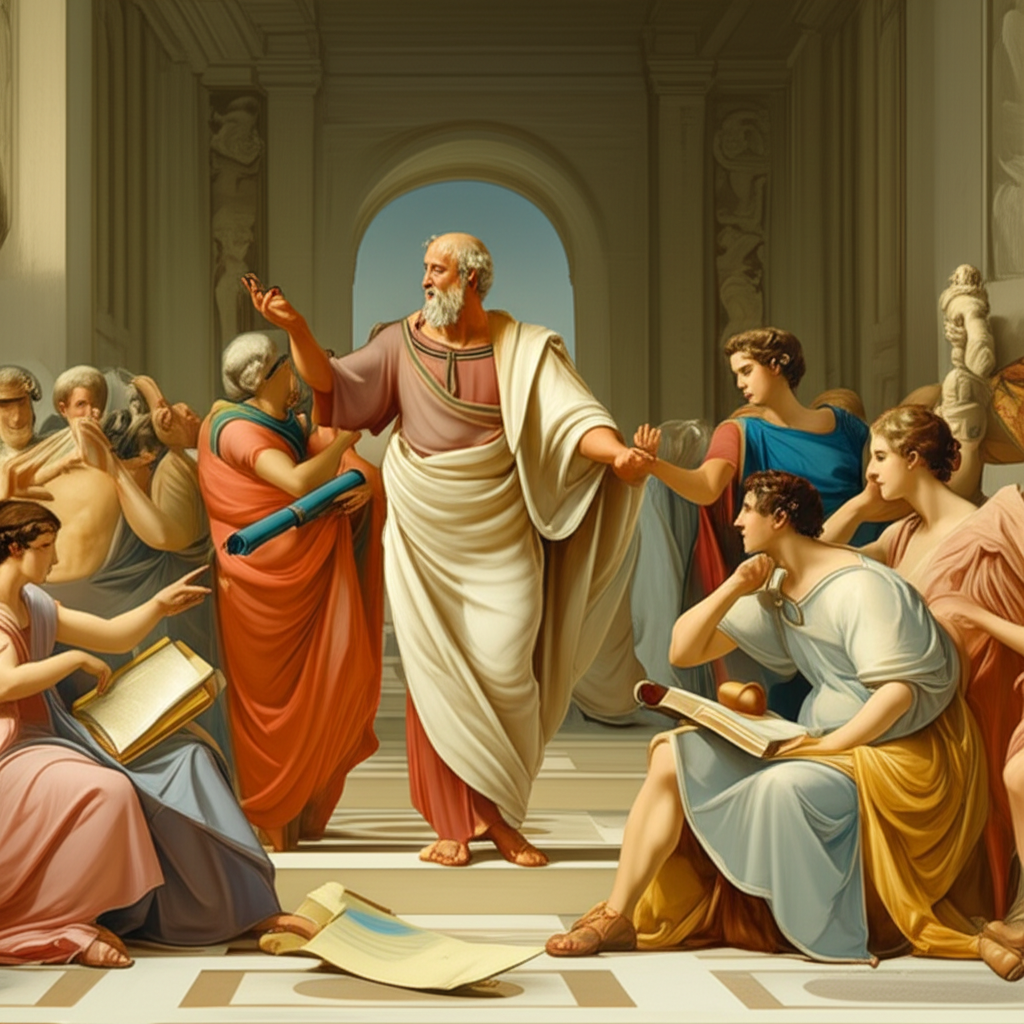
From the ancient academies to the Enlightenment salons, philosophers have consistently highlighted education's pivotal role in shaping society and the State.
From Ancient Greece to the Enlightenment
- Plato's Vision: In The Republic, Plato meticulously outlines an educational system designed to produce philosopher-kings, arguing that only those whose minds are fully trained and illuminated by the pursuit of truth can justly govern the ideal State. For Plato, the progress of the polis hinges entirely on the rigorous education of its leaders and citizens, ensuring they possess the knowledge necessary for virtue and wisdom.
- Aristotle's Practicality: Aristotle, in works like Politics and Nicomachean Ethics, emphasized education for the development of virtuous citizens. He believed that the State has a duty to educate its populace to foster civic virtue and rational thought, essential for the stability and progress of the community. A well-educated citizenry, capable of reasoning and deliberation, was crucial for a well-ordered society.
- Enlightenment's Illumination: Thinkers like John Locke, Jean-Jacques Rousseau, and Immanuel Kant championed education as the key to human liberation and societal advancement. Locke's Some Thoughts Concerning Education stressed the importance of reason and experience. Kant, in What Is Enlightenment?, defined enlightenment as humanity's emergence from self-imposed immaturity, urging individuals to "dare to know" – a direct call for widespread education to achieve intellectual and moral progress. For these philosophers, the spread of knowledge through education was the only path to overcoming superstition, tyranny, and ignorance, thereby fostering a more rational and just State.
These historical perspectives underscore a consistent theme: that the quality of a society and its capacity for progress are directly proportional to its commitment to education.
The Mechanics of Advancement: How Education Fuels Progress
The link between education and progress is not abstract; it manifests through tangible mechanisms that reshape individuals and societies.
Individual Flourishing and Collective Growth
- Critical Thinking and Innovation: Education equips individuals with the capacity for critical analysis, problem-solving, and creative thinking. This intellectual toolkit is vital for scientific discovery, technological innovation, and artistic expression – all hallmarks of societal progress. A knowledgeable populace is an inventive populace, constantly pushing the boundaries of what is possible.
- Economic Development: An educated workforce is more productive, adaptable, and capable of generating new industries and wealth. This directly contributes to economic progress, raising living standards and fostering stability within the State.
The Informed Citizenry and the Just State
- Democratic Participation: Education empowers citizens to understand complex issues, engage in informed debate, and make judicious decisions in democratic processes. This ensures the State is governed by reason and consent, rather than ignorance or demagoguery, thereby securing political progress.
- Ethical and Moral Development: Beyond practical skills, education nurtures empathy, ethical reasoning, and a sense of social responsibility. A society composed of ethically aware individuals is more likely to strive for justice, equality, and human rights, leading to moral and social progress.
Challenges and the Continuous Pursuit
Despite its undeniable importance, the connection between education and progress is not automatic. Challenges such as unequal access to quality education, the politicization of curriculum, and the rapid pace of information require constant vigilance. The State plays a crucial role not only in providing education but also in ensuring its quality, accessibility, and relevance. Neglecting education is a direct impediment to future progress, risking stagnation and regression. Thus, the pursuit of better, more comprehensive education must be a continuous endeavor for any society aspiring to meaningful advancement.
Conclusion: A Foundation for the Future
The philosophical and historical evidence overwhelmingly supports the assertion that education is the bedrock upon which all true progress is built. It is the engine that drives the acquisition of knowledge, fosters critical thinking, and ultimately shapes the character and capabilities of both individuals and the State. From Plato's ideal republic to the Enlightenment's call for reason, the message remains clear: invest in education, cultivate knowledge, and thereby secure the path to a brighter, more progressive future for all.
📹 Related Video: PLATO ON: The Allegory of the Cave
Video by: The School of Life
💡 Want different videos? Search YouTube for: ""Plato's Philosophy of Education - The Republic""
📹 Related Video: KANT ON: What is Enlightenment?
Video by: The School of Life
💡 Want different videos? Search YouTube for: ""The Enlightenment: Crash Course World History #17""