

The Indissoluble Bond: Education, Progress, and the Flourishing State
Summary:
Education is not merely the acquisition of facts; it is the fundamental engine of human Progress. From the shaping of individual intellect to the advancement of entire societies, the cultivation of Knowledge through systematic learning is the bedrock upon which all meaningful development rests. Without a commitment to robust Education, the very notion of societal advancement, ethical governance, and the flourishing of the State remains an elusive ideal. This article explores the profound and multifaceted connection between these essential elements, drawing insights from the enduring wisdom of philosophical tradition.
The Unfolding of Human Potential: Education as the Catalyst for Progress
The trajectory of human civilization, marked by profound leaps in understanding, technology, and social organization, is inextricably linked to the pursuit and dissemination of Knowledge. It is Education that serves as the primary conduit for this pursuit, transforming raw potential into realized Progress. From the earliest Socratic dialogues to the Enlightenment's fervent call for reason, philosophers have consistently recognized learning as the cornerstone of both individual enlightenment and collective advancement.
We often speak of Progress in terms of technological innovation or economic growth, but true societal advancement encompasses far more. It involves the cultivation of critical thought, ethical reasoning, civic responsibility, and the capacity for self-governance. These are not innate qualities; they are meticulously nurtured through a comprehensive educational framework that extends far beyond vocational training.
The Cultivation of Knowledge: Fueling Individual and Collective Advancement
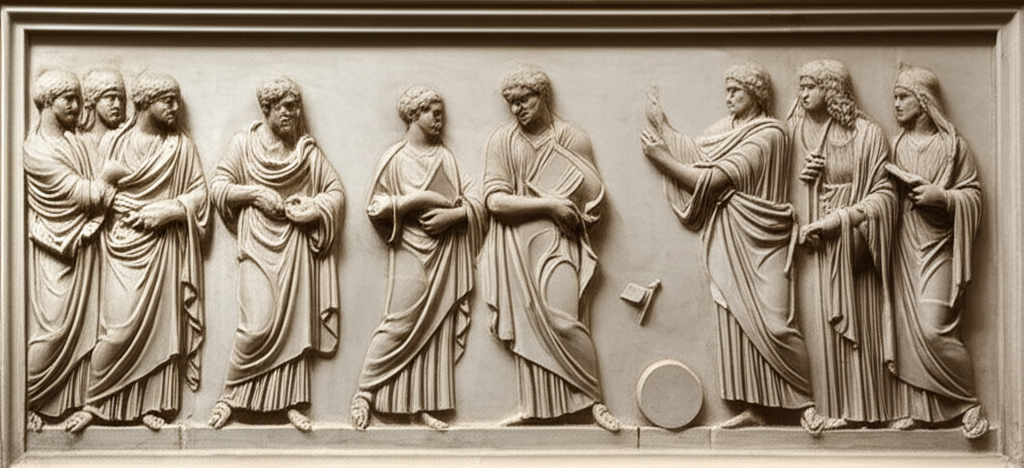
At its heart, Education is the systematic cultivation of Knowledge. This isn't just about memorization, but about understanding, analysis, synthesis, and the application of wisdom. The Great Books of the Western World, for instance, are not merely historical artifacts; they are repositories of foundational Knowledge that continue to inform our understanding of ethics, politics, science, and the human condition.
- Individual Flourishing: For the individual, Education unlocks potential. It sharpens the intellect, broadens perspectives, and fosters the capacity for independent thought. An educated mind is equipped to question, to innovate, and to contribute meaningfully to society. As Plato argued in The Republic, the proper education of individuals is paramount for them to understand their role and contribute to the harmony of the State.
- Societal Innovation: Collectively, this individual enlightenment translates into societal Progress. New ideas emerge, problems are solved, and the boundaries of what is possible are continually pushed. Scientific breakthroughs, artistic movements, and advancements in social justice all stem from a foundation of shared Knowledge and the critical inquiry fostered by Education.
The State's Imperative: Investing in Education for Enduring Progress
The relationship between Education and the State is symbiotic. A thriving State requires an educated citizenry—one capable of informed decision-making, economic productivity, and active participation in civic life. Conversely, a responsible State has a fundamental obligation to provide accessible and high-quality Education to all its members.
The State's Stake in Education:
| Aspect of State | Benefit from Education |
|---|---|
| Governance | Informed electorate, capable of critical evaluation of policies and leaders, leading to more stable and just institutions. |
| Economy | Skilled workforce, innovation, increased productivity, and competitiveness in a globalized world. |
| Social Cohesion | Shared values, understanding of diverse perspectives, reduction of social inequalities, and promotion of civic duty. |
| National Security | Capacity for technological advancement, critical analysis of threats, and informed citizenry resilient to propaganda. |
| Cultural Enrichment | Preservation and advancement of arts, sciences, and humanities, contributing to national identity and global standing. |
Philosophers like John Locke underscored the importance of reason and the role of experience in shaping the mind, implicitly highlighting the necessity of an environment (often provided or regulated by the State) that facilitates such learning. Similarly, Rousseau, in Emile, or On Education, explored how education shapes a citizen for the common good, emphasizing its crucial role in the formation of a virtuous republic.
Challenges and the Enduring Relevance
Despite its undeniable importance, the pursuit of universal and quality Education faces perpetual challenges, including resource allocation, equitable access, and adapting to a rapidly changing world. Yet, the core principle remains: without continuous investment in Education, Progress stagnates, and the State risks intellectual and moral decline.
The contemporary world, with its complex global challenges and rapid technological shifts, demands an even greater commitment to lifelong learning. Education is no longer a finite process confined to youth but an ongoing journey essential for navigating complexity, fostering adaptability, and ensuring sustained human Progress. It is the lamp that illuminates the path forward, a beacon that guides us towards a more enlightened and prosperous future.
YouTube Video Suggestions:
-
📹 Related Video: PLATO ON: The Allegory of the Cave
Video by: The School of Life
💡 Want different videos? Search YouTube for: ""Plato's Republic education philosophy explained""
2. ## 📹 Related Video: KANT ON: What is Enlightenment?
Video by: The School of Life
💡 Want different videos? Search YouTube for: ""Enlightenment thinkers on education and society""