

The Crucible of Minds: How Education Forges the Path to Progress
The enduring quest for a better society, for a more enlightened existence, invariably circles back to a single, foundational truth: Education is not merely a means to an end, but the very crucible in which Progress is forged. It is the systematic cultivation of Knowledge, the sharpening of reason, and the broadening of perspective that empowers individuals and, by extension, the State, to transcend limitations and build a future richer in wisdom and well-being. This article delves into the profound, symbiotic relationship between these two indispensable pillars of human civilization, exploring how the transmission and expansion of understanding propel us forward, not just technologically, but morally, socially, and intellectually.
Unpacking the Philosophical Foundations of Education and Progress
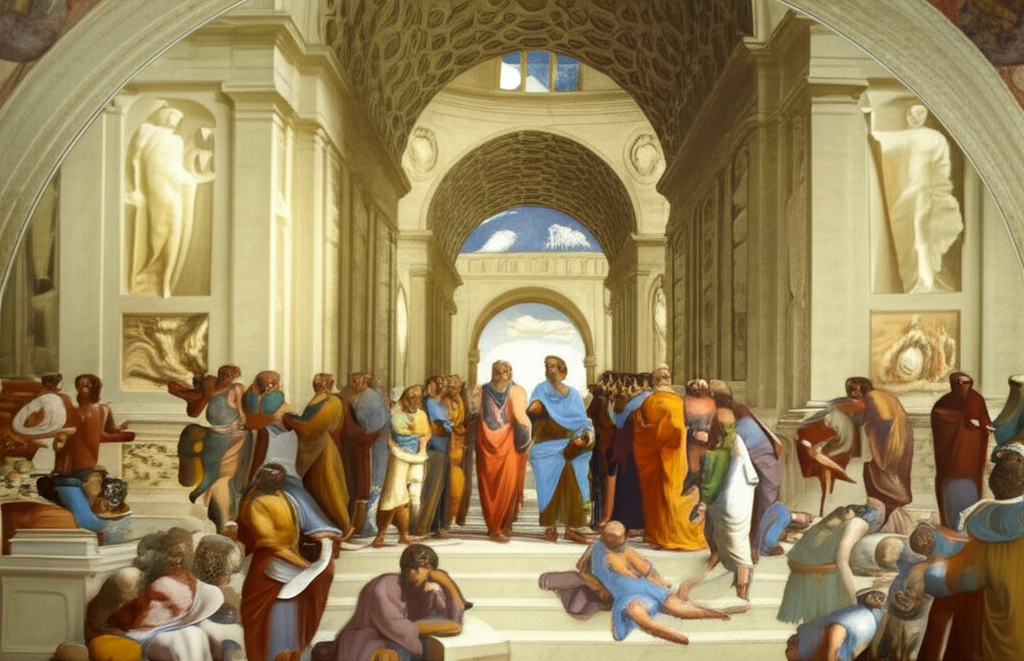
To understand the intricate dance between education and progress, we must first turn to the foundational thinkers whose insights illuminate this connection. From Plato's Republic, where the ideal State is governed by philosopher-kings whose Knowledge is paramount, to Aristotle's emphasis on paideia – the holistic development of the citizen – the Great Books of the Western World consistently underscore education's role in shaping both individual virtue and societal flourishing.
Consider the Enlightenment, a period defined by an unwavering faith in human reason and the power of Knowledge to dispel ignorance and superstition. Thinkers like John Locke posited that the mind is a tabula rasa, a blank slate upon which experience and education inscribe understanding, thereby enabling individuals to govern themselves and contribute to a rational society. Jean-Jacques Rousseau, while critical of certain forms of societal corruption, nevertheless advocated for an education that nurtured natural goodness and civic virtue, essential for the progress of a truly free State.
This historical and philosophical lineage reveals a consistent theme: true progress is not simply about accumulating wealth or technological advancements, but about the cultivation of a discerning, ethical, and informed populace.
Dimensions of Progress Beyond Mere Accumulation
When we speak of Progress, it is crucial to move beyond a narrow, materialistic definition. While economic and technological advancements are undeniable facets, a holistic understanding encompasses:
- Intellectual Progress: The expansion of human understanding, the development of critical thinking, and the pursuit of truth across all disciplines.
- Moral Progress: The refinement of ethical frameworks, the cultivation of empathy, and the pursuit of justice and equality within society.
- Social Progress: The evolution of more inclusive, equitable, and harmonious community structures, fostering cooperation and mutual respect.
- Political Progress: The development of more just, representative, and stable forms of governance, responsive to the needs of its citizens.
Each of these dimensions is inextricably linked to the quality and accessibility of Education. Without the Knowledge and critical faculties imparted by education, genuine, sustainable progress remains elusive.
The Indispensable Role of Knowledge: The Engine of Advancement
At the heart of education lies the transmission and generation of Knowledge. This is the fuel that drives all forms of Progress. It is not merely the memorization of facts, but the understanding of principles, the ability to synthesize information, and the capacity for independent thought.
- Knowledge as Foundation: Education provides the foundational understanding of the natural world, human history, and societal structures. Without this bedrock, innovation is blind, and societal discourse is impoverished.
- Knowledge as Innovation: Scientific and technological breakthroughs, which are often the most visible forms of Progress, are direct products of advanced Knowledge gained through specialized education and research.
- Knowledge as Empowerment: An educated populace is better equipped to understand complex issues, challenge dogma, and participate meaningfully in democratic processes, thereby fostering political Progress.
- Knowledge as Empathy: Through the study of literature, history, and philosophy, education broadens perspectives, fostering empathy and understanding across cultures and communities, paving the way for moral and social Progress.
The State's Imperative: Nurturing the Educational Ecosystem
The connection between education and progress places a significant onus upon the State. A truly enlightened State recognizes that investing in education is not an expenditure, but an investment in its own future, its stability, and its capacity for enduring Progress.
| Aspect of State Involvement | Impact on Education and Progress |
|---|---|
| Universal Access | Ensures all citizens have the opportunity to acquire Knowledge, maximizing human potential and reducing inequality. |
| Quality Standards | Guarantees that education is rigorous, relevant, and effective in developing critical thinking and essential skills. |
| Funding and Resources | Provides the necessary infrastructure, teachers, and materials for a robust educational system. |
| Curriculum Development | Shapes what Knowledge is valued and transmitted, influencing societal values and future directions. |
| Protection of Academic Freedom | Fosters an environment where inquiry, dissent, and the pursuit of new Knowledge can flourish without undue interference. |
A State that neglects its educational responsibilities risks stagnation, social unrest, and a decline in its capacity for meaningful Progress. Conversely, a State that champions education cultivates an informed citizenry, a vibrant economy, and a rich cultural landscape, ensuring its long-term resilience and flourishing.
The Ongoing Challenge: Education in a Rapidly Evolving World
While the connection between education and progress is undeniable, it is not a static relationship. In our rapidly evolving world, the nature of Knowledge itself is constantly expanding and changing. Education must therefore be dynamic, adapting to new challenges and opportunities. This requires:
- Lifelong Learning: The understanding that education is not confined to schooling but is a continuous process throughout life.
- Critical Digital Literacy: The ability to navigate and discern truth in an information-saturated digital landscape.
- Global Citizenship: Education that fosters an understanding of interconnectedness and responsibility beyond national borders.
The pursuit of Progress through Education is an eternal endeavor, demanding constant vigilance, courageous investment, and a profound appreciation for the power of the cultivated mind. It is the ultimate testament to humanity's capacity for self-improvement and the enduring legacy we build for future generations.
📹 Related Video: PLATO ON: The Allegory of the Cave
Video by: The School of Life
💡 Want different videos? Search YouTube for: ""Plato's Republic Explained: Philosophy & Education""
📹 Related Video: KANT ON: What is Enlightenment?
Video by: The School of Life
💡 Want different videos? Search YouTube for: ""The Enlightenment: Crash Course World History #17""