

The connection between democracy and education is not merely incidental; it is foundational, symbiotic, and absolutely essential for the survival and flourishing of any self-governing society. From ancient philosophical inquiries to modern democratic theory, the consensus among profound thinkers is clear: an informed, critically thinking, and civically engaged citizenry, cultivated through robust education, is the bedrock upon which a true democracy stands. Without a continuous commitment to educating its citizens, the democratic ideal risks devolving into mere populism or tyranny, losing its capacity for reasoned deliberation and collective self-determination.
The Indivisible Bond: Why Education is Democracy's Lifeblood
The very essence of democracy lies in the principle of self-governance, where power ultimately resides with the people. For this principle to be more than a theoretical construct, the people—the citizens—must possess the capacity to make wise decisions, understand complex issues, and participate actively and meaningfully in public life. This capacity is not innate; it is cultivated through education. Education, in this context, extends beyond mere literacy or vocational training; it encompasses the development of critical thinking, ethical reasoning, civic knowledge, and an understanding of historical context and diverse perspectives. It is the crucible in which responsible citizens are forged, capable of discerning truth from falsehood, engaging in respectful debate, and holding their leaders accountable.
Historical Roots: Philosophy's Early Insights into the Connection
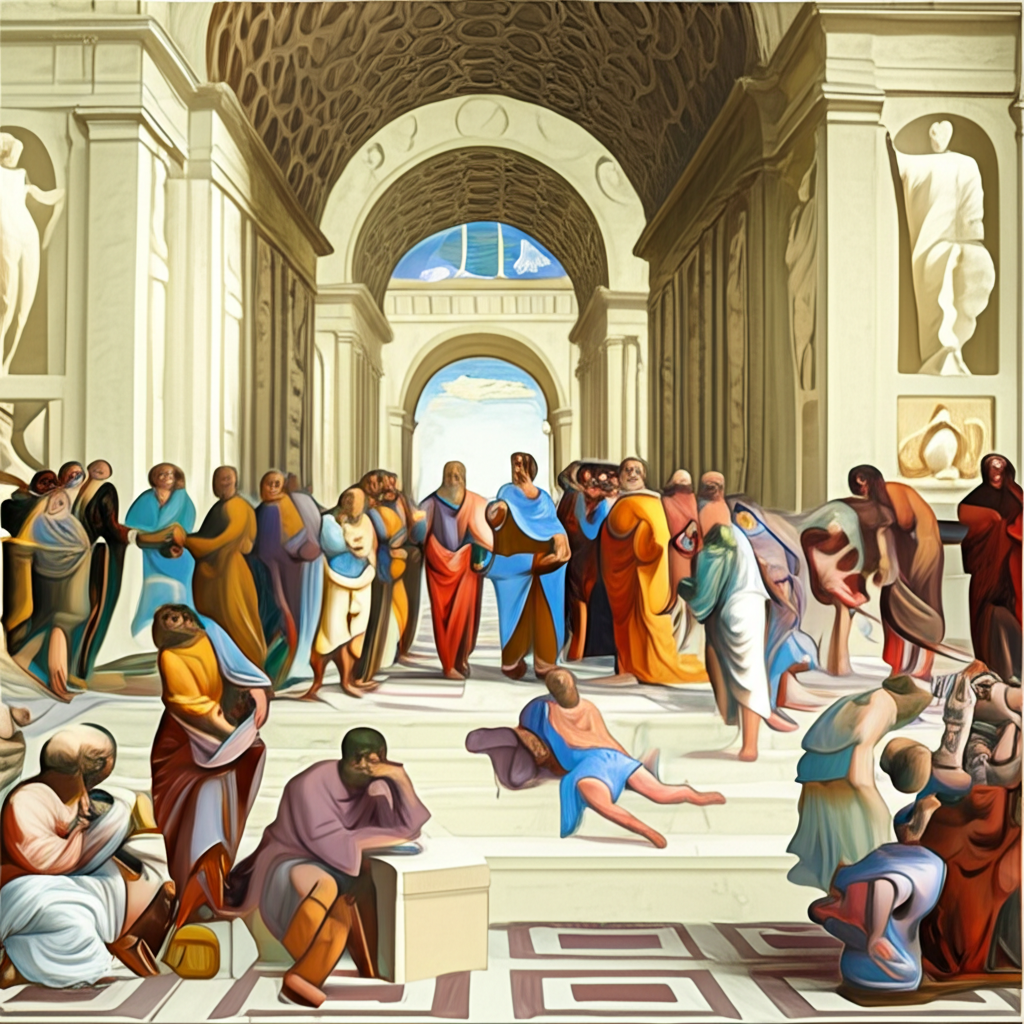
The profound connection between the quality of a state and the education of its citizens has been a central theme in Western philosophy since its inception, finding extensive exploration within the pages of the Great Books of the Western World.
Plato's Republic and the Philosopher-King
Plato, deeply skeptical of Athenian democracy in its raw form, famously argued in The Republic that governance should be entrusted to philosopher-kings – individuals who have undergone rigorous, lifelong education to attain wisdom and understand the Forms. While his ideal state was not democratic, his work profoundly underscores the idea that sound governance, regardless of its form, demands intellectual and moral excellence, cultivated through intensive education. For Plato, an uneducated populace was prone to irrationality, swayed by rhetoric and fleeting desires, making stable and just governance impossible. He highlighted the dangers of a society where citizens lack the philosophical grounding to discern true good from superficial appeal.
Aristotle on Citizenship and Virtue
Aristotle, in his Politics, offered a more pragmatic yet equally emphatic view on the necessity of education for civic life. He believed that the primary purpose of the state was to enable its citizens to live a good life, and that a proper system of education was indispensable for achieving this. For Aristotle, a citizen was not merely someone who resided in a polis, but one who actively participated in its governance and legal system. This active participation required education in civic virtue, practical reason (phronesis), and the ability to deliberate effectively on matters of public concern. He argued that the best form of government, whether a polity (a mixed constitution combining elements of oligarchy and democracy) or an aristocracy, depended on the education of its citizens to cultivate the virtues necessary for self-rule and collective flourishing.
Enlightenment Ideals: Education for Self-Governance
The Enlightenment era further cemented the connection between education and nascent democratic ideals, as thinkers grappled with the implications of individual rights and popular sovereignty.
Locke and the Social Contract
John Locke, whose theories heavily influenced democratic revolutions, posited that individuals possess natural rights and enter into a social contract to form governments that protect these rights. For this contract to be legitimate and enduring, citizens must be capable of rational thought, understanding their rights and responsibilities, and consenting to the government's authority. Locke’s writings, particularly Some Thoughts Concerning Education, emphasized the importance of reasoning and moral instruction to develop rational, virtuous individuals capable of self-governance and responsible participation in society. He believed that education was crucial for individuals to understand and uphold the principles of liberty and justice.
Rousseau's General Will and Civic Education
Jean-Jacques Rousseau, in The Social Contract, introduced the concept of the "general will" – the collective good that emerges when citizens act for the common interest rather than private advantage. For citizens to discern and act upon this general will, they require a specific form of civic education. Rousseau's Emile, or On Education outlines a process designed to cultivate individuals who are morally autonomous, capable of empathy, and committed to the common good. This education was vital for ensuring that individuals, when participating in the democratic process, would contribute to the collective flourishing of the state rather than succumbing to selfish impulses.
Modern Democratic Thought: The Evolving Role of Education
As democratic systems matured, the emphasis on education continued, adapting to the complexities of industrial societies and global challenges.
John Stuart Mill on Liberty and Deliberation
John Stuart Mill, a staunch advocate for individual liberty and representative government, underscored the critical role of education in his seminal work, On Liberty. He argued that a free society thrives on the open exchange of ideas and vigorous public deliberation. For this deliberation to be productive, citizens must be educated to think critically, evaluate arguments, and tolerate dissenting opinions. Mill believed that education was essential for developing individuals capable of independent thought, guarding against the tyranny of the majority, and contributing to the intellectual and moral progress of society. He saw education as the means to cultivate informed voters and engaged public participants.
Dewey and Experiential Learning
John Dewey, an American philosopher and educational reformer, further elaborated on the connection between democracy and education in the 20th century. For Dewey, democracy was not just a form of government but a way of life – a continuous process of collective problem-solving and shared experience. He argued that education must prepare students for active, participatory citizenship by engaging them in real-world problems and fostering critical inquiry, collaboration, and adaptability. His philosophy of "experiential learning" emphasized that schools should be mini-democracies, where students learn by doing, discussing, and making decisions, thereby developing the habits of democratic citizenship.
The Contemporary Challenge: Sustaining the Connection
In the 21st century, the connection between democracy and education faces new pressures. The proliferation of information, often unverified or deliberately misleading, makes the development of critical thinking skills more urgent than ever. The globalized nature of challenges, from climate change to economic inequality, demands a globally aware and ethically sensitive citizenry.
Maintaining a healthy democracy today requires:
- Continuous Learning: The pace of change necessitates lifelong education for citizens to remain informed and adaptable.
- Media Literacy: The ability to critically evaluate information from diverse sources, including digital media, is paramount.
- Civic Engagement: Beyond voting, education must foster active participation in community life, advocacy, and respectful dialogue.
- Ethical Reasoning: Navigating complex moral dilemmas in public policy demands a strong ethical foundation.
Key Pillars of Democratic Education
To reinforce the vital connection, contemporary education must prioritize the following:
| Pillar of Democratic Education | Description |
|---|---|
| Critical Thinking | The ability to analyze information, evaluate arguments, identify biases, and form reasoned judgments, essential for discerning truth in a complex information landscape. |
| Civic Literacy | Understanding the structures, functions, and history of government, the rights and responsibilities of citizens, and the mechanisms of democratic participation. |
| Ethical Reasoning | Developing the capacity to consider the moral implications of actions and policies, fostering empathy, and making decisions that promote justice and the common good. |
| Media Literacy | The skill to access, analyze, evaluate, and create media in a variety of forms, empowering citizens to navigate digital information and resist manipulation. |
| Global Awareness | Understanding interconnectedness, diverse cultures, and global challenges, preparing citizens for responsible participation in an increasingly interdependent world. |
Conclusion: The Enduring Imperative
The connection between democracy and education is an enduring imperative, a philosophical axiom that has resonated through millennia of thought. From the ancient Greek polis to the modern global village, the health and vitality of self-governance are inextricably linked to the intellectual and moral development of its citizens. As Daniel Sanderson, I posit that neglecting education is not merely an oversight; it is an act of undermining the very foundations of freedom and collective self-determination. To secure the future of democracy, we must ceaselessly invest in the education of every citizen, cultivating the wisdom, virtue, and critical faculties necessary to navigate the complexities of our shared world and uphold the principles of a truly representative and just society.
📹 Related Video: PLATO ON: The Allegory of the Cave
Video by: The School of Life
💡 Want different videos? Search YouTube for: ""Plato's Republic explained""
📹 Related Video: ARISTOTLE ON: The Nicomachean Ethics
Video by: The School of Life
💡 Want different videos? Search YouTube for: ""John Dewey and Democratic Education""