

The Profound Interplay: Unveiling the Connection Between Beauty and Form
Summary: The essence of beauty is often perceived as subjective, residing solely in the eye of the beholder. However, a deeper philosophical inquiry reveals a profound and enduring connection between beauty and form. This article explores how objective structures, patterns, and arrangements—what we define as form—are not merely containers for beauty, but are often integral to its very emergence and perception, especially within the realm of art. From ancient Greek philosophy to contemporary aesthetics, the interplay between the structured and the sublime offers a compelling argument for beauty as something more than just personal preference.
The Enduring Question of Beauty: Beyond the Subjective Gaze
For millennia, thinkers have grappled with the elusive nature of beauty. Is it a fleeting sensation, a personal preference, or does it possess an inherent quality, an objective truth that transcends individual taste? While the subjective experience of beauty is undeniable, a rich tradition of Western thought, deeply rooted in the Great Books, posits that beauty is often inextricably linked to underlying structures—to form. This isn't to deny personal appreciation but to suggest that certain formal qualities consistently evoke aesthetic pleasure across diverse cultures and times.
Consider a perfectly symmetrical face, a meticulously crafted sonata, or a well-proportioned building. In each instance, our perception of beauty is guided, if not shaped, by the arrangement of its constituent parts, by its inherent form. It is this fascinating connection that we seek to unravel.
Plato's Ideal Forms: The Blueprint of Beauty
Perhaps no philosopher explored the connection between beauty and form more profoundly than Plato. For him, the beauty we perceive in the material world is but a faint echo, a mere participation in an eternal, immutable, and perfect Form of Beauty existing in the realm of Ideas.
- The Cave Allegory: Just as prisoners mistake shadows for reality, we often mistake imperfect earthly manifestations for true beauty.
- Participation: A beautiful person, a beautiful painting, a beautiful piece of music—each is beautiful to the extent that it participates in, or reflects, the ultimate Form of Beauty.
For Plato, form is not just about physical shape; it's about the very essence, the ideal blueprint that makes something what it is. True beauty, therefore, is an apprehension of this ideal form, a glimpse of divine order and harmony. This philosophical stance elevates beauty from a mere sensation to a profound intellectual and spiritual experience, intrinsically tied to an objective, transcendent form.
Aristotle's Empirical Harmony: Order, Proportion, and Wholeness
While Plato sought beauty in transcendent Forms, his student Aristotle grounded it in the observable world. Yet, the connection to form remained central. For Aristotle, beauty was characterized by:
- Order (Taxis): A proper arrangement of parts.
- Proportion (Symmetria): A harmonious relationship between these parts.
- Definite Size (Peras): A comprehensibility that allows the mind to grasp the whole.
In his Poetics, Aristotle discusses how a beautiful plot, like a living organism, must have a beginning, middle, and end, and its parts must be arranged in such a way that if one is removed, the whole is disturbed. This emphasis on organic unity, balance, and proportion directly ties beauty to the internal form and structure of an object or narrative. It's not just about what something is, but how it is put together.
Art as the Embodiment: Crafting Beauty Through Form
The most evident arena where the connection between beauty and form unfolds is in art. Artists, whether sculptors, painters, architects, composers, or writers, are masters of form. They manipulate elements to evoke aesthetic responses.
Formal Elements in Art that Evoke Beauty:
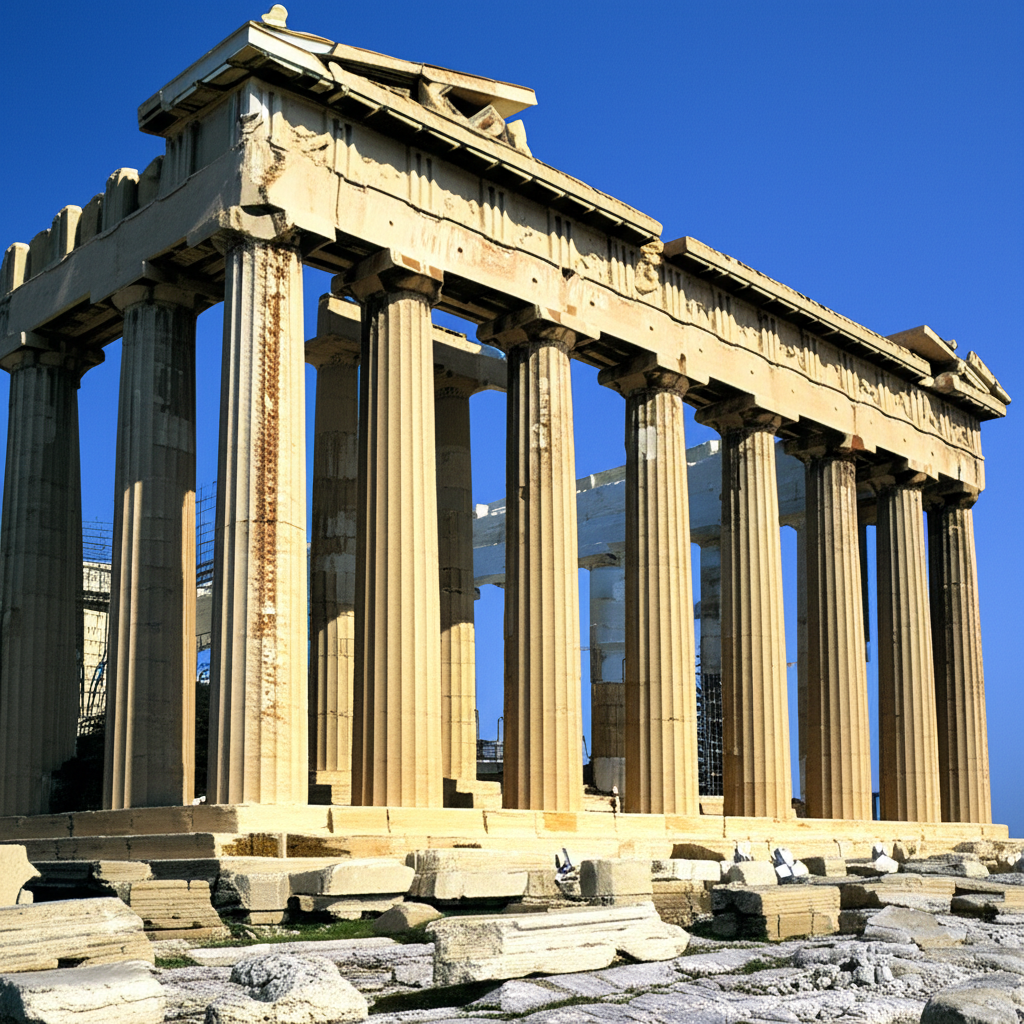
- Symmetry & Balance: Creates a sense of harmony and stability, often found in classical architecture and portraiture.
- Proportion & Ratio: Utilizes mathematical relationships (e.g., the Golden Ratio) to achieve aesthetically pleasing dimensions, seen in Renaissance painting and ancient Greek sculpture.
- Rhythm & Repetition: Establishes movement and pattern, fundamental to music, dance, and poetic meter.
- Unity & Variety: The interplay of cohesive elements with sufficient diversity to maintain interest, crucial in composition across all artistic mediums.
- Line & Shape: The fundamental building blocks that define contours and volumes, guiding the eye and creating visual weight.
- Color & Texture: While seemingly less about pure form, their arrangement and interaction contribute to the overall formal composition and emotional impact.
Through the deliberate application of these formal principles, artists transform raw materials into works of art that resonate with us, often because their underlying form aligns with our inherent appreciation for order, balance, and harmony. The beauty isn't just in the form; it is the form, skillfully articulated.
Beyond the Visual: Form in Abstract Beauty
The connection between beauty and form isn't limited to the visual arts. Consider:
- Music: A symphony's beauty lies in its formal structure—its movements, themes, harmonies, and rhythms. The form of a sonata or a fugue is what allows its emotional and aesthetic power to unfold.
- Poetry: The beauty of a sonnet or a haiku is deeply rooted in its specific form—its rhyme scheme, meter, and stanza structure. These formal constraints often enhance, rather than limit, the expressive power.
- Mathematics: Many mathematicians describe elegant proofs or equations as "beautiful." This beauty is purely formal, residing in the simplicity, symmetry, and logical coherence of the abstract structure itself.
In these instances, form is not something seen but understood—a framework that provides coherence, elegance, and aesthetic satisfaction.
Conclusion: A Harmonious Interplay
The philosophical journey through the connection between beauty and form reveals a truth far richer than mere subjective preference. While individual taste undoubtedly plays a role, there is a profound and undeniable interplay between the structured elements of the world—its form—and our perception of its beauty. From Plato's transcendent ideals to Aristotle's empirical observations, and through the endless manifestations in art, we find that beauty often emerges from order, proportion, balance, and unity. To truly appreciate beauty, then, is to recognize and engage with the underlying form that gives it life and meaning. This ongoing philosophical inquiry continues to shape our understanding of aesthetics, inviting us to look deeper than the surface and discover the harmonious architecture beneath.
YouTube Video Suggestions:
-
📹 Related Video: PLATO ON: The Allegory of the Cave
Video by: The School of Life
💡 Want different videos? Search YouTube for: "Plato Theory of Forms Explained"
2. ## 📹 Related Video: ARISTOTLE ON: The Nicomachean Ethics
Video by: The School of Life
💡 Want different videos? Search YouTube for: "The Golden Ratio in Art and Architecture"