

The Profound Connection Between Angel and God: A Theology of Divine Intermediaries
The relationship between angels and God is a cornerstone of classical theology and philosophy, revealing a sophisticated understanding of divine order, creation, and providence. Far from mere mythical figures, angels, within the framework of Western thought stretching from ancient philosophy through medieval scholasticism, represent a crucial intellectual and spiritual connection between the transcendent divine and the immanent created world. This article explores their nature, function, and the profound implications of their existence for our understanding of God's omnipotence and omnipresence, drawing heavily from the enduring insights found within the Great Books of the Western World.
The Celestial Hierarchy: A Divine Blueprint
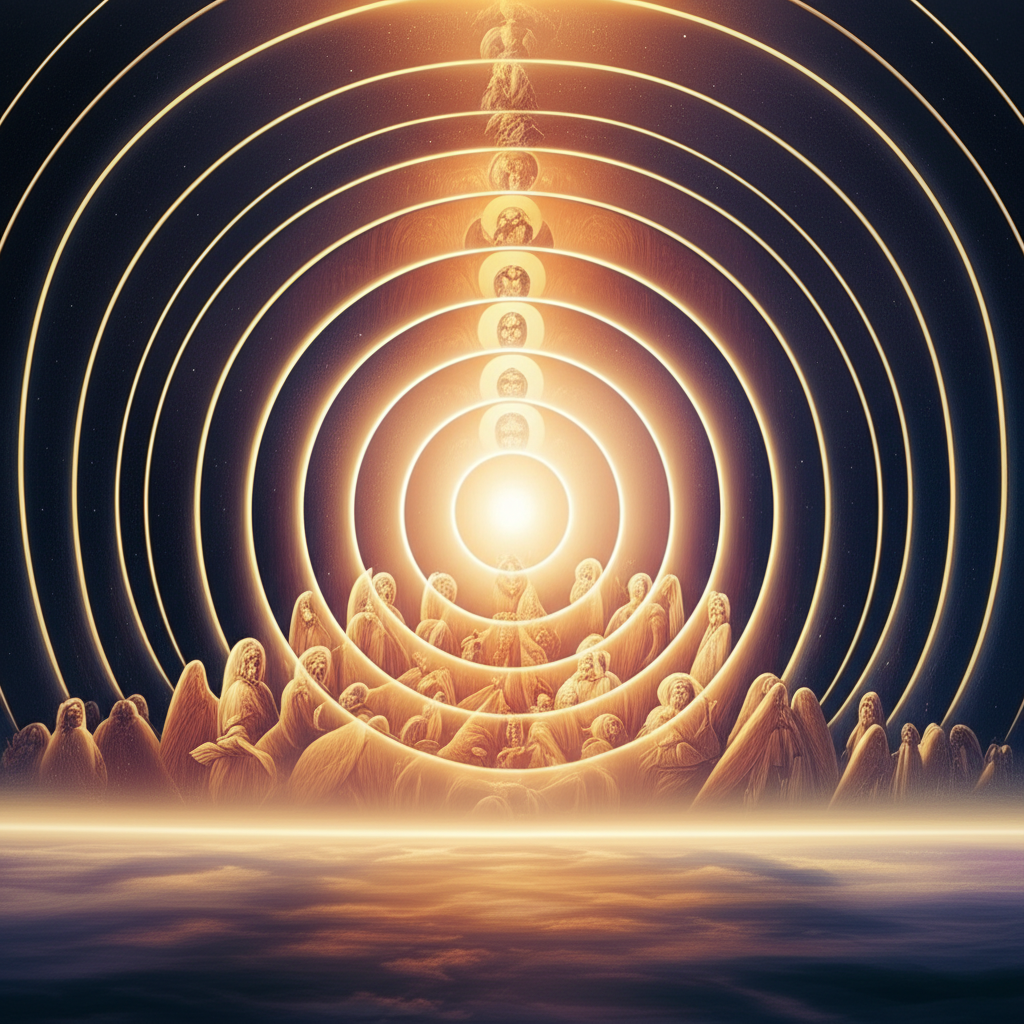
To truly grasp the connection between angel and God, one must first appreciate the concept of a hierarchical cosmos, a notion deeply embedded in philosophical traditions from Plato to Pseudo-Dionysius the Areopagite, whose Celestial Hierarchy meticulously outlines the nine orders of angels. This structure is not arbitrary but reflects a divine blueprint, illustrating the graduated descent of being from the absolute perfection of God.
Angels as Messengers and Ministers
The very word "angel" derives from the Greek angelos, meaning "messenger." This etymology immediately highlights their primary functional connection to God: they are the divine envoys, the instruments through which God's will is communicated and enacted within creation. As Thomas Aquinas, in his monumental Summa Theologica (a central text in the Great Books tradition), meticulously explains, angels are pure intellectual substances, incorporeal beings who serve as ministers of divine providence. They bridge the gap between the wholly transcendent God and the material world, carrying out divine commands and guiding humanity. Their existence posits a universe not of direct, unmediated divine intervention in every instance, but one governed by an ordered chain of command, reflecting God's infinite wisdom in the management of creation.
Degrees of Being and Proximity to the Divine
Within this cosmic hierarchy, angels occupy a unique and exalted position. They are superior to humans in their nature, possessing intellects unburdened by material limitations and wills perfectly aligned with the divine. Yet, they remain creatures, infinitely distinct from the Creator. Their proximity to God is a matter of both essence and function; they are closer to the divine source of being, reflecting God's attributes more perfectly than any other created order. This proximity facilitates their role as intermediaries, allowing them to receive divine illumination directly and transmit it downwards. This concept underscores a fundamental theological principle: God's power and presence permeate all levels of existence through various channels, with angels being the most immediate and perfected of these.
Divine Illumination and Angelic Intellection
The connection of angels to God is perhaps most profoundly understood through their intellectual nature and their capacity for divine illumination. Unlike humans, whose knowledge is acquired discursively through sensory experience and abstract reasoning, angels possess a form of intuitive apprehension.
Mirrors of God's Wisdom
Angels are often described as "mirrors" of God's wisdom, reflecting divine truths with pristine clarity. Their intellects, being pure and unadulterated by matter, are capable of directly grasping universal truths and the divine essences that lie behind the phenomena of the world. Augustine, in works like The City of God, speaks to the angelic apprehension of divine truth, suggesting a knowledge that is immediate and comprehensive, a stark contrast to the human struggle for understanding. This perfect intellection allows angels to execute God's will with unwavering precision and understanding, making them ideal agents of divine providence.
The Act of Creation and Sustenance
While angels do not create, they are intimately involved in the sustenance and ordering of creation. They are the executors of God's creative and providential decrees. For instance, the traditional roles of guardian angels or the angels presiding over natural phenomena (as sometimes suggested in older theological texts) point to their active participation in maintaining the cosmic order. This active participation establishes a dynamic connection where angels are not passive recipients of divine command but active, intelligent agents in the unfolding of God's plan for the universe.
The Ontological Bridge: Angels and the Problem of Immateriality
The very existence of angels presents a fascinating philosophical and theological challenge regarding the nature of being and the distinction between spirit and matter.
Pure Spirit vs. Embodied Existence
The defining characteristic of an angel is its pure spiritual nature. Unlike humans, who are a composite of body and soul, angels are purely intellectual substances, existing without material form. This distinction places them uniquely in the hierarchy of being, bridging the gap between the purely immaterial God and the material world of which humanity is a part. Their existence helps to articulate a universe that is not simply physical but also teeming with immaterial realities, demonstrating the richness and complexity of God's creative power.
The Connection Through Grace and Providence
Ultimately, the connection between angel and God is one of absolute dependence and perfect instrumentality. Angels exist for God, to glorify Him, to carry out His will, and to serve as a conduit for His grace and providence towards humanity and the rest of creation. They embody the principle that all created beings, in their unique ways, reflect and participate in the divine being. Their service is not forced but a willing and joyous participation in the divine economy, a testament to their perfect alignment with the divine will. Through them, we gain a deeper understanding of the intricate and loving ways in which God governs His universe.
Further Exploration:
📹 Related Video: PLATO ON: The Allegory of the Cave
Video by: The School of Life
💡 Want different videos? Search YouTube for: "Aquinas Angels Summa Theologica"
📹 Related Video: ARISTOTLE ON: The Nicomachean Ethics
Video by: The School of Life
💡 Want different videos? Search YouTube for: "Pseudo-Dionysius Celestial Hierarchy Explained"