

The Unfolding Riddle: The Concept of the Soul in Ancient Philosophy
The question of the Soul stands as one of the most persistent and profound inquiries in the history of Philosophy. From the earliest pre-Socratic thinkers to the sophisticated systems of Plato and Aristotle, ancient minds grappled with the fundamental nature of life, consciousness, and what it means to be. This pillar page delves into the diverse and often conflicting ancient perspectives on the Soul, tracing its evolution from a vital animating principle to an immortal essence, and exploring its central role in ancient Metaphysics and the understanding of Being. We will journey through the foundational texts of the Great Books of the Western World, illuminating how these thinkers laid the groundwork for millennia of philosophical debate.
A Glimpse into the Ancient Psyche
Ancient philosophers were not merely speculating about an abstract concept; they were attempting to understand the very essence of human experience, the source of thought, emotion, and motion. The Soul was often seen as the animating force, the principle that distinguishes the living from the dead, and the rational from the irrational. Their inquiries into the Soul were inextricably linked to their broader cosmological and ethical systems, profoundly influencing their understanding of reality, purpose, and the ultimate destiny of individuals. This exploration reveals the intellectual vigor and enduring relevance of ancient Philosophy in shaping our understanding of Metaphysics and the nature of Being.
The Dawn of Inquiry: Pre-Socratic Musings on the Soul
Before the towering figures of Socrates, Plato, and Aristotle, the earliest Greek philosophers, known as the Pre-Socratics, began to move beyond mythological explanations to seek rational principles for the cosmos. Their ideas about the Soul were often intertwined with their theories about the fundamental substance (arche) of the universe, seeing it as a manifestation of a primal element or force.
- Thales (c. 624 – c. 546 BCE): Believed that "all things are full of gods," suggesting a form of panpsychism where even seemingly inanimate objects possessed a vital force or Soul. He famously said that the magnet has a Soul because it moves iron.
- Anaximenes (c. 585 – c. 528 BCE): Identified air as the primary substance. He proposed that the Soul is air, and just as air holds the cosmos together, so does the Soul hold the body together. "Just as our Soul, being air, holds us together, so breath and air encompass the whole world."
- Heraclitus (c. 535 – c. 475 BCE): Saw the Soul as composed of fire, the most dynamic and ever-changing element. A dry, fiery Soul was considered wisest, while a wet Soul was less rational. His emphasis on flux and the unity of opposites extended to the Soul's nature.
- Pythagoras (c. 570 – c. 495 BCE): Introduced the concept of the Soul as immortal and subject to transmigration (reincarnation). For Pythagoras, the Soul was distinct from the body, trapped within it, and could be purified through a life of philosophical contemplation and asceticism. This marked a significant shift towards dualism.
These early thinkers, while diverse in their conclusions, shared a common thread: the search for the animating principle, the essence of Being, and the underlying Metaphysics of life itself.
Key Pre-Socratic Ideas of the Soul:
- Material Monism: Often conceived as a material substance (air, fire).
- Animating Principle: The source of motion and life.
- Cosmic Connection: Linked to the fundamental elements or forces of the universe.
- Early Dualism: Pythagoras notably introduced the idea of the Soul's separation from the body and its immortality.
Plato's Grand Design: The Immortal Soul and the Forms
Plato (c. 428 – c. 348 BCE), a student of Socrates, developed a highly influential and complex theory of the Soul, which stands as a cornerstone of Western Philosophy. For Plato, the Soul is not merely an animating principle but an immortal, divine, and rational entity, fundamentally distinct from the mortal body. It is the true self, capable of apprehending the eternal and unchanging Forms—the ultimate reality of Being.
Plato's arguments for the Soul's immortality are famously articulated in dialogues such as the Phaedo, where Socrates, facing death, discusses the nature of the Soul. He posits that the Soul existed before birth, possesses innate knowledge (recollection, or anamnesis), and is essentially akin to the divine and the eternal Forms.
The Tripartite Soul: A Model for Understanding Being
In his masterpiece, the Republic, Plato famously describes the Soul as having three distinct parts, each with its own function and corresponding virtue:
- Reason (Logistikon): Located in the head, this is the rational, immortal, and divine part of the Soul. Its virtue is wisdom, and it seeks truth and knowledge of the Forms. It should rule the other parts.
- Spirit (Thymoeides): Located in the chest, this is the spirited, courageous, and emotional part. Its virtue is courage, and it is the ally of reason, helping to enforce its commands. It seeks honor and recognition.
- Appetite (Epithymetikon): Located in the belly, this is the irrational, desiring part, driven by bodily pleasures and desires (food, drink, sex, wealth). Its virtue is temperance, and it needs to be controlled by reason and spirit.
This tripartite model is not merely a psychological theory; it is a profound statement on human Metaphysics and ethics. A just individual, like a just society, is one where reason governs the spirit and the appetites, leading to harmony and true Being.
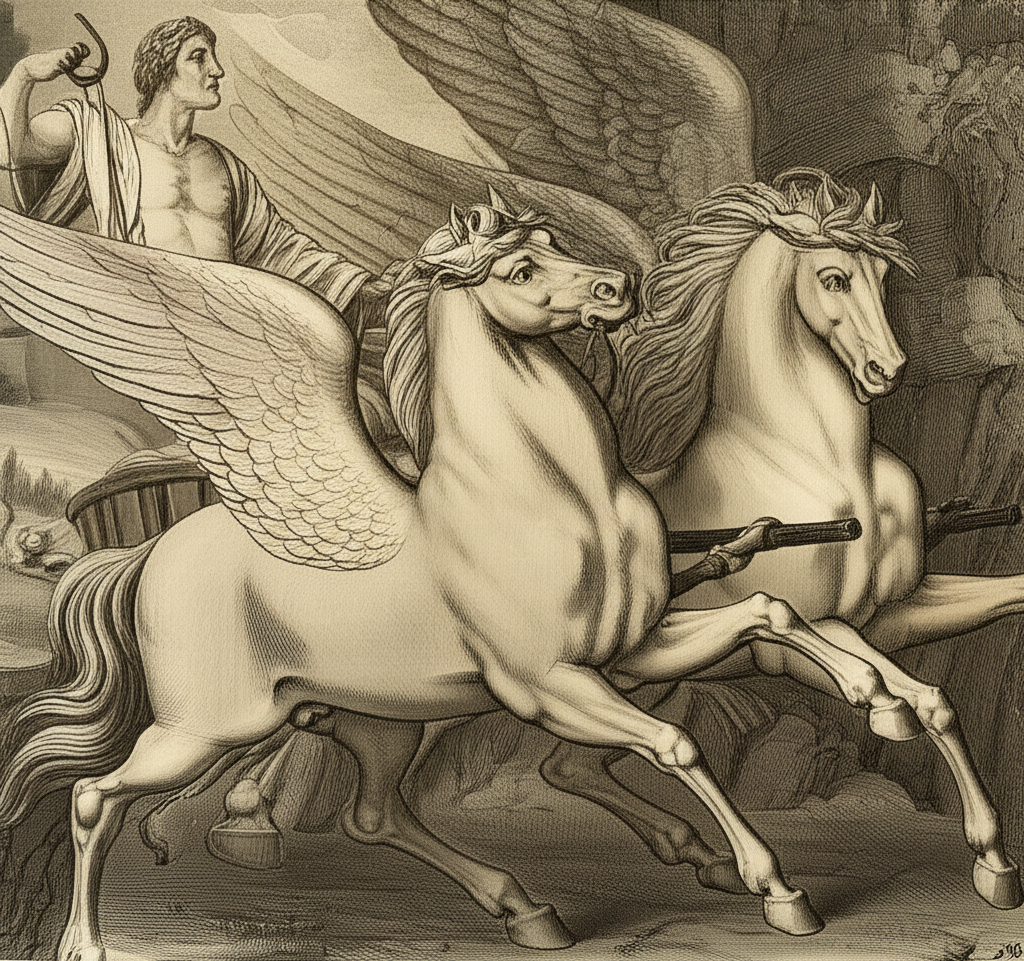 , the other unruly and desiring (Appetite)—across a celestial realm towards the realm of perfect Forms.)
Plato's theory profoundly influenced subsequent philosophical and religious thought, establishing a strong dualistic view of human nature where the Soul is the superior, immortal element, striving to escape the limitations of the material world and reconnect with its divine origin and the true nature of Being.
Aristotle's Empirical Approach: The Soul as Form of the Body
Aristotle (384 – 322 BCE), Plato's most famous student, offered a radically different, more empirically grounded perspective on the Soul. Rejecting his teacher's dualism, Aristotle argued against the Soul's existence independent of the body. For him, the Soul is not a separate entity imprisoned within the body but rather the form or first actuality of a natural body having life potentially.
In his seminal work, De Anima (On the Soul), Aristotle defines the Soul as "the first actuality of a natural body that has life potentially." This means the Soul is what makes a body alive and capable of performing its characteristic functions. It is the organization and function of the body, not a substance distinct from it. Just as the shape of an axe is its form, enabling it to cut, the Soul is the form of the body, enabling it to live, perceive, and think.
Three Types of Soul: A Hierarchy of Being
Aristotle identified a hierarchy of Souls, corresponding to different levels of life and Being:
- Nutritive Soul (Vegetative): Found in plants, animals, and humans. It is responsible for growth, nutrition, and reproduction. It is the most basic form of life.
- Sensitive Soul (Perceptive): Found in animals and humans. It encompasses the functions of the nutritive Soul but also includes sensation (perception), desire, and locomotion.
- Rational Soul (Intellective): Unique to humans. It includes the functions of the nutritive and sensitive Souls but adds the capacity for thought, reason, and abstract understanding. This is the highest form of Soul.
For Aristotle, the Soul is inseparable from the body, just as the form of a statue is inseparable from the material of the statue. When the body perishes, the Soul also perishes, with the possible exception of the "active intellect" which some interpretations suggest might be immortal or divine. His emphasis on the Soul's functions within the natural world grounded the study of Metaphysics in empirical observation, profoundly shaping biology and psychology.
Comparing Plato's and Aristotle's Views on the Soul:
| Feature | Plato's View (e.g., Phaedo, Republic) | Aristotle's View (e.g., De Anima) |
|---|---|---|
| Relationship to Body | Distinct, immortal, and separable from the mortal body; imprisoned within it. | Inseparable from the body; the "form" or "actuality" of a living body. |
| Immortality | Immortal; pre-exists and survives the body; capable of reincarnation. | Generally mortal; perishes with the body, with possible exception for active intellect. |
| Nature | Divine, rational, and immaterial essence; knows the Forms. | The functional organization and capacity for life; not a separate substance. |
| Primary Focus | The Soul's journey, purification, and apprehension of eternal truths. | The Soul's functions (nutrition, sensation, thought) within the natural world. |
| Key Metaphysical Concept | Dualism (Soul vs. Body), Forms, Recollection. | Hylomorphism (matter and form are inseparable), Actuality and Potentiality. |
Hellenistic Elaborations: Stoics, Epicureans, and Skeptics
Following Plato and Aristotle, the Hellenistic schools of Philosophy continued to explore the concept of the Soul, often adapting or reacting to their predecessors' ideas within new ethical and cosmological frameworks.
The Stoic Breath of Life: Pneuma and Logos
The Stoics, founded by Zeno of Citium, viewed the entire cosmos as a living, rational organism permeated by pneuma, a fiery, material breath or spirit, which is a form of the divine logos (reason). The human Soul, for the Stoics, was a fragment of this cosmic pneuma, a material, fiery substance that permeated the body. It was considered the ruling part (hegemonikon), located in the heart, responsible for perception, assent, impulse, and reason. While individual Souls were thought to dissolve back into the cosmic logos at death or during the periodic conflagrations of the universe, their emphasis was on living in accordance with universal reason, making the Soul's rational faculty paramount for ethical conduct and achieving tranquility.
Epicurean Atoms of Mind: Mortality and Pleasure
Epicurus (341 – 270 BCE), building on the atomist theories of Democritus, proposed a thoroughly materialistic view of the Soul. For Epicurus, the Soul was composed of extremely fine, smooth, rapidly moving atoms dispersed throughout the body. These Soul atoms were responsible for sensation and thought. Crucially, the Soul was mortal; when the body died, the Soul's atoms scattered, and sensation ceased. This belief was central to Epicurus's ethical system, which aimed to liberate individuals from the fear of death and the afterlife. Since death meant the complete dissolution of the Soul, there was no conscious experience of death itself, and therefore, nothing to fear. The focus was on achieving ataraxia (freedom from disturbance) and aponia (absence of pain) in this life.
Skeptical Reservations: The Unknowable Soul
The Skeptics, particularly the Pyrrhonists, took a different approach, questioning the very possibility of certain knowledge about the Soul. They argued that since philosophers had offered so many conflicting and unprovable theories about the Soul's nature, immortality, and relationship to the body, it was best to suspend judgment (epoche). This suspension of judgment, they believed, was the path to ataraxia, as it freed one from the disturbance of seeking elusive truths. Their challenge highlighted the deep Metaphysical complexities inherent in the concept of the Soul and the limitations of human reason in fully grasping the essence of Being.
Legacy and Enduring Questions
The ancient philosophical inquiries into the Soul laid the bedrock for nearly all subsequent Western thought on consciousness, personal identity, and the nature of human Being. From the religious doctrines of Christianity, which adopted and adapted Platonic notions of an immortal Soul, to the scientific pursuits of modern psychology and neuroscience, the questions first posed by the ancients continue to resonate.
The debate between the dualistic view of Plato and the hylomorphic view of Aristotle, for instance, continues to echo in contemporary discussions about the mind-body problem. Is consciousness merely an emergent property of complex brain activity, or is there an immaterial aspect to our Being? The ancient philosophers, through their profound engagement with the Soul, compel us to continually re-examine our own understanding of life, death, and the very essence of existence. Their legacy reminds us that the pursuit of Philosophy is, at its heart, an unending quest to comprehend the deepest mysteries of Metaphysics and what it means to be.
Conclusion: The Soul's Echo Through Time
From the animating breath of the Pre-Socratics to Plato's immortal charioteer and Aristotle's functional form, the concept of the Soul has served as a central organizing principle in ancient Philosophy. It was the lens through which thinkers explored the nature of life, consciousness, and the ultimate Being of humanity. These ancient inquiries, meticulously preserved in the Great Books of the Western World, offer not just historical insights but also a timeless framework for understanding the fundamental questions that continue to challenge us. The journey through the ancient Soul is a journey into the origins of our own intellectual heritage, a profound exploration of Metaphysics, and a testament to the enduring human drive to understand ourselves and our place in the cosmos.
📹 Related Video: PLATO ON: The Allegory of the Cave
Video by: The School of Life
💡 Want different videos? Search YouTube for: "Plato's Theory of the Soul Explained"
📹 Related Video: ARISTOTLE ON: The Nicomachean Ethics
Video by: The School of Life
💡 Want different videos? Search YouTube for: "Aristotle De Anima Summary"