

The Enduring Enigma: The Concept of the Soul in Ancient Philosophy
The question of the soul stands as one of the most profound and persistent inquiries in the history of human thought. From the earliest whispers of ancient civilizations to the rigorous debates of classical Greece, the concept of the soul has been central to understanding human nature, morality, and the very fabric of Being. This pillar page embarks on a journey through the foundational ideas of ancient philosophy, exploring how different thinkers grappled with the soul's nature, its origin, its fate, and its place within the broader cosmic order. We will uncover a rich tapestry of perspectives, from the vital breath of the Pre-Socratics to the immortal essence of Plato, the inseparable form of Aristotle, and the atomic particles of the Hellenistic schools, culminating in the transcendent ascent envisioned by Neoplatonism. Understanding these ancient concepts is not merely an academic exercise; it is to engage with the very origins of Western thought on consciousness, identity, and the meaning of existence.
Early Greek Speculations: From Breath to Harmony
Before the systematic inquiries of the classical period, early Greek thinkers, often referred to as Pre-Socratics, offered diverse and often poetic interpretations of the soul. Their ideas laid the groundwork for later, more elaborate theories, linking the soul to fundamental elements and cosmic principles.
- Anaximenes (c. 585–528 BCE): Proposed that air (pneuma) was the primary substance, and just as air gives life to the cosmos, it also constitutes the soul of living beings. The soul, for Anaximenes, was essentially breath, animating the body.
- Heraclitus (c. 535–475 BCE): Believed that fire was the fundamental element, symbolizing change and flux. The soul, for Heraclitus, was also fiery, an ever-changing process, and a dry soul was considered the wisest and best. This tied the soul directly to the rational capacity and Being.
- Pythagoras (c. 570–495 BCE): Introduced the influential idea of the soul's immortality and its transmigration (reincarnation) through various bodies. For Pythagoras, the soul was an immortal entity distinct from the body, capable of purification through intellectual pursuit and a disciplined life, eventually achieving a state of harmony. This notion of the soul's journey and its connection to a higher order began to introduce metaphysical dimensions.
- Empedocles (c. 494–434 BCE): Suggested the soul was composed of the four root elements (earth, air, fire, water), and its journey involved cycles of love and strife, influencing its embodiment.
These early ideas, though varied, commonly linked the soul to the animating principle of life and often hinted at its non-physical or transcendent qualities, setting the stage for more detailed philosophical investigations.
Socrates and Plato: The Immortal and Tripartite Soul
The classical Athenian philosophers, Socrates and his student Plato, dramatically shifted the focus of philosophy towards ethics, knowledge, and the nature of the soul itself, establishing concepts that would resonate for millennia.
Socrates: The Care of the Soul
Socrates (c. 470–399 BCE), as depicted in Plato's dialogues, famously asserted that the unexamined life is not worth living. For Socrates, the paramount concern was the care of the soul (psychē). He believed that the soul was the seat of intelligence and character, and virtue was its proper state. To neglect the soul by focusing solely on bodily pleasures or material wealth was the greatest error. Knowledge, particularly self-knowledge, was essential for the soul's well-being and for achieving a virtuous life. His pursuit of definitions and ethical conduct was fundamentally a metaphysical quest for the true nature of human Being.
Plato: The Soul as the Essence of Being
Plato (c. 428–348 BCE), building on Socratic ideas, developed a comprehensive and highly influential theory of the soul, intricately linked to his theory of Forms and his broader metaphysics. For Plato, the soul was:
-
Immortal and Pre-existent: In dialogues like the Phaedo and Meno, Plato argues that the soul exists before birth and continues after death. Its immortality is demonstrated through arguments such as recollection (anamnesis), where learning is seen as remembering knowledge the soul already possesses from a prior existence.
-
Separate from the Body: The body is a temporary prison or vehicle for the soul. True philosophy is seen as a preparation for death, allowing the soul to escape the distractions of the body and contemplate the eternal Forms.
-
Tripartite: In the Republic, Plato famously divides the soul into three distinct parts, each with its own function:
Part of the Soul Function Virtue Location (Metaphorical) Reason (Logistikon) Seeks truth, rules the soul Wisdom Head Spirit (Thymoeides) Seeks honor, courage, emotion Courage Chest Appetite (Epithymetikon) Seeks bodily desires (food, sex) Moderation Belly/Lower body A just individual, and by extension a just society, is one in which Reason rules the other parts, ensuring harmony and proper function. This internal harmony is crucial for the soul's well-being and its ability to apprehend the Forms, which are the ultimate reality of Being.
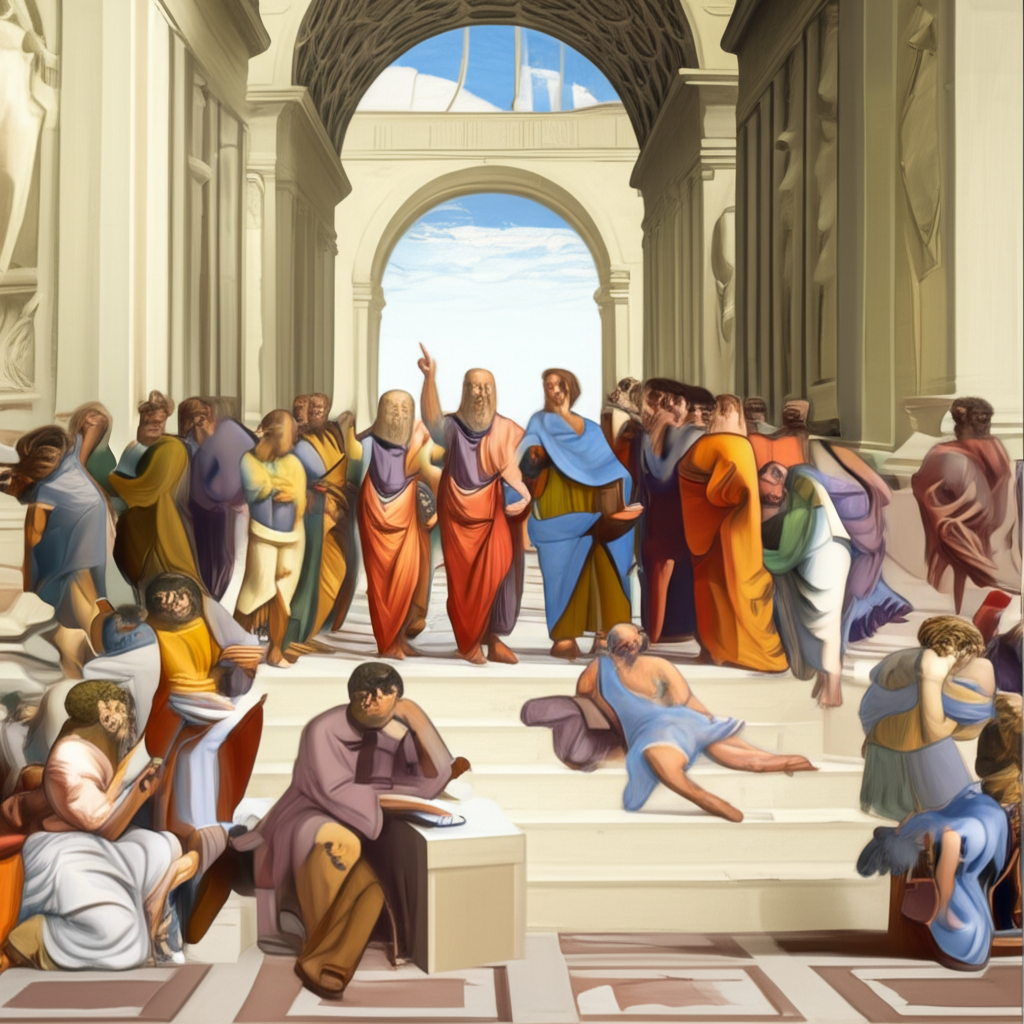
Aristotle: The Soul as the Form of the Body
Aristotle (384–322 BCE), Plato's most famous student, offered a radically different yet equally profound perspective on the soul. Rejecting Plato's dualism, Aristotle sought to understand the soul not as a separate entity, but as an integral aspect of a living organism.
In his seminal work, De Anima (On the Soul), Aristotle defines the soul as "the first actuality of a natural body having life potentially." This definition is crucial:
-
Not a Substance but a Form: The soul is not a distinct substance existing independently of the body, but rather the form or essence of the body. Just as the shape of an axe is its form, enabling it to chop, the soul is the form of a living body, enabling it to live, grow, perceive, and think. It is the organizing principle that makes a body a living organism.
-
Inseparable from the Body: For Aristotle, the soul cannot exist without the body, nor can a body be a living body without a soul. They are two aspects of a single living entity. To speak of a soul without a body is like speaking of the "chop" of an axe without the axe itself.
-
Hierarchy of Souls: Aristotle identified different levels or types of souls, corresponding to the different capacities of living things:
- Nutritive Soul: Possessed by plants. Responsible for growth, nutrition, and reproduction.
- Sensitive Soul: Possessed by animals. Includes the capacities of the nutritive soul, plus sensation, desire, and movement.
- Rational Soul: Possessed by humans. Includes the capacities of the sensitive and nutritive souls, plus the unique ability to reason, think, and deliberate.
While Aristotle generally saw the soul as mortal and inseparable from the body, he did entertain the possibility of a separable "active intellect" within the rational soul, a point of much scholarly debate regarding its implications for individual immortality. His approach firmly grounded the study of the soul within the realm of biology and natural philosophy, profoundly influencing later scientific and metaphysical inquiries into Being.
Hellenistic Schools: Materialism and Cosmic Reason
Following the classical period, Hellenistic philosophy offered diverse views on the soul, often reflecting a greater concern for individual well-being and ethics in a turbulent world.
- Epicureanism: Epicurus (341–270 BCE) and his followers held a materialistic view of the soul. They believed the soul was composed of fine, smooth atoms dispersed throughout the body. These atoms were responsible for sensation and thought. When the body died, the soul atoms dispersed, meaning the soul was mortal and ceased to exist. This view aimed to alleviate the fear of death and divine judgment, promoting a life free from pain and disturbance.
- Stoicism: The Stoics, founded by Zeno of Citium (c. 334–262 BCE), believed that the soul was a part of the universal divine fire or pneuma (a subtle, fiery breath) that permeated the cosmos. It was a fragment of the cosmic reason (Logos) that governed the universe. The human soul, therefore, was rational and capable of aligning itself with cosmic nature. While some Stoics believed the soul might survive the body for a time before rejoining the cosmic Logos, the emphasis was on living virtuously in the present, in accordance with reason and fate.
- Skepticism: Pyrrho of Elis (c. 360–270 BCE) and his followers questioned the possibility of definitive knowledge about the soul or any ultimate reality. They advocated for suspending judgment (epochē) on such matters, leading to a state of tranquility (ataraxia). For Skeptics, the search for a definitive answer about the soul was ultimately fruitless and could lead to distress.
These schools, while differing greatly, illustrate a shift towards more empirically grounded or ethically focused interpretations of the soul, even as they continued to grapple with its metaphysical implications for human Being.
Neoplatonism: The Soul's Ascent to the One
The final significant ancient philosophical tradition to deeply explore the soul was Neoplatonism, primarily articulated by Plotinus (c. 204–270 CE). Neoplatonism was a resurgence and reinterpretation of Plato's philosophy, infused with mystical and spiritual elements.
Plotinus posited a hierarchical emanation of Being from a singular, ineffable source he called The One. From The One emanates the Intellect (Nous), then the World-Soul, and finally individual human souls and the material world.
- The Soul's Origin: Individual souls are emanations from the World-Soul, sharing in its divine nature. They are immortal and inherently good, but they have "fallen" or descended into the material world, becoming entangled with bodies and subject to its imperfections.
- The Soul's Purpose: The ultimate goal of the human soul is to purify itself from material attachments and ascend back to The One through intellectual contemplation, virtue, and mystical experience. This journey involves a progressive detachment from the physical and an increasing identification with the higher hypostases (Intellect, then The One).
- A Bridge to the Divine: Neoplatonism viewed the soul as the crucial intermediary between the intelligible world of Being and the sensible world of becoming. It possesses the capacity to look both upwards towards the divine and downwards towards the material. This metaphysical framework profoundly influenced early Christian theology and later Western thought on the spiritual nature of humanity.
Conclusion: The Enduring Legacy of Ancient Soul Concepts
The ancient philosophical inquiries into the soul laid the indelible groundwork for millennia of Western thought. From the vital breath of the Pre-Socratics to Plato's immortal, tripartite essence, Aristotle's inseparable form, the atomic particles of Epicurus, the cosmic reason of the Stoics, and the transcendent journey envisioned by Plotinus, these thinkers grappled with questions that remain profoundly relevant today.
Their diverse perspectives on the soul forced a deeper examination of human identity, consciousness, morality, and the very nature of reality. The ongoing debates about the mind-body problem, artificial intelligence, and the nature of consciousness owe a profound debt to these ancient foundational inquiries. The ancient philosophers, through their rigorous philosophy and deep metaphysical explorations of Being, bequeathed to us not just answers, but a rich lexicon of concepts and a persistent spirit of inquiry that continues to challenge and inspire. The concept of the soul remains an enduring enigma, a testament to humanity's ceaseless quest for self-understanding.
YouTube Video Suggestions:
-
📹 Related Video: PLATO ON: The Allegory of the Cave
Video by: The School of Life
💡 Want different videos? Search YouTube for: ""Plato's Theory of the Soul Explained""
2. ## 📹 Related Video: ARISTOTLE ON: The Nicomachean Ethics
Video by: The School of Life
💡 Want different videos? Search YouTube for: ""Aristotle De Anima Summary""