

The Enduring Enigma: Unpacking Sin and Moral Judgment
The concepts of sin and moral judgment are not mere relics of ancient dogma; they are foundational pillars upon which much of Western thought, ethics, and societal structure have been built. From the earliest theological pronouncements to the most intricate philosophical treatises, humanity has grappled with the nature of transgression and the mechanisms by which we deem actions, and indeed individuals, as good and evil. This pillar page delves into the multifaceted history and philosophy of sin and judgment, tracing their evolution from religious decree to secular ethical frameworks, and exploring their profound implications for individual conscience and collective morality. As Daniel Fletcher, I invite you to traverse this complex intellectual landscape, drawing insights from the "Great Books of the Western World" to illuminate how these enduring concepts continue to shape our understanding of human nature and our place in the cosmos.
I. The Genesis of Sin: A Historical and Theological Lens
The notion of sin is deeply embedded in the human psyche, often serving as a primary framework for understanding wrongdoing and moral failure. Its origins are largely theological, but its philosophical implications stretch far beyond the confines of religious doctrine.
A. Early Conceptions and Religious Doctrines
In many ancient cultures, actions that disrupted cosmic order or offended divine beings were considered transgressions. However, it is within the Abrahamic traditions that the concept of sin truly crystallizes, becoming a pivotal element of human existence and divine interaction.
- Judaism: Sin (chet) is often understood as missing the mark, an act that deviates from God's commandments. It emphasizes human responsibility and the possibility of repentance and reconciliation. The focus is less on inherent depravity and more on conscious choice.
- Christianity: The concept of original sin, famously articulated by St. Augustine of Hippo in works like Confessions and City of God, posits that humanity inherits a fallen nature from Adam's first disobedience. This inherent inclination towards evil shapes human will and makes salvation through divine grace a necessity. Thomas Aquinas, in his Summa Theologica, further systematized the understanding of sin, categorizing it by its nature (e.g., mortal vs. venial) and its opposition to natural law and God's eternal law.
- Islam: Sin (dhanb, khati'ah) is viewed as a deviation from God's will, but individuals are generally considered born pure, with the capacity for both good and evil. Repentance and seeking forgiveness are central to rectifying sinful acts.
These religious frameworks profoundly influenced the Western understanding of human fallibility, the need for moral guidance, and the ultimate judgment that awaited individuals.
B. Philosophical Interpretations of Transgression
While religion often provides the initial lexicon for sin, philosophy has sought to understand wrongdoing through reason, often independent of divine command.
- Plato: For Plato, as explored in dialogues like The Republic, evil often stems from ignorance. To know the Good is to do the Good; therefore, wrongdoing is a result of a lack of knowledge or a misapprehension of what is truly beneficial for the soul. This suggests that moral failure is less about malevolence and more about intellectual error.
- Aristotle: In Nicomachean Ethics, Aristotle approaches moral transgression not as sin in a theological sense, but as a vice—a deficiency or excess that deviates from the virtuous mean. Actions are judged based on their alignment with reason and their contribution to eudaimonia (flourishing). A person acts wrongly when they fail to exercise practical wisdom (phronesis) in choosing the virtuous path.
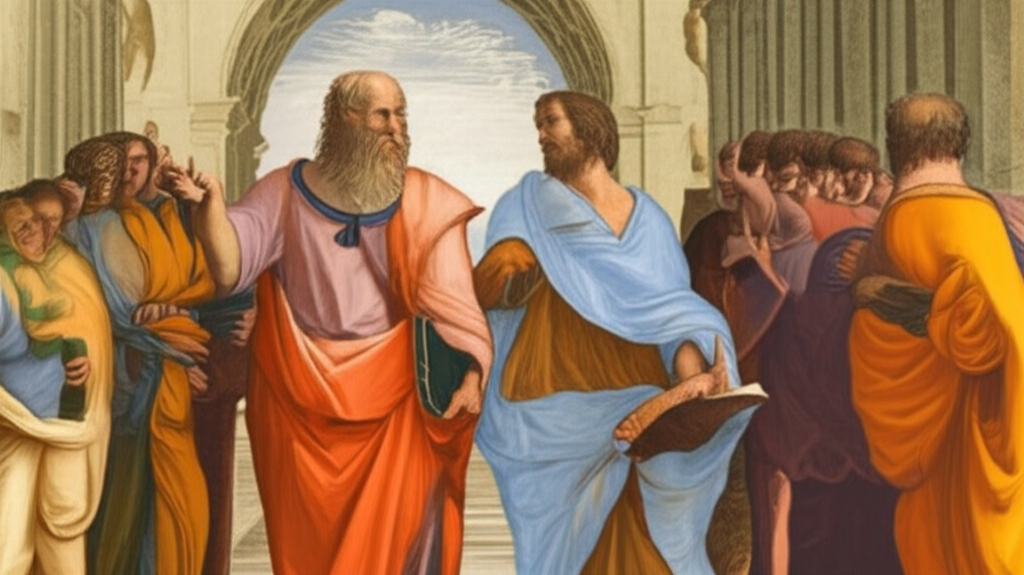
II. Moral Judgment: Navigating Good and Evil
The act of moral judgment is the process by which we evaluate actions, intentions, characters, or even entire systems against a set of ethical standards. It is the mechanism through which we distinguish between good and evil, right and wrong.
A. Foundations of Ethical Thought
Philosophers have proposed various foundations for moral judgment, each offering a distinct lens through which to assess human conduct.
- Virtue Ethics (Aristotle): Judgment here focuses on the character of the moral agent. An action is good if it is performed by a virtuous person acting from a virtuous disposition. The emphasis is on developing moral character traits like courage, justice, and temperance.
- Deontology (Immanuel Kant): Kant, in his Groundwork of the Metaphysics of Morals, argued that moral judgment should be based on duty and universal moral laws. An action is right if it adheres to the categorical imperative—a principle that can be universally applied without contradiction. The intention behind an action is paramount, not its consequences.
- Consequentialism/Utilitarianism (Mill): This approach judges the morality of an action based on its outcomes. An action is good if it produces the greatest good for the greatest number. While not directly from the "Great Books," it's a significant counterpoint to Kantian ethics and is often discussed in conjunction with it.
B. The Role of Conscience and Reason
Central to moral judgment is the internal faculty that guides our ethical decisions: conscience.
- Augustine's Internal Struggle: Augustine's Confessions vividly portrays the internal battle between flesh and spirit, the will's struggle against temptation, and the role of divine grace in illuminating the path to righteousness. Conscience, for Augustine, is deeply tied to God's law and the individual's relationship with the divine.
- Kantian Reason: For Kant, reason is the ultimate arbiter of morality. A rational being, through their own capacity for reason, can discern universal moral laws. Conscience, in this view, is the internal voice of reason, guiding us towards actions that are consistent with our duty.
III. Intersections and Divergences: Sin, Judgment, and Society
The concepts of sin and judgment are not confined to individual introspection; they profoundly influence societal structures, legal systems, and cultural norms.
A. Law, Punishment, and Redemption
Societies have always sought to regulate behavior, often drawing parallels between legal transgressions and moral sin.
- Codification of Morality: Legal systems frequently reflect underlying moral principles. Acts deemed evil or sinful (e.g., murder, theft, perjury) are often codified as crimes, leading to societal judgment and punishment. The purpose of punishment can range from retribution to deterrence, rehabilitation, or societal protection.
- Redemption and Forgiveness: Just as religion offers paths to redemption from sin, societies often provide mechanisms for individuals to atone for their wrongdoings, whether through legal rehabilitation, community service, or public apology. The concept of forgiveness, though difficult, remains a powerful force in both personal and collective healing.
B. Secular Ethics and the Reimagining of Transgression
In an increasingly secular world, the language of sin may seem anachronistic. However, the underlying concerns about wrongdoing, harm, and moral accountability persist, simply re-articulated in secular terms.
- Nietzsche's Critique: Friedrich Nietzsche, particularly in On the Genealogy of Morality, offered a radical critique of traditional moral judgment and the concept of sin. He argued that "good and evil" were not objective truths but rather creations of a "slave morality," designed to control and suppress the strong. He challenged the very foundation of ascetic ideals and traditional notions of guilt and sin.
- Humanism and Harm Principle: Secular ethics often focuses on the "harm principle" (as articulated by John Stuart Mill): actions should be judged based on the harm they cause to others. Transgressions are understood not as sins against a divine being, but as actions that violate human rights, cause suffering, or undermine societal well-being.
- Existentialism and Responsibility: Existentialist thinkers like Jean-Paul Sartre emphasized radical freedom and responsibility. In a world without inherent meaning or divine command, individuals are "condemned to be free" and thus solely responsible for their choices and the values they create. Moral failure, in this context, is a failure to embrace this responsibility or an act of "bad faith."
IV. The Contemporary Relevance: Why These Concepts Still Matter
Despite centuries of philosophical debate and societal evolution, the concepts of sin and moral judgment remain profoundly relevant in the 21st century.
A. Personal Responsibility and Collective Morality
In an era of complex global challenges—from climate change to social inequality—the questions of individual culpability and collective judgment are more pressing than ever. How do we assign responsibility for systemic issues? When does individual action become a sin against future generations or marginalized communities? These questions demand a rigorous ethical framework, whether it draws from ancient wisdom or contemporary thought.
B. The Evolving Landscape of Good and Evil
The boundaries of good and evil are constantly being redefined by scientific advancements, technological innovations, and shifting social norms. Bioethics grapples with the morality of genetic engineering; digital ethics debates the judgment of AI algorithms; and global politics confronts the sin of inaction in the face of humanitarian crises. The philosophical tools developed over millennia, from Plato's pursuit of the Forms to Kant's categorical imperative, provide essential frameworks for navigating these new moral frontiers.
YouTube: The Problem of Evil Philosophy Explained
YouTube: Kant's Categorical Imperative: Crash Course Philosophy #35
Conclusion: The Ongoing Dialogue of Conscience
The journey through the concepts of sin and moral judgment reveals not a static dogma, but a dynamic, evolving intellectual landscape. From the theological pronouncements of Augustine to the rational ethics of Kant and the radical critiques of Nietzsche, philosophers have continuously sought to understand why we err, how we judge, and what it means to live a truly good life. As Daniel Fletcher, I believe that grappling with these fundamental questions is not merely an academic exercise, but a vital endeavor for self-understanding, societal progress, and the ongoing pursuit of justice. The dialogue between religion, philosophy, and human experience continues, forever shaping our understanding of good and evil and the enduring weight of judgment.
📹 Related Video: What is Philosophy?
Video by: The School of Life
💡 Want different videos? Search YouTube for: "The Concept of Sin and Moral Judgment philosophy"