

The Infinite Horizon: God, Eternity, and the Boundless Reach of Theology
Summary: Probing the Divine Limitless
The concept of infinity, a notion that challenges the very limits of human comprehension, finds its most profound and essential application within theology. Far from being a mere mathematical abstraction, infinity, when contemplated through a theological lens, illuminates the fundamental nature of God, the expanse of creation, and the timeless reality of Eternity. This article delves into how the divine is understood as inherently infinite, exploring the attributes of God that necessitate a boundless scope, and how this theological infinity shapes our understanding of existence, purpose, and our place within a cosmos touched by the limitless. Drawing upon the rich intellectual traditions found in the Great Books of the Western World, we shall navigate the philosophical and spiritual dimensions of this most awe-inspiring concept.
Unveiling the Boundless: Infinity at the Heart of Theology
For centuries, philosophers and theologians alike have grappled with the concept of infinity. It is a notion that simultaneously captivates and confounds, stretching the human mind beyond its conventional boundaries. Yet, within the realm of Theology, infinity is not merely an intellectual puzzle; it is an indispensable attribute, a foundational principle upon which the understanding of God and the cosmos rests. To speak of God is, almost invariably, to speak of the infinite.
The very idea of a Supreme Being, the ultimate ground of all existence, necessitates a being without limit. As one might ponder the Metaphysics of Aristotle, distinguishing between potential and actual infinite, theological thought gravitates towards an actual infinite when considering the divine essence. This is not merely an endless quantity but a qualitative boundlessness, a perfection that admits no constraint.
The Divine Infinitude: God as the Unbounded
When we speak of God in a theological context, we are often referring to a being possessed of attributes that are, by their very nature, infinite. These divine perfections are not simply vast; they are without measure or end.
- Omnipotence: God's power is limitless, capable of all things not logically contradictory. There is no task too great, no barrier too formidable for an omnipotent God.
- Omniscience: God's knowledge encompasses all truths, past, present, and future, actual and potential. This knowledge is not acquired but inherent, an infinite understanding.
- Omnipresence: God is present everywhere, at all times, not spatially extended but infinitely encompassing all space and time.
- Goodness and Love: The divine goodness and love are not finite wells but inexhaustible founts, infinitely pouring forth.
These attributes, among others, paint a picture of a God whose essence is Infinity. As figures like Thomas Aquinas, drawing from Aristotelian concepts, articulated in the Summa Theologica, God's simplicity implies a lack of composition, and thus, a lack of potential for limitation or finitude. God is His essence, and that essence is infinite perfection.
Eternity: The Timeless Dimension of Infinite Being
Beyond the quantitative and qualitative aspects of divine infinity, theology introduces the profound concept of Eternity. This is not merely endless duration, like an infinite line stretching forward and backward in time, but rather a state of timelessness, an infinite present. As Augustine so eloquently explored in his Confessions, God exists outside of time, creating time itself.
Distinguishing Time and Eternity:
| Aspect | Temporal Existence (Created) | Eternal Existence (Divine) |
|---|---|---|
| Nature | Successive, measured by change, has a beginning and end. | Simultaneous, immutable, outside of succession. |
| Duration | Finite or potentially endless duration (e.g., an immortal soul). | Infinite, a singular, complete, and perfect possession of being. |
| Relation to God | Created by God; God acts in time from our perspective. | God is Eternity; all time is present to God simultaneously. |
Eternity, therefore, is a specific manifestation of infinite being – an infinite present where past, present, and future are held in an indivisible unity. This understanding of Eternity is crucial for comprehending divine providence, foreknowledge, and the unchanging nature of God's character.
The Cosmos and the Infinite Creator
The relationship between the finite universe and an infinite God is another cornerstone of theological inquiry. Whether the universe itself is spatially or temporally infinite (a concept debated by ancient Greeks and modern cosmologists alike) is less critical than the understanding that its very existence is contingent upon an infinite Creator. The act of creation ex nihilo (from nothing) by an infinite being demonstrates a power and wisdom beyond all bounds. The universe, no matter its scale, is a finite expression of an infinite divine will.
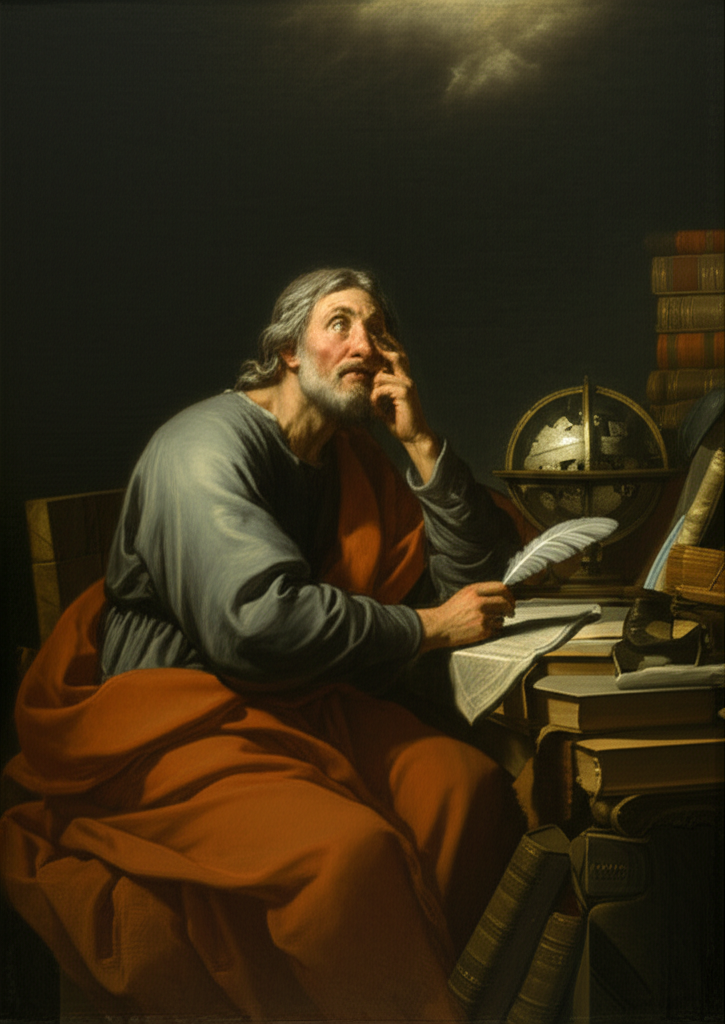
Humanity's Aspiration Towards the Infinite
The theological concept of infinity is not merely an abstract doctrine; it deeply impacts human experience and aspiration. Our innate longing for meaning, for justice, for love, often points towards an infinite source that cannot be fully satisfied by finite things. This yearning, this eros for the divine, suggests an inherent connection between the human spirit and the boundless nature of its Creator. It invites us to consider our own potential for growth, our capacity for understanding, and the ultimate destiny of the soul in relation to an infinite God.
Conclusion: The Enduring Mystery of the Unbounded
The concept of Infinity in Theology remains one of the most compelling and essential aspects of religious thought. It frames our understanding of God as a being without limit in power, knowledge, and presence, and defines Eternity not as endless time but as a timeless, infinite present. This boundless reality, articulated and explored through the ages by minds found within the Great Books of the Western World, continues to challenge our intellect and inspire our spirits, reminding us of the profound mystery at the heart of existence. To contemplate the infinite is, in essence, to draw closer to the divine.
📹 Related Video: ARISTOTLE ON: The Nicomachean Ethics
Video by: The School of Life
💡 Want different videos? Search YouTube for: ""Aquinas God's Infinity" or "Augustine on Time and Eternity""