

The Unfathomable Horizon: Infinity in Theological Thought
The concept of infinity stands as one of humanity's most profound intellectual challenges, finding its ultimate and most compelling expression within the realm of theology. Far from being a mere mathematical abstraction, infinity, when applied to God, transforms our understanding of divine attributes, eternity, and the very nature of existence. This article explores how theological traditions, drawing heavily from the foundational texts of the Great Books of the Western World, have grappled with the boundless nature of the divine, presenting infinity not just as an absence of limit, but as the essence of divine perfection and being.
The Divine Calculus: Defining Infinity Beyond Mere Numbers
At its core, infinity refers to that which is without limit, end, or measure. In mathematics, it denotes a quantity greater than any finite number; in philosophy, it can describe an endless series or an unbounded space. However, in theology, the concept takes on a far richer, qualitative dimension. When we speak of God's infinity, we are not merely suggesting an endlessly extended being, but rather a being whose perfections are absolute and without any conceivable boundary. This theological understanding distinguishes divine infinity from purely quantitative or spatial notions, grounding it in the very essence of God's being.
Key Facets of Theological Infinity:
- Qualitative Perfection: God is infinitely good, wise, powerful, and loving. There is no limit to these attributes.
- Absolute Being: God's existence is not contingent or dependent; it is self-sufficient and boundless.
- Transcendence: God infinitely surpasses all created reality, existing beyond the constraints of the cosmos.
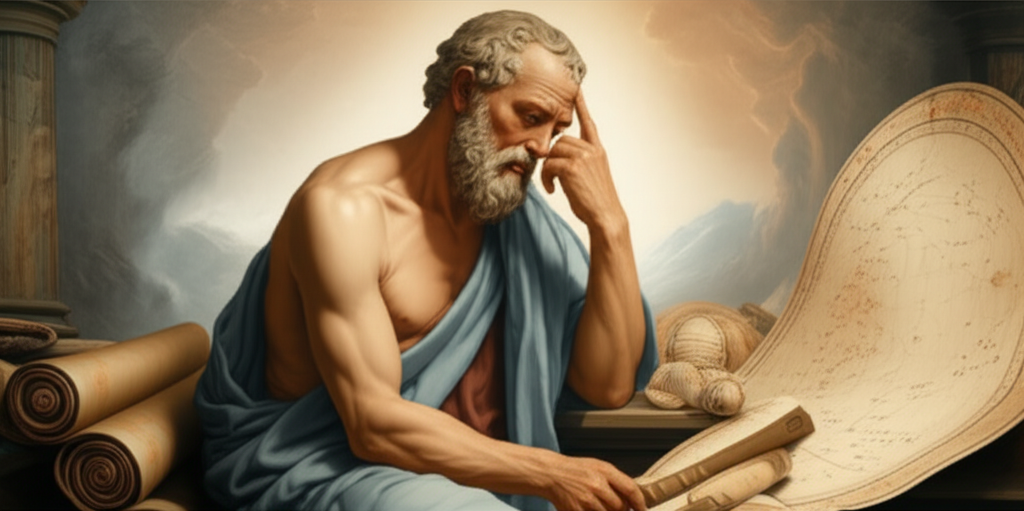
God as the Infinite Being: Attributes of Boundless Perfection
The Great Books of the Western World frequently present God, or the ultimate reality, as possessing attributes that inherently imply infinity. Thinkers from Plato and Aristotle, with their concepts of the Form of the Good or the Unmoved Mover, laid philosophical groundwork that later theological traditions would build upon. For Christian theologians like Augustine and Aquinas, God's infinity became central to defining His nature.
Divine Attributes and Their Infinite Nature:
| Attribute | Description | Implication of Infinity |
|---|---|---|
| Omnipotence | All-powerful; capable of doing all things logically possible. | God's power has no limit or boundary. |
| Omniscience | All-knowing; possesses perfect knowledge of all things past, present, future. | God's knowledge is exhaustive and limitless. |
| Omnipresence | Present everywhere at all times. | God's presence is boundless, not confined by space or location. |
| Omnibenevolence | All-good; perfectly benevolent and loving. | God's goodness and love are inexhaustible and without flaw. |
| Immutability | Unchanging; constant and eternal in nature. | God's being is not subject to change or degradation over infinite time. |
St. Augustine, in his Confessions, frequently meditates on God's timeless and boundless nature, acknowledging that human language and temporal experience struggle to grasp such an entity. He writes of God as "ever ancient, ever new," a profound statement on divine eternity that transcends mere temporal succession.
Eternity: Infinity in the Dimension of Time
The concept of eternity is inextricably linked with infinity in theology. Often, eternity is mistakenly understood as simply endless duration – time stretching on forever. However, a deeper theological understanding, particularly evident in the works of Boethius and Thomas Aquinas, posits eternity as a state outside of time altogether.
Aquinas, drawing from Boethius's definition in The Consolation of Philosophy, describes eternity as "the simultaneous and complete possession of everlasting life." This is not an infinite series of moments, but rather a single, indivisible "now" that encompasses all time without being subject to its passage. God's existence is therefore infinitely beyond temporal succession; He simply is. This timelessness is a qualitative infinity, signifying a perfection that transcends the limitations of beginning, middle, and end.
- God's Aseity: God's existence is from Himself, not derived or dependent. This self-sufficiency is an infinite perfection.
- Creator of Time: As the creator, God must exist prior to and independent of time, thus inhabiting eternity.
The Unknowable Infinite: Apophatic Theology and Human Limitation
While theology asserts God's infinity, it also acknowledges the inherent limitations of finite human minds in fully comprehending such a concept. This leads to a tradition known as apophatic theology or negative theology, which attempts to describe God by stating what He is not, rather than what He is. By saying God is infinite, we are saying He is not finite, not limited, not bounded. This approach respects the transcendent otherness of the divine, recognizing that any positive human description inevitably falls short of the boundless reality of God.
The paradox of the infinite God is that while He is the ultimate ground of all being and accessible through faith, His essence remains an unfathomable mystery. This mystery is not a defect but a testament to His truly infinite nature, inviting continuous contemplation and worship rather than complete intellectual mastery.
Conclusion: The Enduring Significance of Divine Infinity
The concept of infinity in theology is far more than a philosophical exercise; it is fundamental to understanding the nature of God, the scope of His power, and the profound mystery of His eternity. From the ancient philosophical inquiries of the Great Books of the Western World to the systematic theologies of the medieval era and beyond, the boundless nature of the divine has consistently challenged and enriched human thought. To contemplate God as infinite is to confront the ultimate reality, a being whose perfections know no limits, whose existence transcends all time, and whose essence remains the eternal horizon of human understanding.
YouTube Video Suggestions:
- "Aquinas on God's Eternity"
- "The Problem of Infinity in Philosophy and Theology"
📹 Related Video: What is Philosophy?
Video by: The School of Life
💡 Want different videos? Search YouTube for: "The Concept of Infinity in Theology philosophy"