

The Boundless Horizon: Exploring Infinity in Theological Thought
The concept of infinity stands as a cornerstone in theological discourse, fundamentally shaping our understanding of God, divine attributes, and the nature of ultimate reality. Far from a mere mathematical abstraction, theological infinity describes the boundless perfection, power, knowledge, and presence of God, inextricably linked to the notion of Eternity. This exploration delves into how the infinite defines the divine, offering a profound lens through which to comprehend the transcendent and immanent aspects of the sacred.
From the earliest stirrings of philosophical inquiry to the grand systematic treatises of scholasticism, humanity has grappled with the notion of the boundless. Yet, nowhere does this concept resonate with such profound weight and mystery as in Theology. When we speak of God, we invariably invoke Infinity—not merely as an absence of end, but as a fullness beyond measure, a perfection without limit. This journey into the infinite, a concept explored by the greatest minds within the Great Books of the Western World, reveals not just an intellectual puzzle, but a spiritual horizon.
The Divine Attribute of Infinity: God Without Measure
At the very heart of theological understanding lies the conviction that God is infinite. This is not a casual descriptor but a foundational attribute, asserting that God possesses all perfections without any limitation whatsoever. When theologians speak of God's omnipotence, omniscience, omnipresence, or supreme goodness, they are, in essence, articulating various facets of divine Infinity.
- Omnipotence: God's power is boundless, capable of all things logically possible. There is no external force or internal weakness that can constrain the divine will.
- Omniscience: God's knowledge is complete, encompassing all past, present, and future events, as well as all possibilities. There is no truth hidden from the divine intellect.
- Omnipresence: God's presence pervades all creation, transcending spatial limitations. God is everywhere, yet nowhere in a localized sense.
- Perfect Goodness: God's goodness is absolute and inexhaustible, the very source and standard of all moral value.
This understanding traces back through figures like Augustine and Aquinas, who, drawing from Hellenic philosophy, sought to define the ultimate reality in terms of pure actuality and unconditioned being. An uncaused cause, an unmoved mover, must by its very nature be utterly complete and self-sufficient—that is, infinite.
Infinity Beyond Quantity: A Qualitative Boundlessness
It is crucial to distinguish the theological concept of Infinity from its mathematical counterpart. While mathematics might concern itself with endless sequences or infinitely divisible spaces, theological infinity speaks to a qualitative boundlessness, a perfection that transcends mere quantity.
Table 1: Mathematical vs. Theological Infinity
| Aspect | Mathematical Infinity | Theological Infinity |
|---|---|---|
| Nature | Quantitative (endless numbers, sizes, durations) | Qualitative (absolute perfection, completeness, essence) |
| Focus | Extension, countability, limits of measurement | Intrinsic nature, being, attributes |
| Implication | Can be partitioned, approached, or contained | Indivisible, unapproachable in its totality, transcendent |
| Example | The set of natural numbers, an infinite series | God's absolute goodness, infinite power |
For theologians, God's infinity is not simply that God has a lot of power, but that God's power is power itself, perfectly and without limit. It is an intensive, not merely extensive, boundlessness. This perspective elevates infinity from a concept of 'more and more' to one of 'absolute being' and 'ultimate reality'.
Eternity: The Infinite Now
Closely intertwined with the concept of God's general Infinity is the specific attribute of Eternity. Often misunderstood as simply "time without end," classical theology, particularly influenced by Boethius in The Consolation of Philosophy, defines Eternity as "the complete, simultaneous and perfect possession of everlasting life."
This is not an endless succession of moments but rather a timeless present, an "infinite now" where past, present, and future are held in a single, unmoving grasp.
- Timelessness: God exists outside of time, not bound by its sequence or passage.
- Immutability: God does not change, as change implies a movement through time from one state to another.
- Omniscience (Revisited): This eternal perspective is what allows God to know all things simultaneously, as they are eternally present to the divine mind.
This profound understanding of Eternity underscores God's absolute transcendence and separateness from the created order, which is inherently temporal and finite. It is a concept that stretches the very limits of human comprehension, inviting us to contemplate a mode of existence utterly unlike our own.
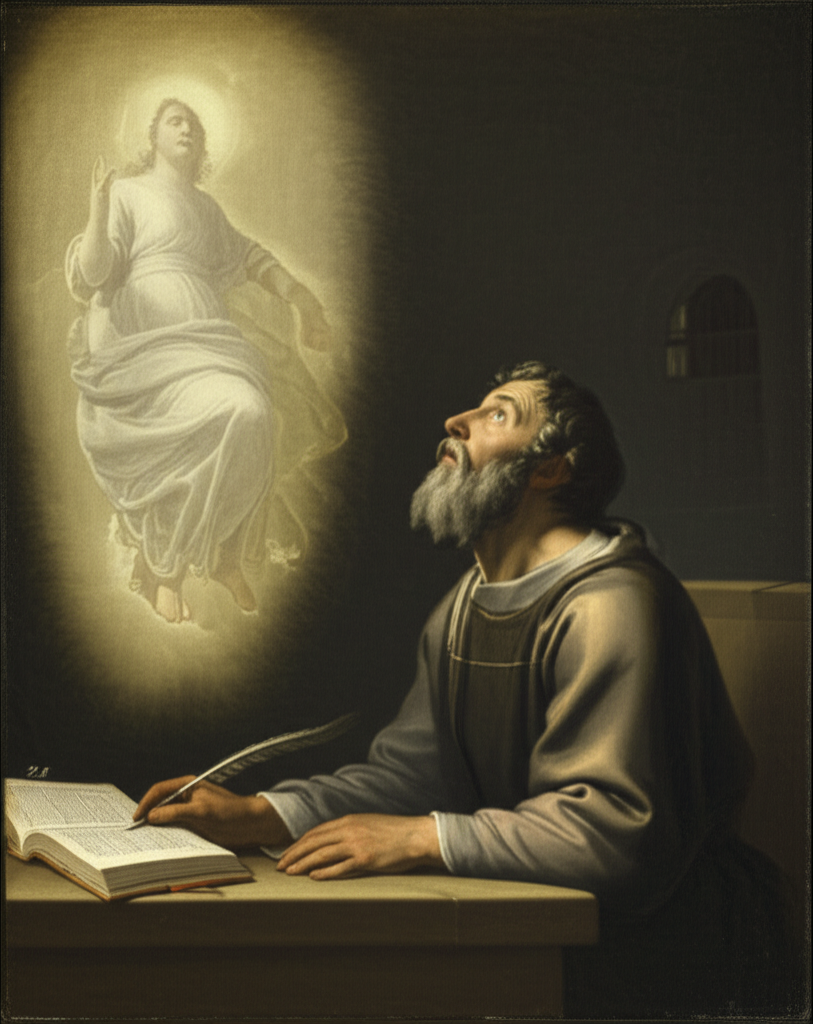
The Human Encounter with the Infinite
Our finite minds struggle to fully grasp Infinity. Yet, it is precisely this struggle that forms a crucial part of our theological and spiritual journey. The contemplation of God's Infinity evokes awe, humility, and a profound sense of wonder. It reminds us of the vast chasm between the Creator and creation, while simultaneously inviting us into a relationship with a being whose love, wisdom, and power are without limit.
Philosophers and mystics throughout history have pointed to moments where the finite human spirit brushes against the boundless, whether in the majesty of nature, the depths of moral conscience, or the yearning for ultimate meaning. These experiences, however fleeting, hint at the reality that Theology attempts to articulate systematically: that our existence is rooted in, and finds its ultimate purpose within, the Infinite reality of God.
YouTube Video Suggestions:
-
📹 Related Video: What is Philosophy?
Video by: The School of Life
💡 Want different videos? Search YouTube for: ""Boethius Consolation of Philosophy Eternity""
2. ## 📹 Related Video: PLATO ON: The Allegory of the Cave
Video by: The School of Life
💡 Want different videos? Search YouTube for: ""Aquinas Five Ways God Infinity""
Conclusion:
The concept of Infinity is not a peripheral detail but the very bedrock of Theology. It defines the essence of God, underpins the attributes of divine power, knowledge, and goodness, and provides the framework for understanding Eternity as a timeless, perfect existence. While our human minds may only ever glimpse fragments of this boundless reality, the pursuit of its understanding continues to inspire, challenge, and elevate our conception of the sacred, encouraging us to gaze beyond the finite horizons of our world toward the ultimate source of all being.