

Navigating the Moral Compass: The Enduring Quest for Good and Evil
The concepts of Good and Evil stand as the bedrock of any moral system, serving as the fundamental poles around which human action, judgment, and societal structures revolve. From ancient philosophical inquiries to theological doctrines and modern ethical frameworks, humanity has grappled with defining what is inherently right or wrong, commendable or reprehensible. This journey isn't merely academic; it's a deeply personal and collective endeavor to understand our place in the world, the choices we make, and the kind of beings we aspire to be. Exploring these concepts reveals the diverse ways different traditions have sought to guide human conduct, whether through the cultivation of character, adherence to divine commands, or the fulfillment of rational obligations.
The Ancient Pursuit: Virtue and Vice as the Path to Goodness
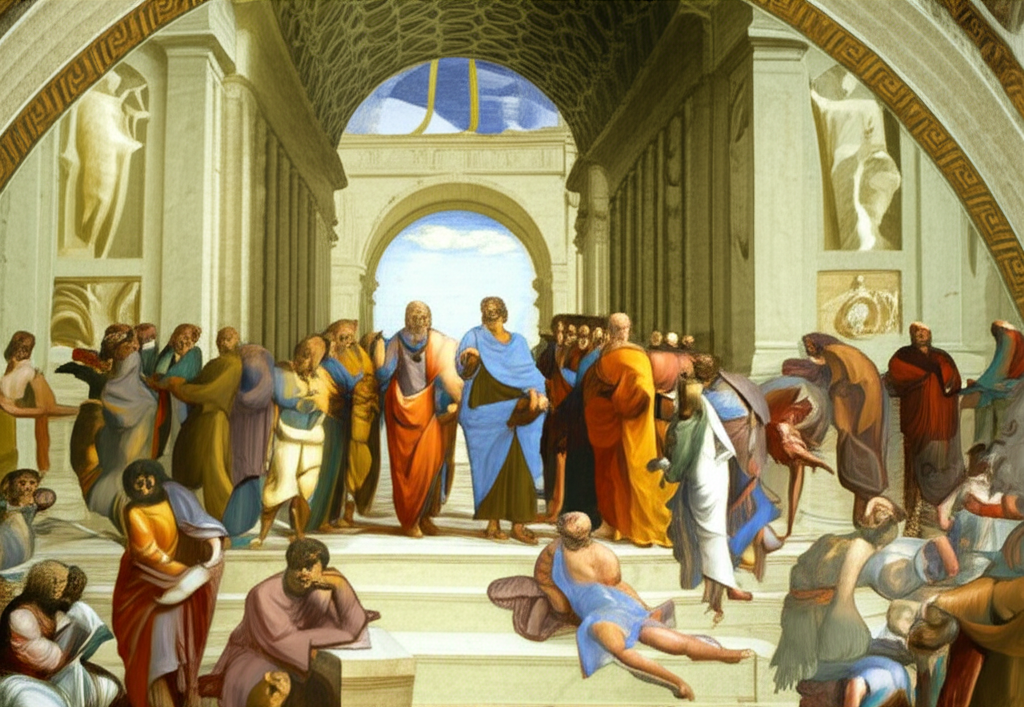
Long before codified laws, early philosophers wrestled with the nature of Good and Evil through the lens of human character. For thinkers like Plato and Aristotle, as illuminated in the Great Books of the Western World, the essence of goodness wasn't merely in isolated actions, but in the cultivation of an excellent soul.
- Plato's Ideal Forms: In works like The Republic, Plato posited the existence of an ultimate Form of the Good, an objective and eternal standard from which all particular goods derive their goodness. To live a good life, for Plato, was to align oneself with this ultimate Good through reason and justice, ensuring harmony within the soul and the state.
- Aristotle and Eudaimonia: Aristotle, in his Nicomachean Ethics, shifted the focus to practical living. He argued that the ultimate Good for humans is eudaimonia, often translated as flourishing or living well. This state is achieved through the development of Virtues – character traits like courage, temperance, justice, and wisdom – which represent a "golden mean" between two extremes of Vice. For Aristotle, Evil or badness stemmed from a deficiency or excess of these virtues, leading to a life that falls short of its full potential.
| Concept | Description | Example |
|---|---|---|
| Virtue | A moral excellence; a habit of character leading to right action. | Courage (between cowardice and recklessness) |
| Vice | A moral failing; a habit of character leading to wrong action. | Cowardice (deficiency of courage) |
| The Good | The ultimate aim of human life; flourishing (eudaimonia). | Living a life of purpose, reason, and moral excellence |
The Divine Imperative: Sin, Duty, and the Sacred Law
With the rise of monotheistic religions, the understanding of Good and Evil often became intrinsically linked to divine will and revelation. Here, the concepts of Sin and Duty took on profound significance.
Sin and the Breaking of Divine Command
For figures like St. Augustine and St. Thomas Aquinas, whose writings are foundational in the Great Books, Evil was often understood as a privation of Good, a turning away from God.
- Augustine's Problem of Evil: Augustine grappled with how Evil could exist in a world created by an all-good God. He concluded that Evil is not a substance but a corruption of the Good, arising from free will. Sin, then, is the willful transgression against God's law, a choice that distances humanity from its divine purpose and ultimate Good.
- Aquinas and Natural Law: Aquinas, building on Aristotle, integrated Christian theology with philosophical reason. He argued that Good is that which accords with our rational nature and divine law, which is often discoverable through natural reason (natural law). Sin is a deviation from this natural order, a failure to act in accordance with reason and God's will.
Duty and the Categorical Imperative
Later, during the Enlightenment, philosophers like Immanuel Kant sought to ground morality in pure reason, independent of divine command or personal inclination. For Kant, the concept of Duty became paramount.
- Moral Law from Reason: In his Groundwork of the Metaphysics of Morals, Kant argued that true moral actions are not done out of desire or fear, but solely out of Duty to the moral law. This moral law is expressed through the Categorical Imperative – a universal principle that demands we act only according to maxims that we could rationally will to become universal laws.
- Good Will: For Kant, the only thing that is Good without qualification is a Good will. A will is Good when it acts purely from Duty, respecting the inherent dignity and rationality of all persons. Actions that violate this Duty, or treat others merely as means to an end, are inherently Evil or immoral, regardless of their consequences.
The Ongoing Dialogue: Relativity vs. Objectivity
The quest to define Good and Evil remains a vibrant and contested field. While some traditions, particularly those rooted in divine revelation or Platonic ideals, argue for an objective, universal standard of Good and Evil, others lean towards relativism, suggesting that these concepts are culturally, historically, or individually constructed.
The tension between these perspectives fuels much of contemporary ethical debate:
- Moral Objectivism: The belief that certain actions are inherently right or wrong, regardless of human opinion or cultural context. This often draws from rational principles (like Kant's Duty) or divine commands (Sin).
- Moral Relativism: The belief that moral truths are not absolute but are relative to particular cultures, societies, or individuals. What is considered Good in one context might be Evil in another.
Understanding these different frameworks helps us appreciate the complexity inherent in moral decision-making and the profound philosophical legacy that informs our modern ethical landscape. The journey through the Great Books of the Western World reveals that while the answers may vary, the fundamental human impulse to distinguish between Good and Evil is an enduring and vital part of our shared intellectual heritage.
📹 Related Video: ARISTOTLE ON: The Nicomachean Ethics
Video by: The School of Life
💡 Want different videos? Search YouTube for: ""Kantian Ethics Explained""
📹 Related Video: ARISTOTLE ON: The Nicomachean Ethics
Video by: The School of Life
💡 Want different videos? Search YouTube for: ""Aristotle Virtue Ethics Summary""