

Navigating the Labyrinth: The Concept of Good and Evil in Moral Systems
The concepts of Good and Evil are arguably the most fundamental and vexing questions in philosophy, underpinning every moral system humanity has ever conceived. From ancient philosophical inquiries into human flourishing to theological doctrines of divine command, and from Enlightenment reason to contemporary ethical dilemmas, our understanding of what constitutes "good" action and "evil" intent shapes our societies, laws, and personal lives. This article will explore the multifaceted nature of Good and Evil, tracing its evolution through various philosophical traditions, examining key concepts like Virtue and Vice, Duty, and Sin, and ultimately reflecting on the enduring challenge of defining these elusive moral poles.
The Enduring Inquiry: Defining Moral Poles
For millennia, thinkers have wrestled with the nature of Good and Evil. Is good an objective reality, perhaps a divine command or a universal principle discoverable by reason? Or is it a subjective construct, born of cultural norms, personal preference, or even an evolutionary imperative? The answers to these questions profoundly influence how we perceive our moral obligations and the very fabric of our ethical frameworks.
Ancient Roots: Virtue, Happiness, and the Good Life
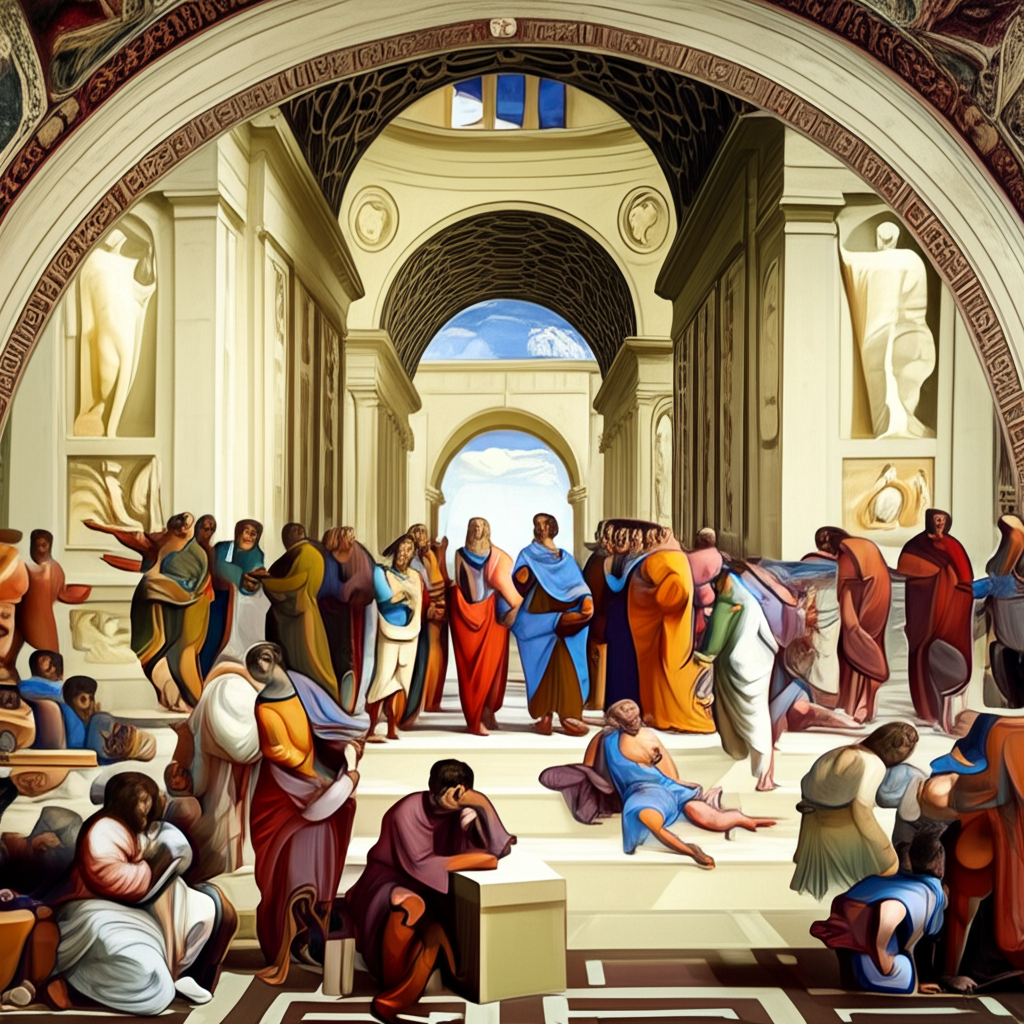
Our journey into Good and Evil often begins with the ancient Greeks, particularly with figures like Plato and Aristotle, whose works form cornerstones of the Great Books of the Western World.
- Plato's Form of the Good: In his Republic, Plato posits the existence of a transcendent "Form of the Good," the ultimate source of all truth, beauty, and moral value. For Plato, understanding this Good is essential for true knowledge and for living a just life, both individually and within the state. Evil, in this view, is often seen as a privation or a departure from this ultimate Good, a form of ignorance or disorder.
- Aristotle's Virtue Ethics: Aristotle, in his Nicomachean Ethics, offers a more practical, human-centered approach. He argues that the ultimate Good for human beings is eudaimonia, often translated as flourishing or living well. Achieving eudaimonia is not about following abstract rules but about cultivating Virtues – character traits like courage, temperance, and justice – through habit and practice. Vices, conversely, are character flaws that detract from flourishing, representing either an excess or a deficiency of a particular trait. For Aristotle, understanding the "golden mean" between these extremes is crucial for ethical living.
The Divine Command: Sin and the Sacred Law
With the advent of Abrahamic religions (Judaism, Christianity, Islam), the concept of Good and Evil took on a distinct theological dimension. Here, Good is often equated with obedience to God's will and divine law, while Evil is understood as Sin – a transgression against these sacred commands.
- Augustine and the Problem of Evil: St. Augustine, a pivotal figure in Christian philosophy, grappled extensively with the problem of evil in his Confessions. He argued that evil is not a substance but a privation of good, a turning away from God. Human free will, while granting us the capacity for good, also allows for the choice of Sin, leading to moral failings.
- Divine Revelation and Moral Precepts: In this framework, moral systems are often derived from sacred texts and interpreted by religious authorities. The concept of Duty here is often understood as a moral obligation to God, with actions being judged good or evil based on their adherence to divinely ordained precepts.
The Age of Reason: Duty, Autonomy, and Universal Law
The Enlightenment brought a shift from divine command to human reason as the primary source of moral authority. Immanuel Kant, another giant among the Great Books authors, profoundly reshaped the discourse on Duty and moral obligation.
- Kant's Deontology: For Kant, the moral worth of an action lies not in its consequences (as utilitarians would argue) but in the intention behind it, specifically whether it is performed out of a sense of Duty. His famous Categorical Imperative provides a test for moral actions: "Act only according to that maxim whereby you can at the same time will that it should become a universal law." Good actions are those performed from a good will, in accordance with universalizable moral laws, while Evil actions violate these rational imperatives. Kant emphasizes human autonomy – our capacity to act according to laws we give ourselves – as central to moral agency.
Revaluations and Relativism: Challenging the Foundations
The 19th and 20th centuries saw significant challenges to traditional notions of Good and Evil. Philosophers like Friedrich Nietzsche questioned the very origins and utility of these concepts.
- Nietzsche's Genealogy of Morality: Nietzsche, in works like On the Genealogy of Morality, argued that Good and Evil are not timeless, universal truths, but rather historical constructs. He distinguished between "master morality" (where "good" is noble, strong, and powerful) and "slave morality" (where "good" is humility, compassion, and patience, often arising from resentment of the powerful). For Nietzsche, traditional concepts of Good and Evil had become life-denying, and he called for a "revaluation of all values."
A Comparative Look at Moral Systems
To illustrate the diverse approaches to Good and Evil, consider this simplified comparison:
| Moral System | Primary Focus | Concept of Good | Concept of Evil | Key Concept Highlighted |
|---|---|---|---|---|
| Virtue Ethics | Character and moral development | Cultivating Virtues leading to human flourishing | Vices, character flaws, lack of balance | Virtue and Vice |
| Deontology | Moral Duty and universal rules | Acting from a good will, obeying universal moral laws | Violating moral Duty, acting on non-universalizable maxims | Duty |
| Divine Command | Obedience to God's will and divine law | Adherence to sacred commands, pleasing God | Sin, transgression against divine law, disobedience | Sin |
| Consequentialism | Outcomes and consequences of actions | Actions that produce the greatest good for the greatest number | Actions that cause harm or negative outcomes | (Implied Good/Evil) |
The Ongoing Dialogue
The concepts of Good and Evil are not static. They are continually re-evaluated in light of new knowledge, cultural shifts, and evolving human experiences. Whether we approach them through the lens of ancient Virtues, Kantian Duty, the theological understanding of Sin, or modern philosophical critiques, the quest to define and navigate these moral poles remains central to our human condition. Understanding their historical and philosophical evolution helps us engage more deeply with our own moral responsibilities and the complex ethical challenges of our time.
Further Philosophical Exploration:
-
📹 Related Video: PLATO ON: The Allegory of the Cave
Video by: The School of Life
💡 Want different videos? Search YouTube for: "Plato Form of the Good Explained"
-
📹 Related Video: KANT ON: What is Enlightenment?
Video by: The School of Life
💡 Want different videos? Search YouTube for: "Kant Categorical Imperative Explained"