

Unraveling the Divine Blueprint: The Enduring Concept of God's Will
The concept of God's Will stands as a monumental pillar in the architecture of philosophy and theology, shaping our understanding of creation, morality, human freedom, and the very nature of existence. Far from a monolithic idea, it has evolved through millennia, inviting profound contemplation from ancient cosmologists to modern existentialists. At its core, God's Will refers to the active, purposeful determination of a divine being – often understood as the ultimate cause and guiding principle behind all that is. This pillar page embarks on a journey through the intellectual landscape of Western thought, exploring how thinkers have grappled with the intricacies of divine volition, its implications for human life, and the persistent questions it poses about the universe and our place within it.
From Cosmos to Command: Early Conceptions of Divine Volition
Before the advent of monotheistic religions, the idea of a divine will often manifested as an impersonal cosmic order or an inherent rationality governing the universe. Ancient Greek philosophy, a foundational wellspring for the Great Books of the Western World, offers diverse perspectives on this proto-will.
The Immutable Order of the Cosmos
- Pre-Socratics: Thinkers like Heraclitus spoke of the Logos, an eternal, universal reason or principle that orders all things, a kind of inherent divine logic rather than a personal will. This cosmic intelligence dictates the flow and change of the universe, acting as its fundamental cause.
- Plato: In dialogues such as the Timaeus, Plato introduces the Demiurge, a divine craftsman who, out of goodness and a desire to bring order from chaos, fashions the sensible world by looking to the eternal Forms. While not a personal God in the Abrahamic sense, the Demiurge's benevolent intention and ordering activity can be seen as an early philosophical analogue to divine will as a creative and ordering principle. His will is to impose reason and harmony.
- Aristotle: Aristotle's Prime Mover, as described in his Metaphysics, is the ultimate cause of all motion and change in the universe. It moves everything not by active will or command, but as a final cause – an object of desire or love. The Prime Mover is pure actuality, thinking only of itself, yet its perfect existence draws all things towards it, initiating the chain of being and motion. This is a form of divine influence, though distinct from volitional command.
- Stoicism: The Stoics posited an immanent divine reason, the Logos, which permeates and governs the entire cosmos. This Logos is fate, providence, and the very will of the universe. For the Stoics, everything happens according to this divine plan, making acceptance of one's destiny a cardinal virtue. Here, divine will is synonymous with the unyielding laws of nature.
Theology's Cornerstone: God's Will in Abrahamic Traditions
With the rise of monotheistic religions – Judaism, Christianity, and Islam – the concept of God's Will takes on a profoundly personal and volitional character. God is no longer merely an abstract principle or a detached craftsman, but an active, conscious agent whose Will is the ultimate source of creation, morality, and salvation.
The Sovereign Decree and Divine Providence
- Augustine of Hippo: A pivotal figure in Christian theology, Augustine, particularly in works like Confessions and City of God, emphasizes God's omnipotent and benevolent Will as the fount of all being. For Augustine, God's Will is the cause of creation ex nihilo, the foundation of moral law, and the guiding hand of providence. He grappled extensively with the problem of evil, reconciling it with a perfectly good and powerful divine Will, often concluding that even evil is permitted by God's Will for a greater, inscrutable good, or that it is a privation of good, not a positive creation. The tension between divine foreknowledge and human free will was a central concern.
- Thomas Aquinas: Building upon Aristotelian philosophy, Aquinas, in his Summa Theologica, provides a systematic exposition of God's Will. He asserts that God's Will is identical with His essence, perfectly rational and good. God wills His own goodness necessarily, and everything else contingently. Aquinas distinguishes between God's antecedent will (His universal desire for all to be saved) and His consequent will (His specific determination based on individual choices and circumstances). For Aquinas, God's Will is the primary cause that establishes and sustains secondary causes, allowing for both divine sovereignty and creaturely agency.
Table 1: Contrasting Aspects of God's Will in Augustine and Aquinas
| Aspect | Augustine of Hippo | Thomas Aquinas |
|---|---|---|
| Nature of Will | Omnipotent, absolutely sovereign, often inscrutable. | Perfectly rational, identical with God's essence, always good. |
| Creation | God's Will creates ex nihilo; everything exists by divine decree. | God's Will is the efficient cause of creation, establishing natural order. |
| Problem of Evil | Evil is a privation; God permits evil for a greater good, though His Will is not its author. | God permits evil, which arises from creaturely free will, but guides it to good. |
| Free Will vs. Divine Will | Deep tension; divine foreknowledge implies determinism, but human responsibility upheld. | Divine Will as primary cause sustains secondary causes (including human freedom). |
| Moral Law | Directly flows from God's Will and eternal law. | Natural law (discoverable by reason) reflects the eternal law of God's Will. |
Navigating the Labyrinth: Philosophical Debates on Divine Volition
The concept of God's Will has not only been a source of spiritual comfort but also a crucible for some of philosophy's most enduring and challenging questions.
The Problem of Evil and Divine Benevolence
If God's Will is both omnipotent and perfectly good, why does evil exist? This perennial question, known as the problem of evil, directly challenges the coherence of God's Will as purely benevolent. Philosophers like Leibniz, in his Theodicy, argued that God's Will chose the "best of all possible worlds," implying that even the existence of evil serves a greater, necessary purpose within the divine plan. Others, however, found this explanation insufficient, pointing to the apparent gratuitousness of suffering.
Free Will vs. Determinism
Perhaps the most persistent debate surrounding God's Will is its relationship to human free will. If God's Will is determinative of all events, how can humans be truly free and morally responsible for their actions?
- Reformation Theologians: Figures like Martin Luther and John Calvin emphasized divine sovereignty to such an extent that human free will seemed severely limited, if not entirely negated, in matters of salvation. This led to heated debates with thinkers like Erasmus, who defended human liberty.
- Descartes: René Descartes posited that God's Will is utterly free and incomprehensible, even creating the eternal truths themselves (e.g., that 2+2=4). This radical freedom of God's Will means it cannot be constrained by any prior standard, making its ways ultimately mysterious.
- Spinoza: Baruch Spinoza, in his Ethics, famously equated God with Nature (Deus sive Natura). For Spinoza, God's Will is not a personal volition but the immutable necessity of the laws governing the universe. There is no free will in God or humans; everything follows necessarily from God's infinite attributes, acting as the ultimate cause.
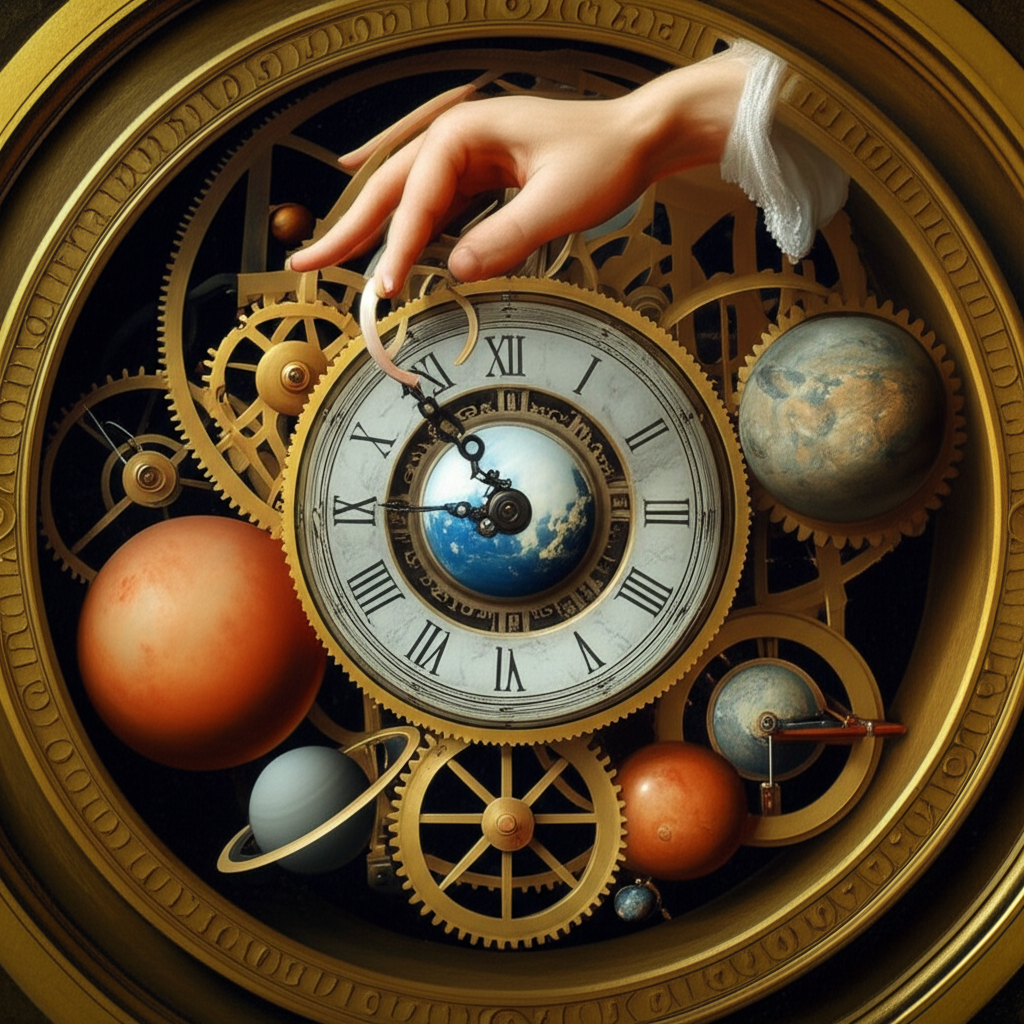
The Euthyphro Dilemma and Divine Command Theory
The Euthyphro dilemma, stemming from Plato's dialogue, asks: "Is the pious loved by the gods because it is pious, or is it pious because it is loved by the gods?" Applied to monotheistic theology, this translates to: "Is something good because God wills it, or does God will it because it is good?"
- Divine Command Theory: This view asserts that moral obligations are derived from God's commands. What is right is right because God wills it. This upholds the absolute sovereignty of God's Will but faces criticisms regarding arbitrary morality.
- Natural Law Theory: As championed by Aquinas, this view suggests that God's Will is rational and good, and therefore God wills things that are inherently good. Morality is discoverable through human reason reflecting divine order, not just through explicit commands.
Contemporary Echoes: God's Will in a Post-Enlightenment World
The Enlightenment and subsequent philosophical movements brought new challenges and interpretations to the concept of God's Will, often questioning its intelligibility or relevance in a secularized world, yet its echoes persist.
- Kierkegaard: Søren Kierkegaard, a precursor to existentialism, explored the radical nature of God's Will in his concept of the "teleological suspension of the ethical." He argued that faith might demand an individual to transcend universal moral laws, implying a God's Will that can override conventional ethics, as seen in Abraham's willingness to sacrifice Isaac. This highlights the terrifying and incomprehensible aspect of divine command.
- Existentialism: For many existentialists, the absence of a discernible divine will or objective meaning places the burden of creation and morality squarely on human shoulders. Jean-Paul Sartre's famous dictum, "existence precedes essence," implies that without a God to will our purpose, we are condemned to be free, creating our own values.
- Process Theology: In the 20th century, process theology (e.g., Alfred North Whitehead, Charles Hartshorne) offered a dynamic view of God's Will. Here, God is not an immutable, all-controlling dictator, but a persuasive presence within a constantly evolving universe. God's Will is not coercive but seeks to maximize value and beauty, guiding rather than dictating, and is itself influenced by the choices of creatures. This shifts God's Cause from absolute determination to active persuasion.
The concept of God's Will remains a fertile ground for philosophical and theological inquiry. From the ancient drive for cosmic order to the personal commands of a divine sovereign, and through the complex debates on freedom, evil, and morality, it continues to challenge our assumptions about power, purpose, and the ultimate nature of reality. Whether understood as an impersonal force, a conscious decree, or a persuasive influence, grappling with God's Will is to confront some of the deepest mysteries of existence and our place within the grand design.
📹 Related Video: PLATO ON: The Allegory of the Cave
Video by: The School of Life
💡 Want different videos? Search YouTube for: ""Augustine on God's Will and Free Will""
📹 Related Video: ARISTOTLE ON: The Nicomachean Ethics
Video by: The School of Life
💡 Want different videos? Search YouTube for: ""Aquinas and the Problem of Evil""