

The Unseen Architect: Exploring the Concept of God's Will and Cause
The notion of a divine will and an ultimate cause stands as one of the most enduring and profound inquiries within philosophy and theology. From ancient cosmologies to modern metaphysics, thinkers have grappled with how a transcendent, omnipotent being might conceive intentions and bring existence into being. This pillar page delves into the multifaceted Concept of God's Will and Cause, tracing its evolution through the intellectual lineage of the Great Books of the Western World, examining the intricate relationship between divine purpose and the unfolding of reality. We will navigate the definitions, distinctions, and dilemmas posed by this foundational idea, offering a lens through which to understand the very fabric of existence and our place within it.
Defining the Divine Will: Intent, Purpose, and Providence
To speak of God's Will is to venture into the realm of divine intention, purpose, and the very blueprint of creation. Unlike human will, which is often characterized by desire, deliberation, and potential change, the divine will is typically conceived as immutable, perfect, and eternally present.
The Philosophical Roots of Divine Intention
Early philosophical inquiries, particularly those predating explicit monotheistic frameworks, laid groundwork for understanding a cosmic intelligence. Plato’s concept of the Forms, for instance, suggests an eternal, perfect realm of ideas that serves as a template for the sensible world, hinting at a divine order or intention. Aristotle’s Prime Mover, while not a personal God in the Abrahamic sense, acts as the final cause, drawing all things towards its perfection, thereby implying a cosmic trajectory, a will of sorts inherent in the universe's telos.
Augustine and the Immutable Will
For Christian thinkers like St. Augustine, the Concept of God's Will becomes central to understanding creation and salvation. In works like Confessions and City of God, Augustine posits God's will as eternally good, unchangeable, and the ultimate source of all existence. Every good thing, every aspect of order, flows from God's benevolent will. Even the existence of evil, though not willed by God directly, is understood within the broader context of God's permissive will, allowing for human freedom and a greater good that unfolds over time.
Aquinas: Distinctions in Divine Volition
St. Thomas Aquinas, building upon Aristotle and Augustine in his Summa Theologica, meticulously distinguishes aspects of God's Will:
- God's Antecedent Will: God's general desire for the good of all creatures, such as the salvation of all humanity.
- God's Consequent Will: God's specific will that takes into account the free choices of creatures and the overall order of the universe, leading to particular outcomes (e.g., some are saved, some are not, based on their choices).
For Aquinas, God's will is not separate from His essence; it is God. It is perfectly rational, omnipotent, and the efficient Cause of all things, not merely a desire but a creative power.
God as First Cause: The Origin of All Being
The idea of God as the ultimate Cause is a cornerstone of metaphysical thought, seeking to answer the fundamental question: Why is there something rather than nothing? This concept posits a prime mover, an uncaused cause, from which all other existence derives.
Aristotle's Unmoved Mover
Aristotle's philosophical system, particularly in his Metaphysics, introduces the Unmoved Mover. This entity is pure actuality, without potentiality, and serves as the ultimate final cause, the object of desire and thought for all things. It causes motion and change in the universe not by directly acting upon it, but by inspiring a desire for its perfection. It is the ultimate explanation for the ongoing movement and existence in the cosmos, a self-sufficient being that needs no prior cause.
Aquinas's Argument from Efficient Causality
Aquinas's Five Ways to prove God's existence famously include the argument from efficient causality. He observes that in the world, every effect has an efficient cause. This chain of causes cannot regress infinitely, for if it did, there would be no first cause, and thus no subsequent causes. Therefore, there must be a first efficient Cause, which everyone understands to be God. This argument highlights God not just as an initial spark, but as the sustaining power behind the causal chain of the universe.
Spinoza and the Immanent Cause
Baruch Spinoza, in his Ethics, presents a radical Concept of God as the immanent Cause of all things. For Spinoza, God (or Nature) is a single, infinite substance, and everything that exists is a mode or attribute of this substance. God does not will things into existence from outside; rather, things necessarily flow from God's nature. God is the cause of Himself and the cause of all else, operating not through arbitrary will but through inherent necessity. This perspective blurs the lines between God, will, and cause, seeing them as inextricably linked within a singular, all-encompassing reality.
The Interplay: Will as Cause, Cause as Will's Manifestation
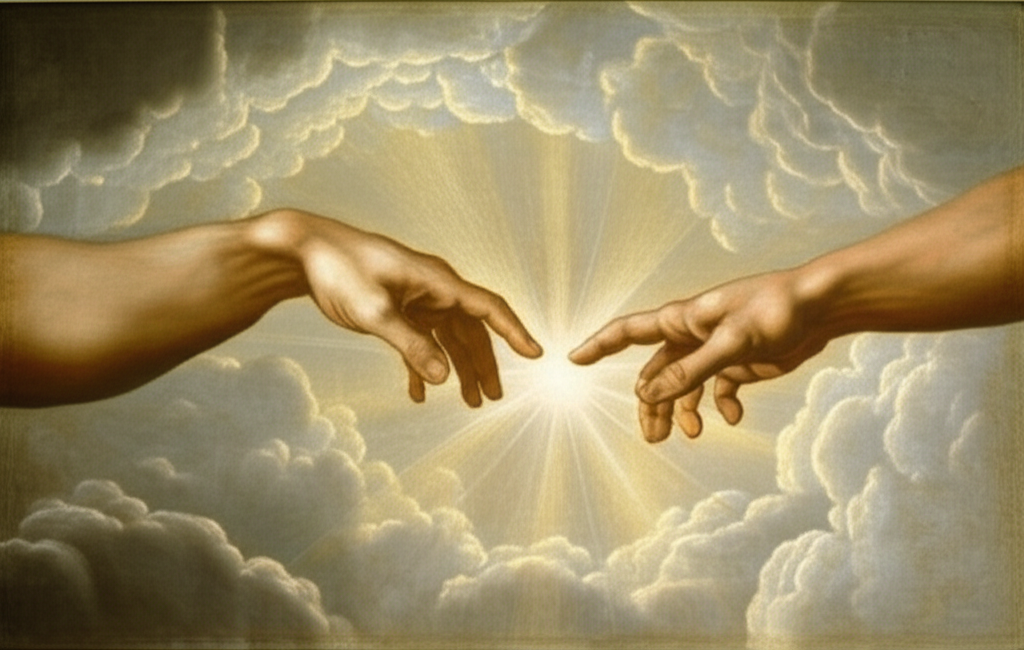
The true depth of this philosophical inquiry lies in understanding how God's Will functions as a Cause, and how the divine Cause is a manifestation of that will. This interaction touches upon creation, providence, and the enduring problem of evil.
Creation Ex Nihilo and Divine Fiat
The most direct link between divine will and cause is found in the Concept of creation ex nihilo (out of nothing). Many theological traditions assert that God, through an act of pure will, brought the universe into being. This is not a process of shaping pre-existing material but a direct command, a divine fiat, where will itself is the efficient cause of existence. This underscores the absolute power and freedom of God's Will.
Providence: The Ongoing Will and Cause
Beyond initial creation, God's Will is often understood as continuously active in the world through providence. This refers to God's foresight and benevolent guidance over all creation.
Table: Aspects of Divine Providence
| Aspect of Providence | Description | Key Philosophical Implication |
|---|---|---|
| General Providence | God's sustaining Will that maintains the natural laws and order of the universe, ensuring its continued operation and coherence. | Underpins the predictability of nature and the possibility of scientific inquiry. God as the constant Cause of order. |
| Special Providence | God's particular interventions or guidance in specific events, lives, or historical moments, often in response to prayer or for a specific divine purpose. | Raises questions about divine intervention, miracles, and the interaction between divine Will and human free agency. |
| Concurrence | The idea that God's Will and Cause cooperate with the free actions of creatures, enabling them to act without diminishing their freedom, yet ensuring God's ultimate plan is achieved. (e.g., Aquinas, Calvin) | Addresses the compatibility of divine sovereignty and human free Will, a complex Concept explored throughout philosophy. |
The Problem of Evil and Divine Will
If God's Will is perfectly good and omnipotent, and He is the ultimate Cause of all things, then the existence of evil and suffering presents a profound challenge. Philosophers throughout the Great Books have grappled with this:
- Augustine: Evil is not a substance created by God, but a privation of good, a turning away from God's perfect will by free creatures. God permits evil for a greater good that He alone fully comprehends.
- Leibniz: Argued that God, in His infinite wisdom and goodness, created the "best of all possible worlds," implying that any apparent evil serves a necessary role in the overall perfection of the cosmos.
These responses attempt to reconcile God's good will with the observable realities of suffering, suggesting that the divine Cause operates within a logic beyond human comprehension.
Diverse Philosophical Lenses on Divine Will and Cause
The Concept of God's Will and Cause has been interpreted through a wide array of philosophical and theological traditions, each offering unique insights and challenges.
Classical Theism (Augustine, Aquinas)
- God's Will: Transcendent, personal, perfectly good, immutable, and the primary source of all intention and purpose.
- God's Cause: The ultimate efficient cause (creation ex nihilo), final cause (telos of creation), and sustaining cause (providence). God is distinct from creation but continually active within it.
Pantheism and Panentheism (Spinoza)
- God's Will: Not a personal desire, but the inherent necessity and unfolding of God's (Nature's) attributes.
- God's Cause: God is the immanent cause of all things; everything necessarily flows from God's nature. God is the universe, or the universe is in God. The distinction between will and cause blurs into one necessary process.
Deism (Enlightenment Thinkers)
- God's Will: Expressed in the initial act of creation, setting up rational, immutable laws of the universe.
- God's Cause: God is the "Clockmaker" who designed and wound up the universe, but then largely withdrew, allowing it to operate according to its own natural laws without further divine intervention or Will.
Process Theology (Whitehead, Hartshorne)
- God's Will: God's will is persuasive, not coercive. God influences the world by offering possibilities and guiding towards greater complexity and beauty, rather than dictating outcomes.
- God's Cause: God is the co-creator alongside creatures, influencing the ongoing process of becoming. God is affected by the world and evolves with it, rather than being entirely static and immutable.
Each of these perspectives, found within the vast repository of Western thought, highlights the enduring challenge and fascination with understanding the ultimate source of intention and reality.
YouTube Video Suggestions:
-
📹 Related Video: PLATO ON: The Allegory of the Cave
Video by: The School of Life
💡 Want different videos? Search YouTube for: "Aquinas Five Ways Explained"
-
📹 Related Video: ARISTOTLE ON: The Nicomachean Ethics
Video by: The School of Life
💡 Want different videos? Search YouTube for: "Spinoza God Nature Substance"
Conclusion: An Enduring Inquiry into Existence
The Concept of God's Will and Cause remains a cornerstone of philosophical and theological discourse, a complex tapestry woven from millennia of human inquiry. From the Unmoved Mover of Aristotle to the immanent substance of Spinoza, and the purposeful creator of Augustine and Aquinas, the quest to understand divine intention and its causal power has shaped our understanding of metaphysics, ethics, and the very meaning of existence.
We have seen that God's Will is conceived not merely as a desire, but as an active, creative, and sustaining force, intimately linked to the Cause of all that is. Whether viewed as a transcendent architect, an immanent process, or a persuasive influence, the ultimate source of being and purpose continues to invite contemplation. As we navigate the complexities of our world, reflecting on the Concept of God's Will and Cause offers a profound lens through which to ponder the origins of order, the nature of freedom, and the enduring mysteries that lie at the heart of reality. The journey through these ideas is not just an academic exercise; it is an exploration of the deepest questions humanity can ask.