

The Unfolding Mystery: Exploring the Concept of God's Eternity
The notion of God's eternity stands as one of the most profound and challenging concepts in philosophy and theology. Far from merely signifying an unending lifespan, it posits a divine existence that transcends the very fabric of time itself. This article delves into the rich philosophical history of this Concept, distinguishing between different interpretations and exploring the implications of a God who is not merely everlasting but utterly timeless. We will navigate the ideas put forth by monumental thinkers, tracing how the Concept of God's Eternity has shaped our understanding of divinity, creation, and our place within existence.
The Nature of Eternity: Beyond Endless Time
When we speak of "eternal" in common parlance, we often mean something that lasts forever, without end – a perpetual duration. However, in philosophical discourse, particularly concerning the divine, Eternity carries a far more radical meaning. It is crucial to distinguish between two primary interpretations:
Sempiternity vs. Timeless Eternity
| Aspect | Sempiternity (Everlasting) | Timeless Eternity (Atemporal) |
|---|---|---|
| Definition | Existence throughout all Time, without beginning or end. | Existence entirely outside of Time, without succession. |
| Relation to Time | Exists in Time, but without limits. | Transcends Time; Time is a creation or consequence. |
| Experience | Experiences succession (past, present, future). | Experiences all moments simultaneously as an eternal "now." |
| Change | Can undergo change over Time. | Immutable; not subject to change or temporal sequence. |
| Analogy | A perfectly straight, infinite line. | A single, indivisible point encompassing all points. |
The Concept of God's Eternity as understood by many classical philosophers and theologians, particularly those drawing from the Great Books of the Western World, aligns with the idea of timeless eternity. This means God does not simply exist for an infinitely long duration, but rather exists outside of Time altogether.
Philosophical Cornerstones: Shaping the Concept
The journey to comprehend God's timelessness has been a long and intricate one, with pivotal contributions from ancient Greek philosophers to medieval Christian thinkers.
Early Seeds in Classical Thought
While not directly addressing God's Eternity in the monotheistic sense, ancient Greek philosophy laid important groundwork:
- Plato: His theory of Forms, existing in an unchanging, eternal realm apart from the temporal, material world, introduced the idea of a reality independent of time. The Good, the highest Form, functions as an ultimate, timeless principle.
- Aristotle: In his Metaphysics, Aristotle posited an "Unmoved Mover" as the ultimate cause of motion in the cosmos. This Mover is eternal and necessary, existing without potentiality or change, thereby hinting at a being beyond temporal flux.
Augustine of Hippo: The Creator of Time
Saint Augustine, in his Confessions (a cornerstone text in the Great Books collection), offers one of the most profound early expositions on God's Eternity. He famously grapples with the question, "What was God doing before He made heaven and earth?" His radical answer is that Time itself is a creation of God.
"For if there was no time before heaven and earth, then no time for You to create heaven and earth. But if there was time, You made it; for time could not pass before You made it." (Confessions, Book XI)
For Augustine, God does not exist in Time but with Time as its creator. This means there was no "before" for God in a temporal sense; God's existence is utterly outside the temporal sequence of past, present, and future. All moments are simultaneously present to the divine consciousness.
Boethius: The Classic Definition
Writing from prison, Boethius's Consolation of Philosophy provides a concise and enduring definition of Eternity that profoundly influenced subsequent medieval thought:
"Eternity, therefore, is the whole, simultaneous and perfect possession of interminable life." (Consolation of Philosophy, Book V, Prose VI)
This definition emphasizes:
- Whole (Tota): Not piecemeal or successive.
- Simultaneous (Simul): All at once, without past or future.
- Perfect (Perfecta): Lacking nothing, complete.
- Interminable Life (Interminabilis Vitae Possessio): Not merely endless, but without beginning or end because it transcends Time.
Thomas Aquinas: Synthesizing Timelessness
Drawing heavily on Augustine and Boethius, Thomas Aquinas, in his Summa Theologica (another foundational text in the Great Books), further developed the Concept of God's Eternity. For Aquinas, God's Eternity is a consequence of His absolute immutability and simplicity. Since God is pure act, without potentiality, He cannot change or undergo succession. Therefore, He cannot be in Time, which is inherently about succession and change.
Aquinas asserts that God's Eternity is not merely the absence of beginning and end, but the absence of any temporal dimension whatsoever. God sees all moments of Time – past, present, and future – in one single, eternal "now."
Attributes of a Timeless God
The Concept of God's Eternity imbues the divine with several key attributes:
- Immutability: A timeless God cannot change, as change implies a before and after, a temporal sequence.
- Simplicity: God is not composed of parts, and this extends to His existence; it is not divisible into temporal segments.
- Omnipresence (in Time): Just as God is present everywhere spatially, a timeless God is present to all moments of Time.
- Perfect Knowledge (Foreknowledge): From a timeless perspective, God does not "foresee" events in the future in the way we do. Rather, all events of Time are eternally present to the divine intellect.
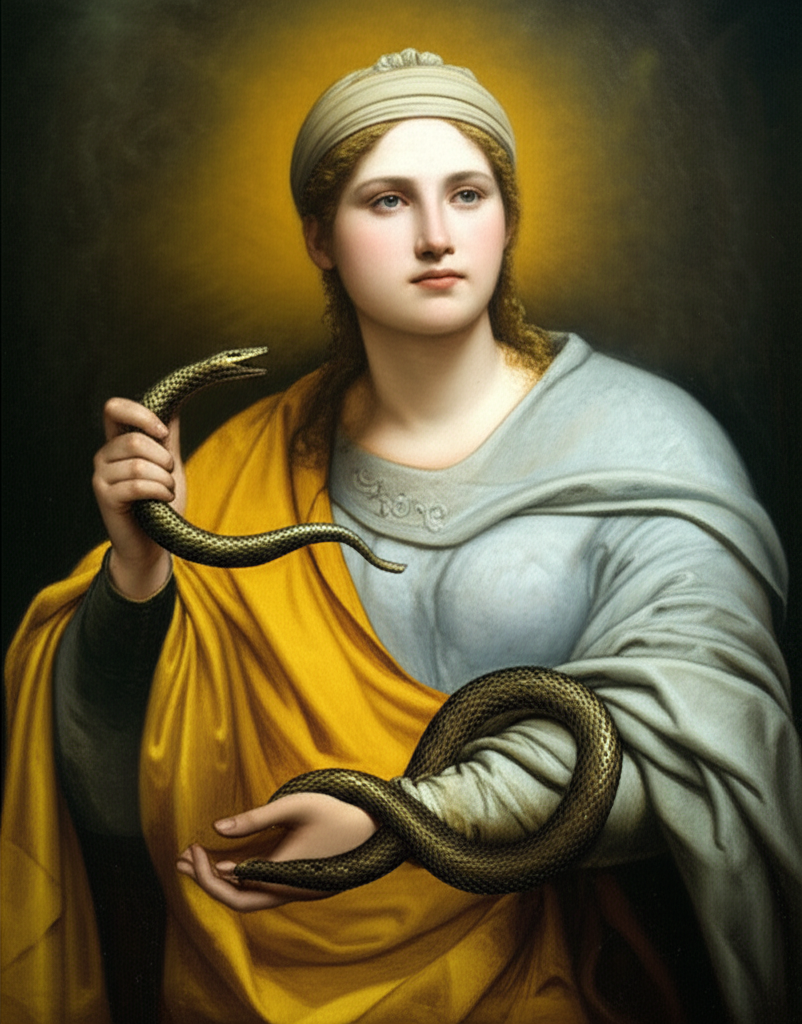 or an hourglass with sand that never falls, set against a backdrop of swirling cosmic elements and ancient ruins, emphasizing the transcendence of temporal order.)
Challenges and Enduring Questions
While the Concept of God's Eternity as timelessness offers a coherent philosophical framework, it also presents significant challenges:
- Interaction with a Temporal World: How can a timeless God act within or interact with a world bound by Time? If God's actions are eternal, how can they be responsive to temporal events like prayers or human free will?
- Divine Foreknowledge and Free Will: If all moments are eternally present to God, does this negate human free will? This problem of reconciling divine foreknowledge with human liberty is a perennial philosophical debate.
- Language Barriers: We are temporal beings, and our language is inherently temporal. Describing a timeless being using words like "before," "after," "always," and "is" inevitably introduces paradoxes and difficulties in full comprehension.
Despite these complexities, the Concept of God's Eternity continues to be a fertile ground for philosophical and theological inquiry, pushing the boundaries of our understanding of existence, causality, and the divine nature. It invites us to ponder a reality far grander and more mysterious than our temporal experience alone can grasp.
📹 Related Video: What is Philosophy?
Video by: The School of Life
💡 Want different videos? Search YouTube for: ""Augustine on Time and Eternity Philosophy""
📹 Related Video: What is Philosophy?
Video by: The School of Life
💡 Want different videos? Search YouTube for: ""Boethius Consolation of Philosophy God's Eternity""