

The Unmoved Mover: Exploring God as the First Cause
Summary:
This article delves into the profound philosophical concept of God as the First Cause, an ultimate Principle underpinning all existence. From the ancient insights of Aristotle to the theological rigorousness of Aquinas, we trace how thinkers have grappled with the necessity of an uncaused Cause to explain the universe's origin and ongoing reality. This exploration ventures deep into Metaphysics, examining the implications of such a foundational God on our understanding of being and causality itself.
Introduction: The Fundamental Question of Origins
In the grand tapestry of philosophical inquiry, few questions resonate with such enduring power as that concerning the ultimate origin of everything. Why is there something rather than nothing? This fundamental query often leads us to the concept of a First Cause – an initial, uncaused Cause from which all subsequent existence flows. For many, this ultimate Principle is intrinsically linked to the notion of God. As we navigate the labyrinthine corridors of Metaphysics, understanding God as the First Cause becomes not merely a theological assertion but a profound philosophical proposition, demanding rigorous thought and careful consideration.
The Ancient Roots: Aristotle's Unmoved Mover
The journey to understanding God as the First Cause often begins with the philosophical titans of ancient Greece. Aristotle, in his seminal work Metaphysics (found within the Great Books of the Western World), introduced the concept of the "Unmoved Mover." Observing the constant motion and change in the world, Aristotle reasoned that every motion must have a mover. This chain of movers, he argued, could not extend infinitely, as an infinite regress would mean no motion could have ever begun. Therefore, there must be a primary mover, itself unmoved, which initiates all other motion. This Unmoved Mover acts as a final cause, drawing things towards itself through desire, rather than pushing them mechanically. It is pure actuality, perfect and eternal, providing the ultimate Principle for the cosmos's dynamic order.
Thomas Aquinas and the Cosmological Argument
Centuries later, the medieval philosopher Thomas Aquinas, deeply influenced by Aristotle, articulated his famous "Five Ways" to prove God's existence in his Summa Theologica (another cornerstone of the Great Books of the Western World). The First Way, often called the Argument from Motion, directly echoes Aristotle, positing that everything in motion is moved by something else. This chain cannot go on infinitely, leading to the necessity of a First Mover, which he identifies as God.
Even more pertinent to our discussion is his Second Way, the Argument from Efficient Causes. Aquinas observed that in the world, there is an order of efficient causes: nothing is the efficient cause of itself, and every effect has a cause. Again, an infinite regress of efficient causes is deemed impossible because if there were no first efficient cause, there would be no subsequent causes or effects. Therefore, there must be a First Efficient Cause, to which everyone gives the name God. This argument lays the bedrock for understanding God as the ultimate Cause of existence itself.
Defining the First Cause: An Uncaused Principle
What precisely do we mean by a First Cause? It is not merely the first event in a temporal sequence, but rather:
- An Uncaused Cause: It is itself not brought into being by anything else. It is self-existent or exists necessarily.
- The Ultimate Origin: It is the source from which all other things derive their existence.
- A Necessary Being: Its non-existence is inconceivable within the framework of the argument.
- A Transcendent Principle: It stands outside the chain of contingent causality it initiates.
This concept necessitates a being whose existence is not contingent upon anything else, but rather is the Principle of all contingency. Without such a foundational Cause, the very fabric of reality, with its intricate web of cause and effect, would unravel into an infinite regress, explaining nothing.
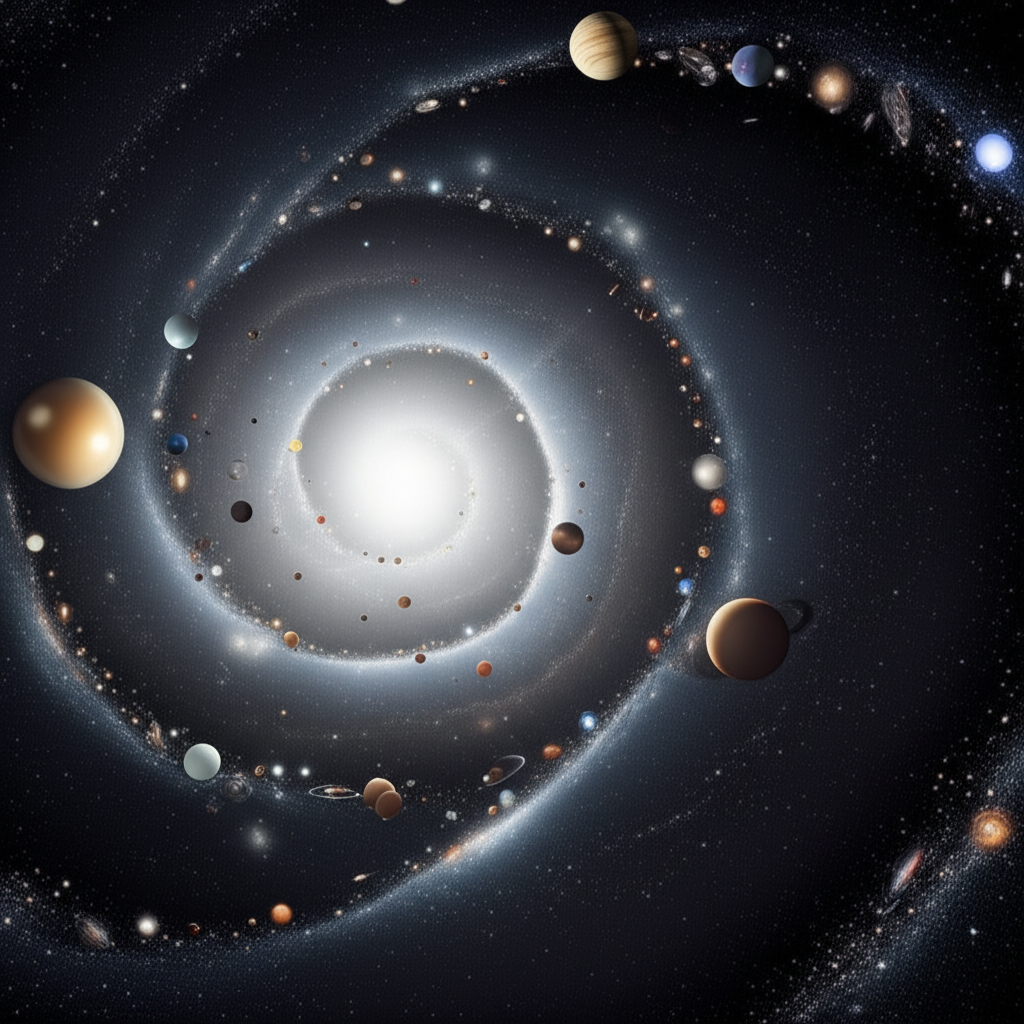
God as the Ultimate Metaphysical Principle
When philosophers identify the First Cause with God, they are not simply assigning a name to an unknown. They are attributing to this Cause certain qualities that align with traditional understandings of the divine. This takes us deep into Metaphysics, the branch of philosophy concerned with the fundamental nature of reality, existence, being, and nothingness.
The First Cause as God implies:
| Attribute | Philosophical Implication |
|---|---|
| Omnipotence | As the source of all being, God must possess infinite power to bring everything into existence. |
| Omniscience | The purposeful order and intricate design often observed in the universe are sometimes attributed to an intelligent First Cause. |
| Necessity | God's existence is not contingent; it is necessary for anything else to exist. This makes God the ultimate Principle of being. |
| Simplicity | To be truly a First Cause and not subject to prior causes, God must be simple, without parts, and unchanging, otherwise, God would require a prior cause for His own composition or change. |
This perspective positions God not just as a creator, but as the very ground of being, the ultimate metaphysical anchor for all reality. It seeks to provide a coherent explanation for the existence of the universe and its inherent order, grounding it in an eternal, self-sufficient Principle.
Conclusion: The Enduring Quest for Ultimate Origins
The concept of God as the First Cause remains a cornerstone of philosophical and theological thought, echoing through the ages from Aristotle's Unmoved Mover to Aquinas's cosmological arguments and beyond. It represents humanity's persistent quest to understand the ultimate Principle behind existence, to find a foundational Cause that explains the universe without itself requiring explanation. While modern science explores the mechanisms of the universe's unfolding, the philosophical question of why there is a universe at all, and what initiated its Cause and effect chains, continues to draw us back to the profound depths of Metaphysics and the enduring inquiry into the nature of God.
YouTube Video Suggestions:
-
📹 Related Video: ARISTOTLE ON: The Nicomachean Ethics
Video by: The School of Life
💡 Want different videos? Search YouTube for: ""Aristotle Unmoved Mover explained""
-
📹 Related Video: ARISTOTLE ON: The Nicomachean Ethics
Video by: The School of Life
💡 Want different videos? Search YouTube for: ""Thomas Aquinas Five Ways First Cause""