

The Unseen Hand: Navigating Chance in Human Affairs
The tapestry of human existence is woven with threads of intention, consequence, and often, an unpredictable element we call chance. Far from being a mere absence of design, the concept of chance has captivated philosophers for millennia, prompting profound inquiries into its nature, its relationship to fate and free will, and its undeniable impact on the course of history. This article delves into the intricate role of chance, exploring how this elusive force shapes our individual lives and the broader human narrative, drawing insights from the rich tradition of Western thought.
What is Chance? A Philosophical Inquiry
At its core, chance can be understood as an uncaused cause within a specific context, or the unexpected intersection of independent causal chains. It's the moment when a fallen apple, a gust of wind, and a passing pedestrian converge in an unforeseen incident. While often conflated with randomness, philosophical discussions, particularly those found in the Great Books of the Western World, reveal a more nuanced understanding. From Aristotle's distinction between chance and spontaneity to the intricate theological debates of Augustine and Aquinas concerning divine providence, chance has consistently challenged our notions of order and predictability.
Chance, Fate, and Will: A Complex Interplay
To truly grasp chance, it's essential to differentiate it from its conceptual siblings: fate and will. These three forces represent distinct perspectives on agency and predictability in human affairs.
- Chance: The occurrence of events without apparent design or discernible purpose, often arising from the confluence of independent factors. It suggests an element of unpredictability and contingency.
- Fate: A predetermined course of events, often conceived as divinely ordained or cosmically inscribed, suggesting an inevitable outcome regardless of individual choice.
- Will: The capacity of an individual to make choices and act upon them, implying agency and the power to influence one's own destiny.
Consider the following distinctions:
| Feature | Chance | Fate | Will |
|---|---|---|---|
| Origin | Independent causal chains, randomness | Divine decree, cosmic order | Individual consciousness, agency |
| Predictability | Low; often unexpected | High; predetermined | Variable; based on choice and context |
| Control | None | None (for individuals) | High (for individuals over own actions) |
| Impact | Contingent events, unforeseen outcomes | Inevitable outcomes, predetermined path | Self-determination, moral responsibility |
The tension between these concepts has fueled centuries of philosophical debate. Does an act of will truly overcome chance, or is our will itself subject to unforeseen influences? And if fate is real, where does that leave the space for chance occurrences or individual volition?
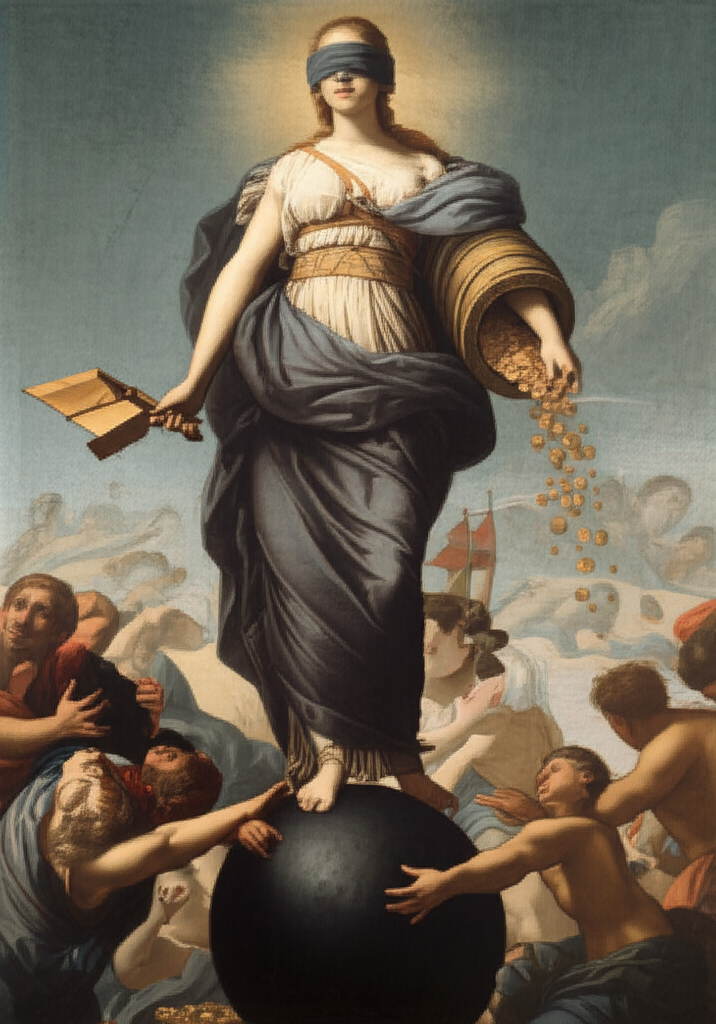
Chance in the Grand Narrative of History
The influence of chance is not confined to individual lives; it profoundly shapes the grand sweep of human history. From the seemingly insignificant accident that alters a battle's outcome to the chance discovery that sparks a technological revolution, history is replete with examples where contingency played a pivotal role. Think of the "lucky" storm that saved the English fleet from the Spanish Armada, or the accidental discovery of penicillin by Alexander Fleming. These events, though often retrospectively rationalized, were fundamentally shaped by chance.
Philosophers like Hegel, while emphasizing the rational progression of history, still acknowledged the "cunning of reason" where individual actions, often driven by personal motives, inadvertently contribute to a larger historical purpose. Yet, the Great Books also offer counterpoints, with thinkers like Thucydides detailing the unpredictable turns of war and human nature, where chance and circumstance often trumped strategic design. The French Revolution, for instance, a monumental shift in human affairs, involved a cascade of unforeseen events and individual decisions, demonstrating how a series of contingent moments can coalesce into epoch-making change.
The Human Response to the Unpredictable
How do we, as humans, cope with the pervasive presence of chance? Our responses are varied:
- Acceptance: Some philosophical traditions, particularly Stoicism, advocate for accepting what is beyond our control, including chance events, and focusing on what we can influence – our reactions and virtues.
- Mitigation: Through science, technology, and planning, we constantly strive to reduce the domain of chance, whether it's through weather forecasting, risk assessment, or medical advancements.
- Exploitation: Entrepreneurs and innovators often thrive by recognizing and seizing opportunities presented by chance, turning unforeseen circumstances into advantages.
- Spiritual Interpretation: Many spiritual and religious frameworks offer explanations for chance, viewing it as divine intervention, a test of faith, or a manifestation of karma.
Ultimately, the concept of chance reminds us of our inherent vulnerability and the limits of our knowledge and control. It invites humility and adaptability, urging us to navigate life's unpredictable currents with wisdom and resilience. While we may strive to chart our course with purpose and will, the unseen hand of chance will always be a co-author of our individual stories and the collective narrative of humanity.
📹 Related Video: What is Philosophy?
Video by: The School of Life
💡 Want different videos? Search YouTube for: ""Philosophy of Chance and Randomness Explained""
📹 Related Video: What is Philosophy?
Video by: The School of Life
💡 Want different videos? Search YouTube for: ""Free Will vs. Determinism: Crash Course Philosophy #24""