

The Unseen Hand: Navigating Chance in Human Affairs
The concept of chance has long been a perplexing and persistent challenge to our understanding of human existence, agency, and the very fabric of the cosmos. From the random toss of a die to the unforeseen turn of historical events, chance introduces an element of unpredictability that seems to defy our desire for order, meaning, and control. This article delves into how philosophers, drawing from the wellspring of the Great Books of the Western World, have grappled with chance, examining its intricate relationship with fate, will, and the unfolding narrative of history. We will explore how different eras and thinkers have attempted to reconcile the seemingly arbitrary nature of chance with human freedom and the search for ultimate meaning.
Defining the Indefinable: What is Chance?
At its core, chance refers to an event without an apparent cause or intention, or one whose causes are so numerous and complex that they appear random to human observation. It’s the unexpected, the contingent, the "what if." Yet, this simple definition belies a profound philosophical tension: if everything has a cause, can true chance exist? Or is chance merely a reflection of our ignorance regarding underlying determinism?
Philosophical inquiry into chance often orbits around several key questions:
- Is chance a fundamental aspect of reality, or merely an epistemological limitation?
- How does chance interact with human will and free choice?
- What role does chance play in shaping individual lives and the broader sweep of history?
- Can chance be reconciled with concepts of divine providence or fate?
The Ancient Dance: Chance, Fate, and Necessity
For the ancient Greeks, the interplay between chance (τυχή - tychē) and necessity (ἀνάγκη - anankē) was a central theme.
- Aristotle, in his Physics, distinguished between events that happen "always or for the most part" and those that happen "by chance." He argued that chance events are those that occur incidentally, not as an intended outcome of a specific cause. For instance, digging for a well and finding treasure is a chance event; the digging was for water, not gold. This suggests chance operates within a causal framework, but at the periphery of intent.
- Plato, particularly in dialogues like The Laws, grappled with the role of chance in the governance of states, often contrasting it with the rule of reason and divine order. While acknowledging the unpredictability of certain events, Plato ultimately leaned towards the idea of an underlying rational order.
- The Stoics, however, offered a more deterministic view. For them, the cosmos was governed by an all-encompassing divine reason or logos, which dictated a predetermined fate. What appeared as chance to human perception was simply an event whose place in the grand causal chain was not understood. There was no true randomness; only an intricate, unbreakable web of cause and effect. Human will lay in assenting to this fate, not in altering it.
| Philosophical Viewpoint | Concept of Chance | Relationship with Fate/Will |
|---|---|---|
| Aristotle | Incidental occurrence, unintended outcome within causal chain. | Acknowledges chance, but not as primary mover. |
| Plato | Unpredictable events, often contrasted with rational order. | Less emphasis on pure chance, more on underlying order. |
| Stoicism | Apparent randomness, but ultimately part of a predetermined fate. | No true chance; human will is to accept fate. |
Divine Providence and Human Agency: Medieval Perspectives
The rise of monotheistic religions brought new dimensions to the concept of chance, primarily through the lens of divine providence.
- St. Augustine, in The City of God, wrestled with the problem of evil and the apparent randomness of human suffering. While affirming God's omnipotence and foreknowledge (a form of divine fate), he also defended human free will. Events that appear to be chance are, from God's perspective, part of a meticulously orchestrated plan, though beyond human comprehension. What looks like a random catastrophe to us might be part of a larger divine purpose.
- St. Thomas Aquinas, building on Aristotelian thought, maintained that chance events are real from a human perspective, arising from the convergence of independent causal chains. However, these events are not random from God's perspective, as God's providence extends to all things, including their contingent outcomes. God permits chance, but does not relinquish ultimate control. The human will operates within this framework, making choices that contribute to the unfolding of history, yet always within the bounds of divine permission.
Fortune's Wheel and the Force of Will: Renaissance to Enlightenment
The Renaissance saw a renewed focus on human agency and a more secular understanding of the forces shaping human destiny.
- Niccolò Machiavelli, in The Prince, famously discussed Fortuna (fortune) as a powerful, often unpredictable force in human affairs, capable of overturning the best-laid plans. Yet, he argued that a virtuous and resolute prince could, through strength of will and cunning, mitigate Fortuna's influence, perhaps even master half of it. This marks a shift towards emphasizing human capacity to act decisively in the face of chance.
- Michel de Montaigne, in his Essays, reflected deeply on the contingency of human life and the role of chance in shaping character and events. He celebrated the variability of human experience, acknowledging that much of our lives is subject to forces beyond our control, leading to a philosophy of acceptance and adaptation.
- The Enlightenment brought a renewed emphasis on reason and scientific causality, leading some to question the very existence of pure chance. David Hume, for example, argued that our idea of chance arises from our ignorance of causes, not from a lack of causality in nature itself. For Hume, all events are causally determined, and what we call "chance" is simply an expression of our limited knowledge.
- Immanuel Kant, while acknowledging the empirical appearance of chance, sought to reconcile it with moral freedom. He argued that while the phenomenal world might be governed by deterministic laws, our noumenal selves, as moral agents, possess free will, allowing us to initiate new causal chains independently of prior empirical conditions. This offered a way for human will to assert itself against a potentially deterministic universe.
Chance in the Tapestry of History
The concept of chance profoundly impacts how we interpret history. Is history a linear progression, a series of predetermined events, or a chaotic interplay of random occurrences and human decisions?
Historians and philosophers of history have long debated whether major historical shifts are the inevitable outcome of underlying forces (economic, social, technological – akin to fate or determinism) or the result of contingent events, individual choices, and sheer luck.
- The rise and fall of empires, the outcomes of wars, the development of technologies – all can be viewed through the lens of chance. A sudden storm, an unexpected illness of a leader, a chance encounter – these seemingly minor events can have monumental consequences, redirecting the course of human history.
- Conversely, some argue that while individual events may appear random, the larger patterns of history reveal a deeper, perhaps inevitable, trajectory. This perspective often downplays the role of individual will and emphasizes broader societal forces.
- Ultimately, the study of history often becomes an exercise in discerning the threads of will, fate, and chance that are woven together, acknowledging that no single force fully explains the complex human story.
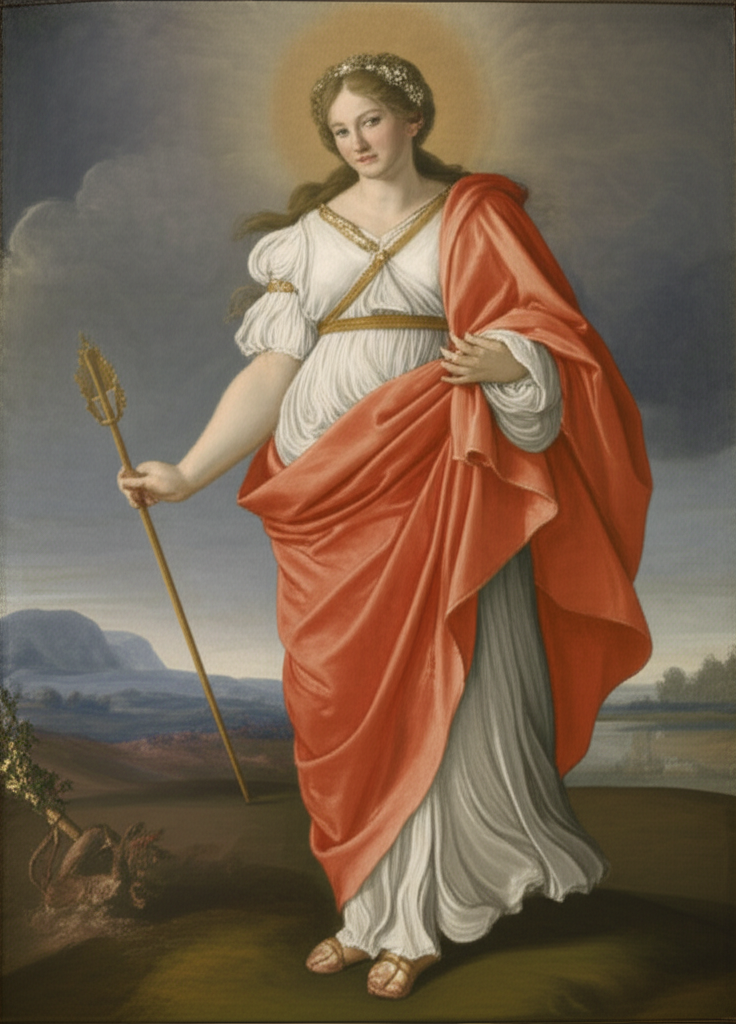 with her eyes blindfolded, standing on a rolling sphere or wheel, holding a cornucopia in one hand and a rudder in the other. Around her, various human figures are shown in states of prosperity and despair, illustrating the arbitrary nature of luck and the unpredictable turns of life.)
Reconciling the Irreconcilable?
The tension between chance, fate, and human will remains one of philosophy's most enduring questions. While scientific advancements have illuminated countless causal relationships, the ultimate nature of randomness at the quantum level continues to fuel debate.
Perhaps the most profound insight from the Great Books is not a definitive answer, but the recognition that our human experience is fundamentally shaped by this interplay. We are creatures who plan and intend, who exercise our will, yet we are constantly confronted by the unforeseen, the contingent, the realm of chance. Our ability to navigate this uncertainty, to find meaning and purpose despite it, and to shape our own history in its presence, is perhaps the truest testament to the human spirit.
YouTube Video Suggestions:
-
📹 Related Video: ARISTOTLE ON: The Nicomachean Ethics
Video by: The School of Life
💡 Want different videos? Search YouTube for: ""The Problem of Free Will and Determinism Explained""
2. ## 📹 Related Video: What is Philosophy?
Video by: The School of Life
💡 Want different videos? Search YouTube for: ""Ancient Greek Philosophy: Fate and Fortune""