

The Unpredictable Tapestry: Navigating Chance in Human Affairs
Summary
The concept of chance in human affairs is a philosophical cornerstone, continually challenging our understanding of agency, causality, and destiny. From the ancient Greeks grappling with fate to modern existentialists asserting individual will, humanity has sought to reconcile the seemingly random occurrences of life with the desire for order and control. This article explores how chance has been perceived through the lens of Western thought, contrasting it with notions of fate and will, and examining its indelible mark on the unfolding narrative of history. Ultimately, chance remains a profound enigma, a canvas upon which our choices, our efforts, and the unforeseen elements of existence paint the human story.
The Ancient World: Fate's Shadow and Chance's Whim
In the classical era, the line between chance and fate was often blurred, yet distinct. For the ancient Greeks, fate was a powerful, often inescapable force, dictated by the Moirai (Fates) or the capricious gods. Think of the tragic heroes of Sophocles or Aeschylus, whose lives, despite their valiant struggles, were often predetermined by a divine or cosmic order. Oedipus, for instance, cannot escape his grim fate, no matter his will or efforts.
However, even within this framework, the idea of chance (Greek: tyche) existed. Aristotle, in his Physics and Metaphysics, distinguished chance from teleological causation. For him, chance referred to events that occur incidentally, without a specific purpose or intention, as when a man digging a well unexpectedly finds a treasure. It’s an accidental cause, not a primary one, yet it profoundly impacts the individual's history. This perspective allowed for a realm of unpredictability, even if the grand narrative of the cosmos was seen as ultimately ordered.
- Key Ancient Views:
- Fate: Predetermined, often divine will or cosmic order (e.g., Greek Tragedy, Homeric epics).
- Chance (Tyche): Accidental occurrences, unintended outcomes, incidental causes (Aristotle).
- Will: Human intention and effort, often struggling against or unknowingly fulfilling fate.
The Medieval Synthesis: Divine Providence and Free Will
With the advent of Christian thought, the concept of chance underwent a significant reinterpretation. For thinkers like Augustine, true chance in the Aristotelian sense—events without any cause—was incompatible with an omniscient and omnipotent God. Instead, what humans perceived as chance was merely an expression of divine providence, a manifestation of God's will that humans, with their limited understanding, could not fully comprehend.
Augustine, wrestling with the problem of evil and free will, argued that God's foreknowledge did not negate human freedom. Our will remains free, even if God knows our choices beforehand. Thus, seemingly random events were not causeless but rather part of a larger, divinely orchestrated history, where every detail, every "chance" encounter, served a purpose known only to the Creator. Thomas Aquinas later built upon this, reconciling Aristotelian causality with Christian theology, suggesting that while God is the ultimate first cause, secondary causes (including human will and what appears to be chance) operate within the divine plan.
The Renaissance and Enlightenment: Virtù, Fortuna, and the Rise of Reason
The Renaissance marked a shift back towards human agency. Niccolò Machiavelli, in The Prince, famously explored the interplay between fortuna (fortune or chance) and virtù (skill, courage, will). Machiavelli argued that while fortuna might control half of human actions, the other half, or nearly so, is left to human governance. A wise prince, possessing virtù, could anticipate, mitigate, and even seize opportunities presented by chance, shaping history rather than merely being swept along by it. This was a radical departure, placing significant emphasis on human will and strategic action.
The Enlightenment further championed human reason and the individual will. Philosophers like John Locke and Immanuel Kant emphasized self-determination and the capacity for rational choice. While the scientific revolution introduced concepts of determinism—suggesting that all events, including human actions, are causally determined—the Enlightenment simultaneously asserted the moral autonomy of the individual. Chance became less about divine whim and more about the limits of human knowledge or the complexities of interacting systems, amenable to study through probability and statistics. History began to be seen as a progression, albeit often unpredictable, shaped by human decisions and the cumulative effect of countless individual wills.
Modern Perspectives: Probability, Existentialism, and the Continuing Enigma
In the modern era, chance is often understood through the lens of probability theory, particularly in scientific and statistical contexts. This view doesn't necessarily deny underlying causes but acknowledges the practical impossibility of predicting every outcome. Yet, the philosophical debate persists. Is chance merely a reflection of our ignorance (epistemic), or is there genuine, irreducible randomness in the universe (ontological)?
Existentialist thinkers, like Jean-Paul Sartre, placed immense emphasis on human will and responsibility. For them, there is no predetermined fate or inherent meaning; humans are "condemned to be free." In this framework, chance is not an external force dictating outcomes but rather the raw, meaningless backdrop against which individuals exercise their will to create meaning and define their essence through choice. The unpredictable nature of existence, the "thrownness" into the world, becomes the very condition for authentic human freedom.
Table: Evolving Concepts of Chance, Fate, and Will
| Era/Philosophical Trend | Conception of Chance | Role of Fate | Role of Will | Impact on History |
|---|---|---|---|---|
| Ancient Greece | Accidental, incidental events (tyche), without purpose. | Often predetermined, divine, inescapable. | Struggle against fate; limited agency. | Part of a cyclical or divinely ordained narrative. |
| Medieval Christian | Apparent randomness, but ultimately part of divine providence. | God's ultimate plan, known only to Him. | Free will exists within God's foreknowledge. | Unfolding of God's plan, guided by providence. |
| Renaissance | Fortuna - unpredictable, but can be influenced. | Diminished, but still a powerful external force. | Virtù - skill, courage, ability to shape events. | Shaped by human action and the navigation of fortune. |
| Enlightenment | Lack of full knowledge; subject to probabilistic analysis. | Largely rejected in favor of human reason/laws. | Rational choice, moral autonomy, self-determination. | Progressive narrative driven by human reason and action. |
| Modern/Existential | Ontological randomness; backdrop for human choice. | Non-existent; humans create their own essence. | Absolute freedom, responsibility for meaning-making. | A series of choices in an indifferent universe. |
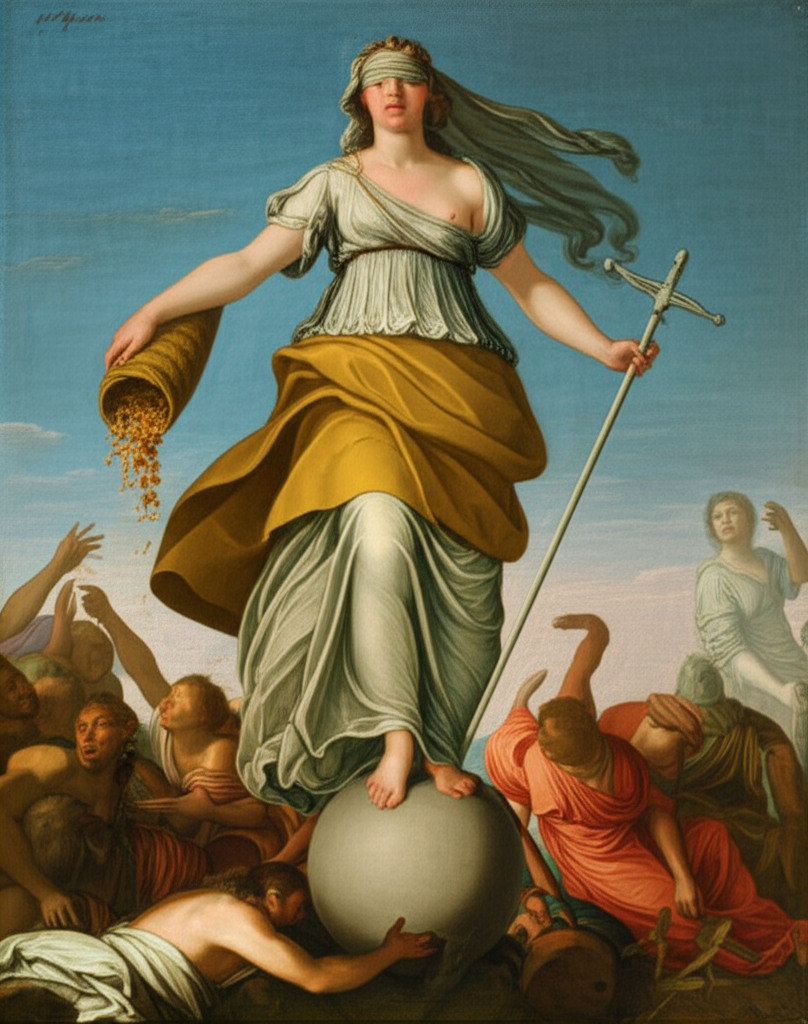
Conclusion: The Enduring Dance of the Unforeseen
The concept of chance in human affairs remains a compelling, often unsettling, subject. It forces us to confront the limits of our knowledge, the boundaries of our control, and the profound impact of the unforeseen on our lives and collective history. Whether viewed as an expression of divine will, a statistical anomaly, or an inherent feature of an indifferent universe, chance continually challenges our notions of fate and the efficacy of human will.
From the Great Books of the Western World, we learn that humanity has always sought to make sense of the arbitrary, to find patterns in chaos, and to assert agency against the currents of unpredictability. The tension between what we can control and what simply happens is a fundamental aspect of the human condition. It is in this dynamic interplay of chance, fate, and will that the rich, complex, and often astonishing tapestry of human history is woven.
📹 Related Video: What is Philosophy?
Video by: The School of Life
💡 Want different videos? Search YouTube for: ""Free Will vs. Determinism Philosophy Explained""
📹 Related Video: What is Philosophy?
Video by: The School of Life
💡 Want different videos? Search YouTube for: ""The Philosophy of Luck and Chance""