

Unveiling Existence: The Concept of Being in Metaphysics
The Concept of Being stands as the cornerstone of Metaphysics, the branch of philosophy dedicated to exploring the fundamental nature of reality. It grapples with the most profound question: "What does it mean to exist?" Far from a simple dictionary definition, Being encompasses everything that is, in every conceivable way, from concrete objects to abstract ideas, from potentiality to actuality. Understanding Being is not merely an academic exercise; it is an attempt to grasp the foundational Element upon which all other inquiries, scientific or philosophical, ultimately rest.
A Fundamental Query: What is it to Be?
From the earliest philosophers in the "Great Books of the Western World" collection to contemporary thinkers, the Concept of Being has been the ultimate subject. It's the "stuff" of existence, the underlying reality that allows anything to be at all. Metaphysics asks us to look beyond individual things and ponder the shared characteristic that makes them real.
This inquiry often feels abstract because Being itself isn't a 'thing' among things. It's the condition for all things. When we speak of Being, we're not just categorizing objects; we're delving into the very ground of their existence, their essence, and their presence in the world.
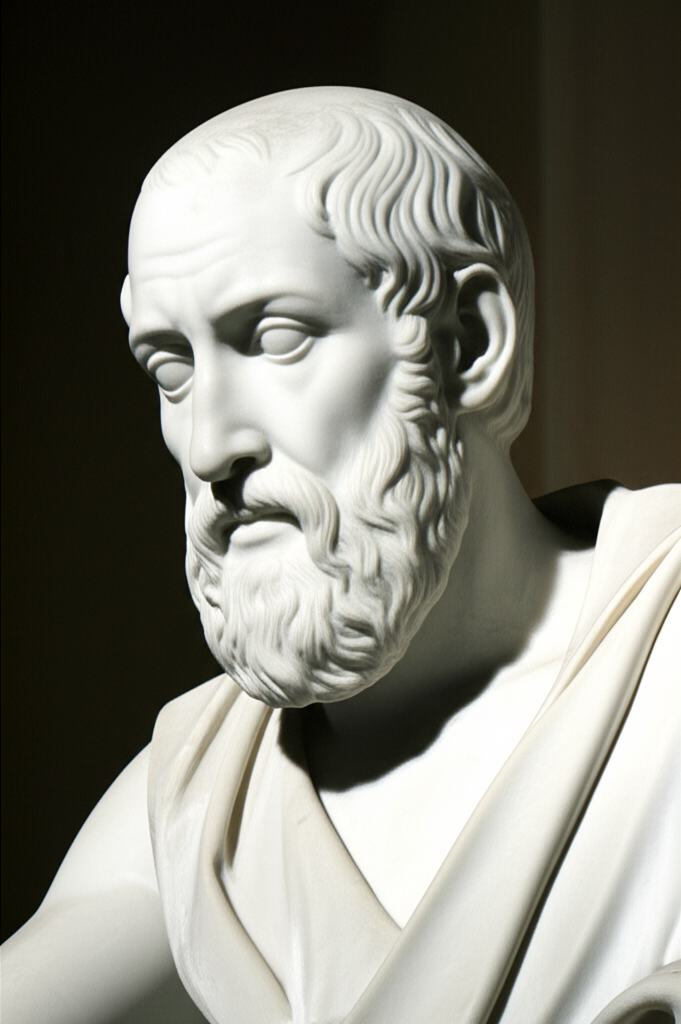 gazing into the distance, with abstract, swirling lines of light and shadow subtly suggesting the complexity of existence and the fundamental questions of Being that occupied ancient minds. The background is a minimalist, ethereal blend of deep blues and purples, evoking the vastness of Metaphysics.)
The Elusive Element: Defining the Indefinable
Defining Being is notoriously difficult because it's the most universal Concept we possess. How do you define something that applies to absolutely everything without simply repeating the word itself? Philosophers have approached this challenge from various angles, each attempting to isolate a crucial Element of its nature.
- Parmenides famously argued that Being is eternal, unchanging, and singular, while non-being is unthinkable.
- Aristotle, in contrast, recognized Being as manifesting in many ways, developing categories of Being (substance, quantity, quality, etc.) to articulate these different modes of existence. His work in Metaphysics is largely an investigation into Being qua Being – Being as such.
- Medieval Scholastics like Thomas Aquinas distinguished between essence (what something is) and existence (that something is), positing God as Pure Being where essence and existence are identical.
- Modern philosophers like René Descartes grappled with the Being of the self (cogito, ergo sum – "I think, therefore I am"), while Immanuel Kant explored how our minds structure our experience of Being.
- Existentialists in the 20th century, notably Martin Heidegger, refocused the inquiry on human Being (Dasein) and its relationship to time and finitude, emphasizing that Being is not a static object but an active process of existing.
Diverse Philosophical Approaches to Being
The breadth of the Concept of Being has led to a rich tapestry of philosophical exploration. Here’s a brief overview of how different perspectives have illuminated this fundamental Element:
| Philosophical Perspective | Key Focus on Being |
|---|---|
| Classical Metaphysics (Plato, Aristotle) | Focused on finding stable, unchanging principles (Plato's Forms) or fundamental categories of Being (Aristotle's substances) that underlie the changing world. The Concept of Being is tied to what is most real and intelligible. |
| Medieval Scholasticism (Aquinas) | Explored the distinction between essence (what a thing is) and existence (that a thing is). God's Being is unique because His essence is His existence; He is ipsum esse subsistens (subsistent Being itself). |
| Rationalism (Descartes, Spinoza) | Sought to deduce the nature of Being from clear and distinct ideas. Descartes' Being is bifurcated into thinking substance and extended substance. Spinoza proposed a single, infinite substance (God or Nature) as the only true Being. |
| Empiricism (Locke, Hume) | Questioned the possibility of knowing the ultimate Concept of Being directly, arguing that all knowledge comes from sensory experience. Hume was skeptical of our ability to grasp substance or a unified self. |
| Transcendental Idealism (Kant) | Shifted the focus from Being as it is "in itself" to Being as it appears to us, shaped by the structures of our mind. The Concept of Being is not an empirical concept but a transcendental one, necessary for experience. |
| Existentialism (Heidegger, Sartre) | Emphasized human Being (Dasein) as fundamentally distinct due to its awareness of its own finitude and freedom. Being is not a fixed entity but an ongoing project of existence, often defined by choice and responsibility. |
Why the Concept of Being Remains Central
The study of Being is not an outdated philosophical relic; it's a living, breathing inquiry that continues to challenge our assumptions about reality. Every scientific discovery, every artistic creation, every moral decision implicitly or explicitly relies on some understanding of what it means to be.
- Foundation of Knowledge: Before we can know what something is, we must first acknowledge that it is. The Concept of Being provides the ultimate framework for all knowledge.
- Ethical Implications: Our understanding of human Being directly influences our ethics, our rights, and our responsibilities.
- Existential Reflection: Grappling with Being forces us to confront our own existence, our place in the cosmos, and the meaning (or lack thereof) we ascribe to life. This Element of personal reflection is profound.
- Scientific Inquiry: Even physics, in its quest for fundamental particles and forces, is engaged in a sophisticated form of metaphysical inquiry into the Being of the universe.
The enduring power of Metaphysics lies in its relentless pursuit of the Concept of Being. It reminds us that beneath the surface of everyday experience lies an intricate, often mysterious, reality that invites endless contemplation. To ponder Being is to engage with the very essence of philosophy itself.
📹 Related Video: What is Philosophy?
Video by: The School of Life
💡 Want different videos? Search YouTube for: "What is Metaphysics? Crash Course Philosophy"
📹 Related Video: PLATO ON: The Allegory of the Cave
Video by: The School of Life
💡 Want different videos? Search YouTube for: "Heidegger's Being and Time Explained"