

The Concept of Angelic Being: An Inquiry into Immaterial Intelligence
The notion of angelic Being stands as one of philosophy's most enduring and fascinating inquiries, transcending mere religious dogma to challenge our very understanding of existence, consciousness, and the nature of reality. Far from being a quaint theological curiosity, the concept of the angel offers a profound lens through which to explore questions of immaterial substance, pure intellect, and the hierarchy of Form. This article delves into the philosophical and theological foundations of angelic Being, examining its evolution from ancient thought to medieval scholasticism, drawing insights from the Great Books of the Western World to understand these enigmatic intelligences.
Unveiling the Angelic Mystery: A Philosophical Introduction
For centuries, philosophers and theologians alike have grappled with the idea of Beings that exist beyond the confines of physical matter – pure spirits, intermediaries, or messengers. What does it mean for something to exist without a body? How does such a Being know, act, or relate to the material world? The concept of the angel, as explored in various traditions, forces us to confront the limits of our anthropocentric worldview and to consider alternative modes of existence. It is an invitation to ponder Form stripped of its physical instantiation, a Being defined solely by intellect and will.
From Plato's Forms to Neoplatonic Emanations: Early Glimpses of Immateriality
While the explicit term "angel" as we understand it primarily emerges from Abrahamic theology, the philosophical groundwork for immaterial intelligences was laid much earlier. In the Great Books, Plato's theory of Forms posits a realm of perfect, eternal, and unchanging essences that exist independently of the physical world. These Forms are not physical objects but ideal blueprints, accessible only through intellect. This concept of a non-physical reality, where truth and Being reside, paved the way for later ideas about spiritual entities.
Later, Neoplatonists, such as Plotinus, developed complex hierarchies of Being emanating from the One, including intellects and souls that are increasingly distant from pure unity. These Beings, while not angels in the biblical sense, share key characteristics: they are immaterial, possess intellect, and exist in a hierarchical structure mediating between the ultimate source and the material world. They exemplify pure Form without the encumbrance of matter, setting the stage for a deeper philosophical investigation into what an angelic Being might entail.
The Immaterial Intellect: Aquinas's Angelic Hierarchy
It is in medieval scholasticism, particularly with Thomas Aquinas, that the philosophical investigation into the nature of angelic Being reaches its zenith. Drawing heavily from Aristotle and Christian theology, Aquinas, in his Summa Theologica (a cornerstone of the Great Books), dedicates extensive passages to understanding angels. For Aquinas, angels are not merely spiritual creatures; they are the purest examples of created Being, existing as pure intellects without bodies.
Key Tenets of Aquinas's Angelic Philosophy:
- Pure Form: Angels are subsistent Forms, meaning they are pure spiritual substances entirely devoid of matter. Each angel is its own species, a unique Form of existence. This contrasts sharply with humans, whose Form (soul) is united with matter (body).
- Immaterial Being: Their existence is entirely spiritual. They do not occupy space in the way physical objects do, though they can act upon and manifest in specific locations.
- Intuitive Intellect: Angels do not reason discursively, moving from premises to conclusions like humans. Instead, they grasp truths intuitively and instantaneously, understanding through innate ideas or divinely infused knowledge. Their knowledge is complete and perfect for their Form of Being.
- Immutable Will: Angels possess free will, but their initial choice (to obey God or rebel) is eternal and unchangeable due to the clarity of their intellect and the absence of temporal change affecting their Being.
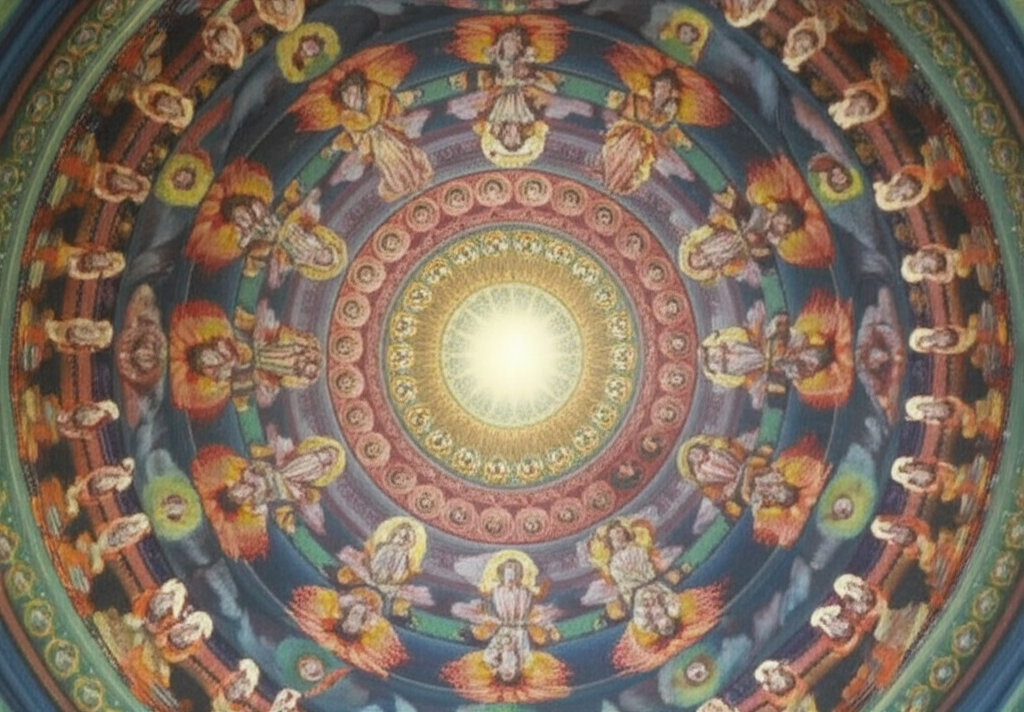
- Hierarchy of Being: Aquinas posits a vast hierarchy of angels, from Seraphim to Guardian Angels, each with different perfections and roles, reflecting the diverse perfections of God's creation. This hierarchy is not just organizational but ontological, reflecting different degrees of Being and intellect.
Aquinas’s intricate analysis challenges us to conceptualize a Being that is purely intelligent, entirely spiritual, and yet distinct from God. It pushes the boundaries of metaphysics, exploring the very nature of substance, cognition, and will in a non-material context.
Attributes of Angelic Being: A Comparative View
To further clarify the concept, let's consider a breakdown of the philosophical attributes commonly ascribed to angelic Being, contrasting them with human existence:
| Attribute | Angelic Being (Philosophical/Theological View) | Human Being (Philosophical View) |
|---|---|---|
| Substance | Pure spiritual Form without matter | Union of spiritual Form (soul) and matter (body) |
| Knowledge | Intuitive, immediate, complete for their nature | Discursive, acquired through senses and reason |
| Will | Free, but immutable after initial choice | Free, mutable, influenced by intellect and passion |
| Location | Not spatially bound, but can act in specific places | Spatially located within a body |
| Communication | Through intellectual illumination/direct thought | Through sensory means (speech, writing) |
| Immortality | Inherently immortal by nature | Soul is immortal; body is mortal |
Enduring Questions and Contemporary Relevance
While modern science may not provide empirical evidence for angels, the philosophical concept of angelic Being remains profoundly relevant. It forces us to ask:
- What are the limits of material explanation for consciousness?
- Can Form exist independently of matter?
- What does it mean to be a purely intellectual Being?
- How do we categorize and understand different modes of existence beyond our own?
The angel serves as a thought experiment, pushing the boundaries of metaphysics and epistemology. It is a testament to humanity's persistent quest to understand the full spectrum of Being and the various Forms it might take, challenging us to look beyond the tangible and consider the profound implications of immaterial intelligence.
Conclusion: A Persistent Philosophical Inquiry
The concept of angelic Being, deeply rooted in theology but rigorously explored through philosophy, invites us into a realm of pure Form and immaterial intellect. From the ancient contemplation of transcendent Forms to Aquinas's meticulous scholastic analysis, the angel stands as a powerful symbol of existence beyond the material. It compels us to question our assumptions about reality and to consider the vast, unseen dimensions of Being. As we continue to unravel the mysteries of consciousness and existence, the philosophical inquiry into angelic Being remains a fascinating and enriching journey, reminding us of the endless possibilities within the cosmos of thought.
YouTube Video Suggestions:
-
📹 Related Video: What is Philosophy?
Video by: The School of Life
💡 Want different videos? Search YouTube for: "Thomas Aquinas Angels Philosophy Summa Theologica"
2. ## 📹 Related Video: PLATO ON: The Allegory of the Cave
Video by: The School of Life
💡 Want different videos? Search YouTube for: "Plato Forms Immaterial Being Metaphysics"