

The Concept of Angelic Being: A Philosophical Inquiry
The notion of an angelic being transcends mere myth, embedding itself deeply within the philosophical and theological traditions of the Western world. Far from simple winged figures, angels represent a profound concept of immaterial existence, challenging our understanding of being itself. This article delves into the rich philosophical history of angels, exploring their nature as pure form, their role in theology, and the enduring questions they pose about intellect, will, and the very fabric of reality, drawing insights from the enduring wisdom found in the Great Books of the Western World.
Unveiling the Immaterial: What is an Angelic Being?
At its core, an angel is conceived as an intelligent, volitional, and incorporeal substance. Unlike humans, who are a composite of body and soul, angelic beings are understood to exist without physical matter. Their being is therefore radically different from our own, prompting deep philosophical investigation into how such entities can exist, act, and know. This concept forces us to consider modes of existence beyond the tangible, pushing the boundaries of our empirical understanding.
The Philosophical Roots of Angelology
The idea of non-physical intelligences predates explicit Christian theology, finding echoes in ancient philosophical thought.
Echoes in Ancient Philosophy
While not explicitly "angels" in the later theological sense, ancient Greek philosophers explored concepts that paved the way for understanding immaterial beings. Plato's theory of Forms posited an eternal, unchanging realm of perfect essences, accessible only by intellect, not senses. Aristotle, too, contemplated "unmoved movers" – pure intelligences responsible for the motion of the celestial spheres, existing without matter and operating through pure thought. These ideas laid a foundational intellectual framework for later thinkers to conceptualize entities that were pure intellect and pure form.
Medieval Synthesis: Aquinas and the Nature of Pure Form
It was in the medieval period, particularly with figures like St. Thomas Aquinas (drawing heavily from Aristotle), that the concept of the angel received its most rigorous philosophical articulation. Aquinas posited angels as subsistent forms – intelligences that are their own form and do not require matter for their individuation. Each angel is, in essence, its own species, a unique and distinct being. This radical immateriality means:
- No Composition: Unlike humans, angels are not composed of matter and form; they are pure form.
- Pure Actuality: They are closer to pure actuality than any created material being, free from the potentiality inherent in matter.
- Individuality: Their individuality stems from their specific essence or form, not from a particular quantity of matter.
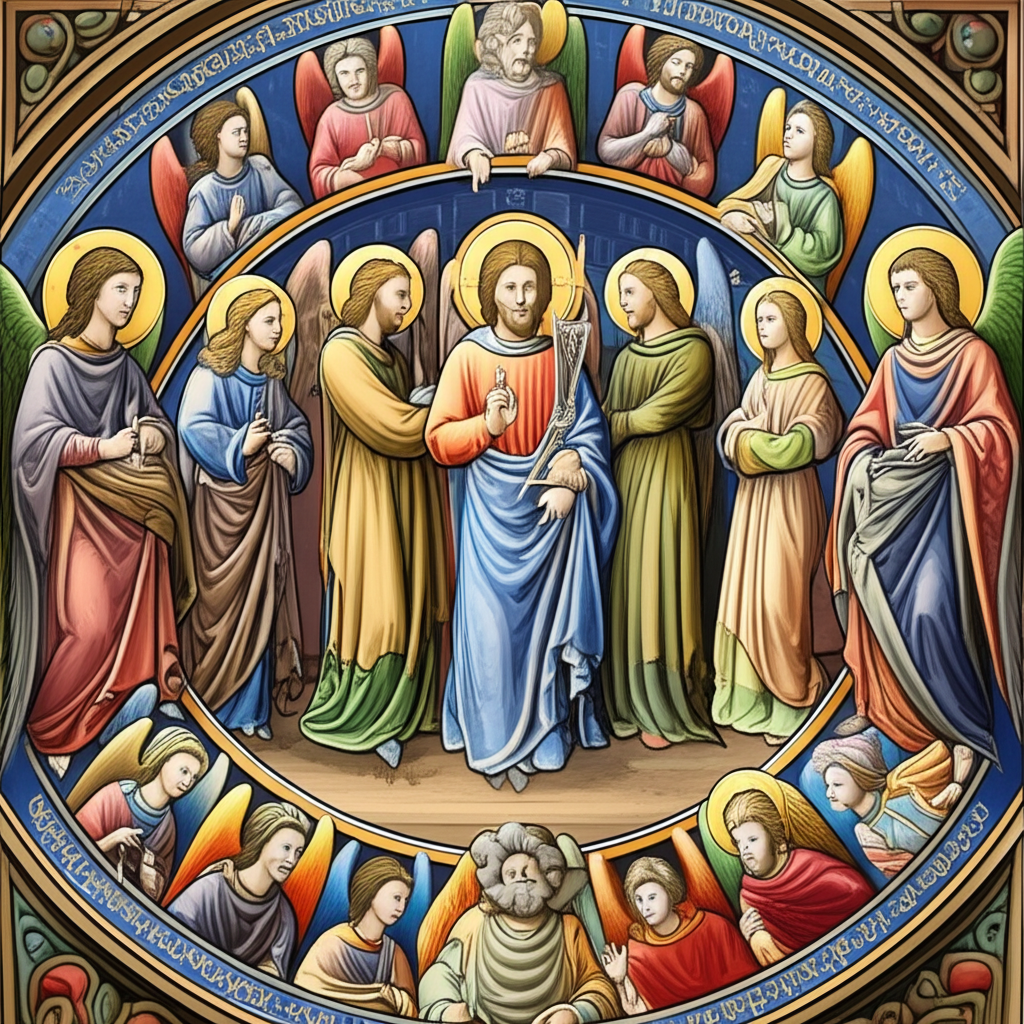
Angelic Attributes: Intellect, Will, and Knowledge
Given their nature as pure form and intellect, angels possess distinct attributes that set them apart:
- Immateriality: As discussed, they are entirely spiritual, without bodies, making them immortal and incorruptible.
- Intellect and Will: Angels possess perfect intellect and free will, unhindered by the limitations of a physical body or sensory perception. Their knowledge is direct and intuitive, not acquired through abstraction from sense data as ours is.
- Direct Knowledge: They grasp truths directly, through infused species (divinely implanted forms of knowledge), rather than through discursive reasoning.
- Perfect Freedom: Their will is perfectly free, allowing for a singular, unchangeable choice once made, as seen in the theological accounts of the fall of some angels.
- Hierarchy: Medieval theology often described angels as existing in various orders or choirs, reflecting a cosmic hierarchy of perfection and function.
| Angelic Choir | General Function (Traditional) | Philosophical Implication |
|---|---|---|
| Seraphim, Cherubim, Thrones | Closest to God, contemplation | Highest intellect, purest form, direct knowledge of God |
| Dominions, Virtues, Powers | Govern creation, celestial order | Executive function, mediating divine will |
| Principalities, Archangels, Angels | Interact with humanity, messengers | Direct interaction, guidance, revelation |
The Role of Angels in Theology and Cosmology
In various theological frameworks, angels play crucial roles beyond their ontological significance:
- Messengers of God: The very word "angel" (from Greek angelos) means messenger, highlighting their function in divine communication and revelation.
- Guardians and Guides: They are often depicted as protectors of individuals, nations, or even cosmic order.
- Movers of the Heavens: In some medieval cosmologies, angels were believed to be the intelligences that moved the celestial spheres, maintaining the harmony of the cosmos. This integrated their philosophical being directly into the physical model of the universe.
- Instruments of Divine Providence: They serve as agents through whom divine will is exercised in the world, influencing events without violating free will.
Modern Reinterpretations and Enduring Questions
While the detailed scholastic discussions of angels might seem distant to contemporary thought, the philosophical questions they raise remain profoundly relevant. How do we conceive of intelligence without a brain? What does it mean for being to be entirely immaterial? The concept of the angel forces us to confront the limits of our anthropocentric understanding of consciousness and existence. Even in secular philosophy, the exploration of artificial intelligence and consciousness often circles back to similar questions about the nature of intellect and form independent of biological substrate.
Conclusion
The concept of the angelic being is far more than a charming myth; it is a sophisticated philosophical construct that has profoundly shaped Western thought. From ancient philosophical inquiries into pure intellect and form to the detailed theology of the medieval period, angels have served as a crucible for exploring the very nature of being, knowledge, and divine interaction with the cosmos. They compel us to stretch our minds beyond the tangible, to contemplate existence in its most refined, immaterial form, leaving us with an enduring legacy of profound intellectual inquiry.
📹 Related Video: What is Philosophy?
Video by: The School of Life
💡 Want different videos? Search YouTube for: ""Aquinas Angelology Explained", "Immaterial Beings Philosophy""