

The Citizen's Relationship to the State: A Perennial Inquiry
The intricate dance between the individual and the collective, between the Citizen and the State, forms one of philosophy's most enduring and vital inquiries. From the ancient polis to modern democracies, this relationship has been the crucible in which concepts of justice, freedom, and order are forged. At its core lies a fundamental tension: how do we reconcile individual autonomy with the demands of communal living, and what Duty does each owe the other under the overarching framework of Law? This article delves into the philosophical underpinnings of this dynamic, drawing insights from the Great Books of the Western World to illuminate its complexities.
I. Foundations of the Social Contract: From Chaos to Community
The very existence of the State implies a departure from a hypothetical "state of nature," a concept explored deeply by Enlightenment thinkers. This transition is often understood through the lens of the social contract theory, where individuals willingly or implicitly surrender certain freedoms for the sake of collective security and prosperity.
- Thomas Hobbes in Leviathan posited a life "solitary, poor, nasty, brutish, and short" without a powerful sovereign State to enforce order. For Hobbes, the Citizen's primary Duty is obedience to the Law to prevent a return to chaos.
- John Locke, in his Two Treatises of Government, offered a more optimistic view, arguing that individuals possess natural rights (life, liberty, property) that the State is bound to protect. The Citizen's Duty here is conditional; obedience is owed as long as the State upholds its end of the contract.
- Jean-Jacques Rousseau, in The Social Contract, conceived of a State where individuals merge their wills into a "general will," creating a collective sovereignty. The Citizen becomes simultaneously ruler and subject, with a Duty to the community that is also a Duty to oneself.
This foundational shift from individualistic existence to communal governance establishes the premise for all subsequent discussions of rights and responsibilities.
II. The Guiding Hand of Law: Order, Justice, and Obedience
Within any organized State, Law serves as the primary mechanism for regulating the Citizen's behavior and defining the boundaries of governmental power. It is the visible manifestation of the social contract, translating abstract principles into concrete rules.
- Plato's Crito powerfully illustrates the Citizen's Duty to the Law. Socrates, facing an unjust death sentence, refuses to escape, arguing that to defy the laws of Athens, which have nurtured and protected him throughout his life, would be to undermine the very fabric of the State. His unwavering commitment underscores a profound respect for the legal system, even when it errs.
- Aristotle, in Politics, viewed the State as a natural institution aimed at promoting the "good life" for its Citizens. Law, for Aristotle, is not merely about preventing wrongdoing but about cultivating virtue and fostering a flourishing community. The Citizen's Duty extends beyond mere obedience to active participation in civic life.
The Dual Role of Law
| Aspect of Law | Function for the Citizen | Function for the State |
|---|---|---|
| Order & Stability | Provides predictability, security, and dispute resolution | Maintains social cohesion, prevents anarchy |
| Justice & Rights | Protects individual liberties, ensures fair treatment | Establishes legitimate authority, limits arbitrary power |
| Duty & Obligation | Defines responsibilities, fosters civic participation | Enforces adherence to societal norms, ensures collective action |
III. Reciprocal Duties: The Citizen's Mandate and the State's Promise
The relationship between Citizen and State is not a one-way street of command and obedience. It is a dynamic interplay of reciprocal Duty and expectation.
The Citizen's Duties to the State:
- Obedience to Law: The most fundamental Duty, ensuring the smooth functioning of society.
- Civic Participation: Engaging in democratic processes, voting, serving on juries, and staying informed.
- Taxation: Contributing to the common good by funding public services.
- Defense: In many contexts, a Duty to defend the State from external threats.
- Respect for Institutions: Upholding the legitimacy of governmental and legal structures.
The State's Duties to the Citizen:
- Protection of Rights: Safeguarding individual liberties, property, and security.
- Provision of Public Services: Education, infrastructure, healthcare, and welfare.
- Enforcement of Justice: Ensuring fair application of Law and due process.
- Accountability: Being transparent and answerable to the Citizenry.
- Promotion of the Common Good: Striving for conditions that allow all Citizens to thrive.
When the State fails in its Duty, particularly in protecting fundamental rights, the question of the Citizen's right to resistance or even revolution arises, as argued by Locke. This underscores that the social contract is a living agreement, subject to review and renewal by the Citizenry.
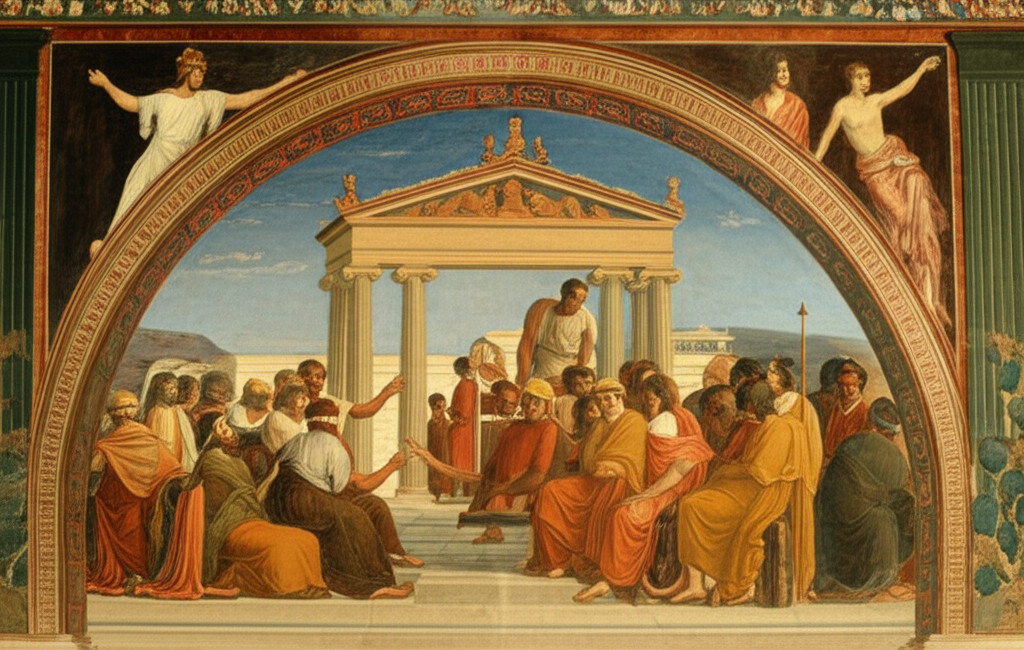
IV. Enduring Questions in a Modern Context
The philosophical discussions initiated by figures in the Great Books remain profoundly relevant today. As societies evolve, new challenges emerge that test the boundaries of the Citizen's relationship to the State. Issues like digital privacy, global governance, and the balance between security and liberty continue to provoke debate.
The enduring lesson is that this relationship is never static. It requires constant examination, active participation, and a commitment from both the Citizen and the State to uphold the principles of justice, Law, and mutual Duty that underpin a flourishing society.
📹 Related Video: PLATO ON: The Allegory of the Cave
Video by: The School of Life
💡 Want different videos? Search YouTube for: ""Social Contract Theory Explained" or "Plato Crito Summary""
📹 Related Video: PLATO ON: The Allegory of the Cave
Video by: The School of Life
💡 Want different videos? Search YouTube for: ""Hobbes Locke Rousseau Comparison""