

The Enduring Dance: Unpacking the Citizen's Relationship to the State
The relationship between the citizen and the state is one of philosophy's oldest and most persistent inquiries, a complex tapestry woven from threads of obligation, liberty, authority, and collective well-being. At its heart lies a fundamental tension: how can individual freedom coexist with the demands of a governing body, and what reciprocal duties bind each to the other? This article delves into the historical and philosophical underpinnings of this crucial dynamic, drawing insights from the foundational texts of Western thought to illuminate the perpetual negotiation that defines our political existence. We will explore the origins of the state, the evolving definition of the citizen, the indispensable role of law, and the multifaceted nature of duty that shapes this enduring partnership.
Foundations of Governance: Defining the State and the Citizen
To understand the relationship, we must first define its participants. The very concept of the state has evolved dramatically, from the ancient Greek polis to the modern nation-state, yet its essence remains a governing entity with authority over a defined territory and its people.
The State: From Polis to Leviathan
For Aristotle, the polis (city-state) was a natural association, essential for human flourishing, where individuals could achieve their highest potential. It was not merely a collection of individuals but a moral community aimed at the "good life." Fast forward to the early modern era, and thinkers like Thomas Hobbes, in his seminal work Leviathan, posited the state as an artificial construct, a powerful sovereign created to rescue humanity from the "war of all against all" inherent in the state of nature. For Hobbes, the state (the Leviathan) demands absolute obedience in exchange for security.
The Citizen: Subject, Participant, or Rights-Bearer?
The definition of a citizen has been equally fluid. In Plato's Republic, the ideal citizen is one who understands and accepts their role within a hierarchical society, contributing to the collective harmony. For the ancient Greeks, citizenship often implied active participation in public life, a privilege not extended to all residents.
With the Enlightenment, the concept of the citizen began to shift towards an individual endowed with inherent rights. John Locke, in his Two Treatises of Government, argued that individuals possess natural rights (life, liberty, property) that pre-exist the state. The citizen, in this view, consents to government not to surrender these rights but to better secure them. Jean-Jacques Rousseau, in The Social Contract, conceived of the citizen as both a subject of the general will and an active participant in its formation, emphasizing collective self-governance.
The Social Contract and the Indispensable Role of Law
The bridge between the citizen and the state is often conceptualized through the idea of a social contract – an implicit or explicit agreement by which individuals surrender some freedoms in exchange for the benefits of organized society. Central to this contract is the establishment of law.
Law as the Binding Fabric
Law is not merely a set of rules; it is the institutionalized expression of the state's authority and the framework within which citizens interact. It provides order, predictability, and a means of resolving disputes. From the Ten Commandments to the Roman legal codes, and later to the constitutional frameworks of modern democracies, law serves several critical functions:
- Order and Stability: Preventing chaos and ensuring public safety.
- Justice: Providing a mechanism for fairness and redress.
- Protection of Rights: Safeguarding individual liberties against infringement.
- Defining Duties: Outlining the obligations of citizens to the state and to each other.
Without law, the state would lack legitimate authority, and the citizen would lack the security and structure necessary for a flourishing life. As Cicero articulated, "The good of the people is the chief law."
The Nature of Duty: Obligations and Reciprocity
The relationship is inherently reciprocal, involving both rights and duties. The citizen has duties to the state, and the state has duties to its citizens.
Citizen's Duty to the State
Historically, the citizen's duty has often been framed as obedience. Socrates, facing execution in Plato's Crito, famously chose to accept his sentence rather than escape, arguing that he had an implicit duty to obey the laws of Athens, having lived under them his entire life. This highlights a powerful philosophical argument for civic obedience.
Beyond mere obedience, citizen duty can encompass:
- Law Abidance: Adhering to the laws of the land.
- Taxation: Contributing financially to the common good.
- Defense: Serving in the military when required.
- Civic Participation: Voting, jury duty, engaging in public discourse.
State's Duty to the Citizen
Conversely, the state is not merely an authoritarian entity; it bears significant duties towards its citizens. These include:
- Protection: Ensuring security from internal and external threats.
- Justice: Upholding the rule of law and providing fair adjudication.
- Provision of Public Goods: Infrastructure, education, healthcare, etc.
- Safeguarding Rights: Protecting fundamental liberties and freedoms.
The balance between these reciprocal duties is a continuous point of philosophical debate and political action. When the state fails in its duties, the legitimacy of the citizen's duty to obey is often questioned, leading to calls for reform or even revolution, as seen in Locke's justification for resistance against tyrannical government.
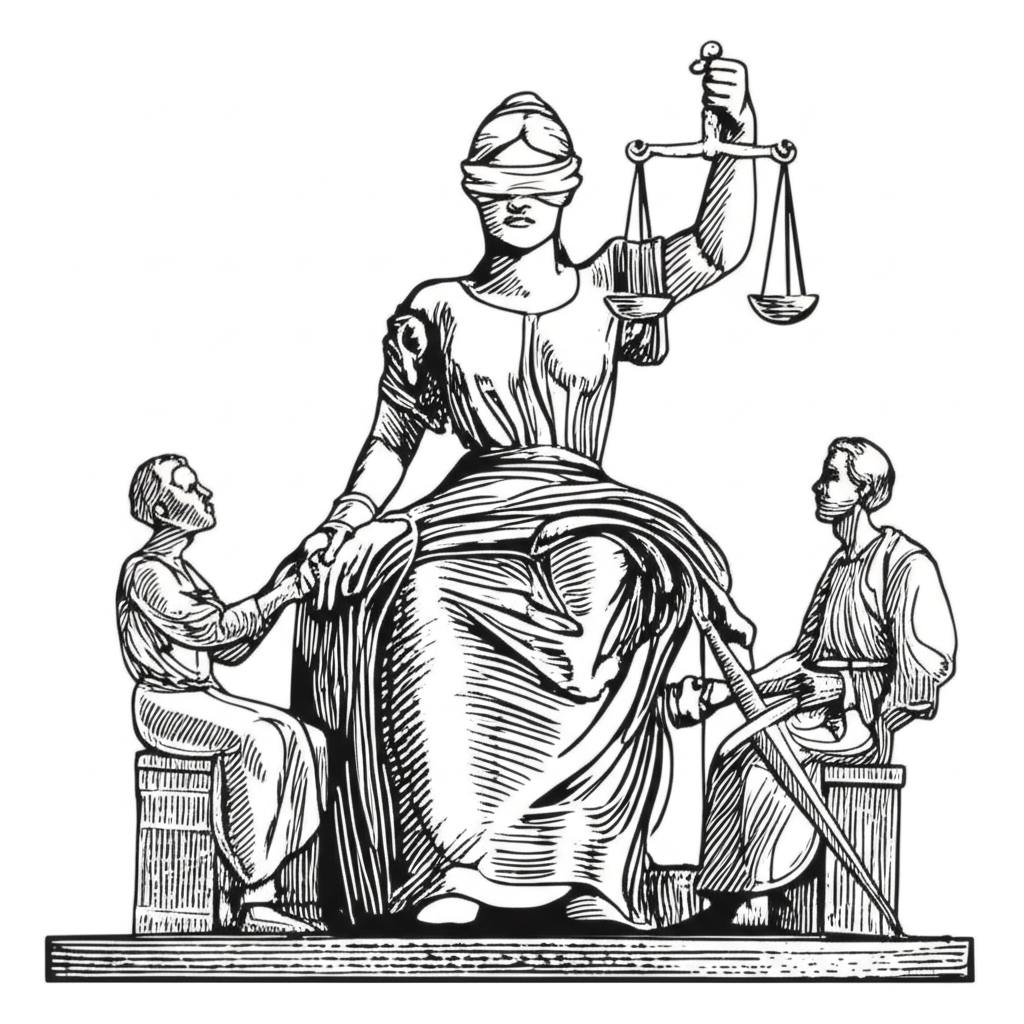 are engaged in a dynamic interaction, with threads or chains subtly connecting them, symbolizing their intertwined duties and obligations under the watchful eye of law.)
Navigating Tensions: When Duty and Conscience Collide
The ideal relationship between citizen and state is often harmonious, but history is replete with instances where individual conscience clashes with state demands.
The Dilemma of Disobedience
The story of Antigone, defying Creon's decree to bury her brother, exemplifies the ancient conflict between divine law or personal morality and the law of the state. This tension raises profound questions:
- Is there a higher law than that of the state?
- When is civil disobedience justified?
- What is the citizen's duty when the state acts unjustly?
Thinkers like Henry David Thoreau championed civil disobedience as a moral imperative when the state demands actions contrary to one's conscience. This highlights that the citizen's duty is not always passive obedience but can, at times, involve active moral resistance.
The Evolving Landscape
In contemporary society, globalization, technological advancements, and shifting political ideologies continue to reshape the citizen's relationship to the state. Debates around surveillance, digital rights, global citizenship, and the responsibilities of states in a climate crisis constantly redefine the boundaries of duty and authority. The core philosophical questions, however, remain steadfast: What is the legitimate scope of state power, and what are the irreducible rights and duties of the individual within it?
Conclusion: A Perpetual Dialogue
The citizen's relationship to the state is not a static agreement but a living, breathing dialogue, constantly re-negotiated through political discourse, legal challenges, and societal evolution. From the ancient polis to modern democracies, the fundamental questions posed by the Great Books of the Western World continue to resonate: How do we balance individual liberty with collective good? What are the true foundations of legitimate authority? And how do we ensure that both the citizen and the state fulfill their respective duties under the guiding principle of law? Understanding this dynamic is not merely an academic exercise; it is essential for informed participation in the ongoing project of building just and flourishing societies.
YouTube Video Suggestions:
-
📹 Related Video: KANT ON: What is Enlightenment?
Video by: The School of Life
💡 Want different videos? Search YouTube for: ""Social Contract Theory Explained Locke Hobbes Rousseau""
2. ## 📹 Related Video: PLATO ON: The Allegory of the Cave
Video by: The School of Life
💡 Want different videos? Search YouTube for: ""Plato's Republic Justice and the Ideal State Summary""