

The Enduring Pact: Exploring the Citizen's Relationship to the State
The relationship between the Citizen and the State stands as one of the most fundamental and enduring inquiries in political philosophy. At its core, this dynamic defines not only how societies are structured but also the very essence of human freedom, collective order, and individual Duty. This article delves into the historical and philosophical underpinnings of this crucial bond, drawing insights from the "Great Books of the Western World," examining the role of Law, and the reciprocal obligations that shape our shared existence. From ancient city-states to modern democracies, the ongoing dialogue between the individual and the governing body remains central to understanding justice, governance, and the pursuit of a flourishing society.
I. The Genesis of Governance: Defining Citizen and State
To unravel this complex relationship, we must first define its primary actors. The Citizen is more than just an inhabitant; they are an individual endowed with specific rights and responsibilities within a political community. This concept evolved significantly, from the limited citizenship of ancient Athens, where only a select few participated in governance, to the broader, albeit still contested, universal citizenship envisioned in modern liberal democracies.
The State, conversely, represents the organized political community under one government. It is the entity that claims a monopoly on legitimate force within a defined territory, responsible for maintaining order, administering justice, and providing for the common good. Thinkers like Thomas Hobbes, in Leviathan, posited the State as a necessary, albeit powerful, entity to escape the "state of nature," where life was "solitary, poor, nasty, brutish, and short."
II. The Philosophical Bedrock: From Contract to Consent
The philosophical frameworks attempting to explain the origin and legitimacy of the State, and thus the citizen's obligation to it, are diverse and profound.
A. The Social Contract Tradition
Perhaps the most influential framework is the Social Contract theory, which posits that individuals voluntarily surrender some of their natural freedoms to a collective authority (the State) in exchange for security, order, and the protection of remaining rights.
| Philosopher | Core Idea | Citizen's Obligation (Duty) | State's Obligation |
|---|---|---|---|
| Thomas Hobbes | Escape from the "war of all against all." | Absolute obedience to the sovereign. | Maintain order and prevent chaos. |
| John Locke | Protection of natural rights (life, liberty, property). | Obedience conditioned on the State upholding natural rights. | Protect natural rights; rule by consent. |
| Jean-Jacques Rousseau | Submission to the "general will" for true freedom and equality. | Active participation in forming the general will; obedience to laws. | Enact laws reflecting the general will; promote common good. |
These diverse perspectives highlight the varying degrees of Duty a citizen owes the State, ranging from absolute submission to conditional consent.
B. Natural Rights and the Purpose of the State
Complementing the social contract, the concept of natural rights—rights inherent to individuals by virtue of their humanity, independent of government—also profoundly shapes the citizen-state relationship. John Locke, building on earlier natural law traditions, argued that the State's primary purpose is to protect these pre-existing rights. When the State fails in this fundamental Duty, citizens retain the right to resist or even overthrow it. This idea profoundly influenced revolutionary thought and the development of modern constitutionalism, where a government's legitimacy rests on its ability to safeguard individual liberties.
III. The Architecture of Order: Law and Duty
At the heart of the citizen-state relationship is Law. Law is the codified expression of the State's authority and the framework within which citizens operate. It defines rights, prescribes Duty, and establishes mechanisms for justice.
A. The Indispensable Role of Law
Law serves multiple critical functions:
- Maintaining Order: It provides a predictable structure, preventing arbitrary action and chaos.
- Protecting Rights: It formalizes and enforces the rights of citizens against infringement by others or by the State itself.
- Administering Justice: It offers a system for resolving disputes and punishing transgressions.
- Defining Duty: It explicitly outlines the obligations citizens owe to the State and to each other.
From the ancient codes of Hammurabi to the intricate legal systems of today, Law is the primary instrument through which the State exercises its power and the Citizen understands their place within the political order. Aristotle, in Politics, emphasized the rule of law as superior to the rule of any individual, arguing that "Law is reason unaffected by desire."
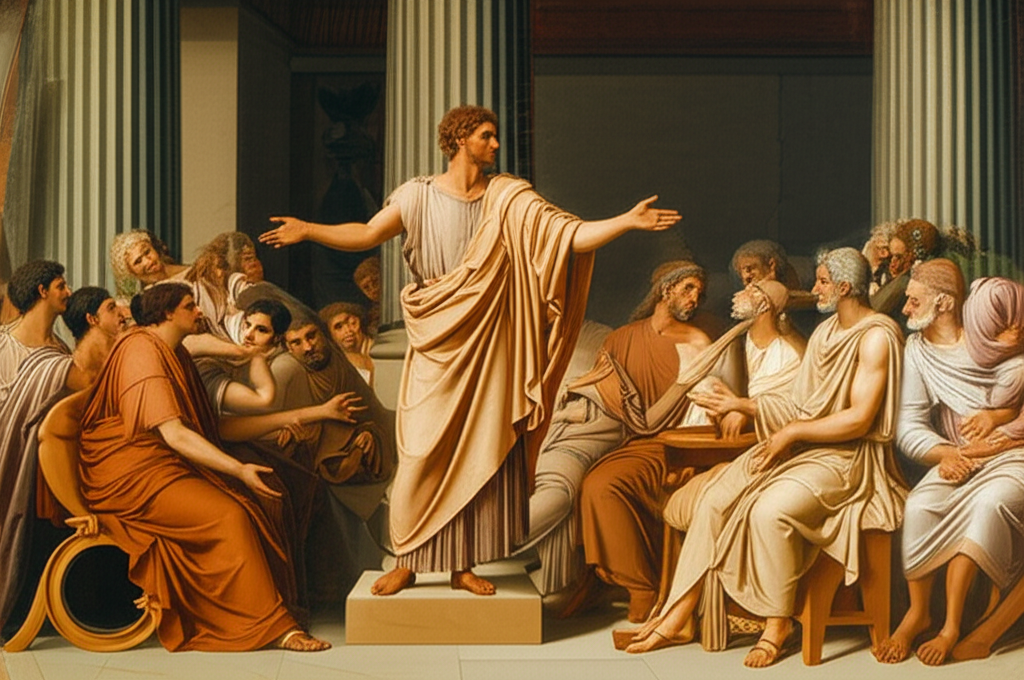
B. The Weight of Duty: Obligations and Ethical Dilemmas
The concept of Duty is central to the citizen's role. This encompasses:
- Obedience to Law: The most basic Duty is to abide by the laws of the land.
- Civic Participation: Voting, serving on juries, engaging in public discourse, and holding elected officials accountable.
- Paying Taxes: Contributing to the common good and the functioning of the State.
- Defense of the State: In times of external threat, citizens may have a Duty to defend their nation.
However, Duty is not always straightforward. Philosophical texts from Sophocles' Antigone to Thoreau's Civil Disobedience explore the profound ethical dilemmas that arise when a citizen's conscience conflicts with the demands of the State or its Law. When is disobedience not merely permissible, but a moral imperative? This question challenges the very foundation of the citizen's Duty and highlights the reciprocal nature of the relationship: if the State fails in its Duty to uphold justice or protect rights, the citizen's Duty may shift.
IV. An Ever-Evolving Dialogue: Rights, Responsibilities, and Power
The relationship between the Citizen and the State is not static; it is a dynamic negotiation of rights, responsibilities, and power. Modern political thought, particularly from figures like John Stuart Mill in On Liberty, emphasizes the importance of individual freedoms and the limitations on state power. Mill argued for a "harm principle," suggesting that the State should only intervene in individual liberty to prevent harm to others.
The ongoing challenge for any society is to strike a balance:
- Between individual liberty and collective security.
- Between the State's authority and the Citizen's autonomy.
- Between the Duty to obey and the right to dissent.
In a healthy democracy, citizens actively participate in shaping the State through elections, advocacy, and protest, ensuring that the State remains accountable to the people it serves. This active engagement is itself a profound Duty of the Citizen, transforming passive subjects into active participants in their shared political destiny.
Conclusion: The Unfinished Symphony
The relationship between the Citizen and the State is a complex, multi-layered tapestry woven from historical precedent, philosophical inquiry, and practical necessity. It is a continuous negotiation, a delicate balance between individual freedom and collective order, upheld by the twin pillars of Law and Duty. As societies evolve, so too must our understanding of this fundamental pact. The "Great Books" offer not definitive answers, but rather a rich tradition of inquiry, reminding us that the quality of our shared life depends profoundly on how thoughtfully and responsibly we navigate this enduring relationship.
YouTube Video Suggestions:
- "The Social Contract: Crash Course Philosophy #33" (This would provide a concise overview of the key social contract theorists mentioned.)
- "Plato's Republic: Crash Course Philosophy #36" (This offers an accessible summary of Plato's ideas on the ideal state and the role of citizens, directly linking to Great Books content.)
📹 Related Video: What is Philosophy?
Video by: The School of Life
💡 Want different videos? Search YouTube for: "The Citizen's Relationship to the State philosophy"