

The Enduring Nexus: The Citizen's Relationship to the State
The relationship between the individual citizen and the collective entity we call the State is perhaps the most fundamental and enduring question in political philosophy. From the ancient polis to the modern nation-state, this dynamic interplay defines our liberties, obligations, and the very structure of society. This article explores the historical evolution of this intricate bond, drawing insights from the Great Books of the Western World, examining the origins of the State, the nature of Law, and the profound concept of Duty that binds or sometimes divides the Citizen from the sovereign.
Foundational Queries: Defining the Citizen and the State
Before delving into the complexities, it is crucial to understand the entities at play. A Citizen is typically understood as an individual member of a political community, endowed with certain rights and subject to specific duties. The State, conversely, is the organized political community itself, possessing sovereignty over a defined territory and its people, responsible for maintaining order, administering justice, and providing for the common good. The relationship is inherently reciprocal: the State derives its legitimacy, at least in part, from its Citizens, who in turn rely on the State for protection and the framework of a civilized existence.
From Ancient Polis to Philosophical Constructs
The earliest philosophical inquiries into this relationship emerged in ancient Greece. Plato, in his Republic, envisioned an ideal State where the Citizen found their place through justice and adherence to a carefully structured social order. For Plato, the individual's well-being was inextricably linked to the health of the polis; a just State fostered just individuals. Aristotle, in Politics, famously declared man to be a "political animal," asserting that human flourishing (eudaimonia) could only be achieved within the community of the State. The Citizen's Duty was to participate actively in the affairs of the polis, contributing to the common good through virtue and adherence to Law.
Table 1: Ancient Perspectives on the Citizen-State Relationship
| Philosopher | Key Concept of State | Citizen's Primary Duty | Underlying Principle |
|---|---|---|---|
| Plato | Ideal, Just Polis | Adherence to social order, pursuit of justice | Harmony and Virtue |
| Aristotle | Natural Community | Active participation, civic virtue | Human Flourishing |
The Social Contract: A Mutual Understanding
Centuries later, the Enlightenment philosophers dramatically reshaped the discourse with the concept of the social contract. This theory posits that the State is not a natural or divinely ordained entity, but rather an agreement, explicit or implicit, among individuals to form a society and government.
- Thomas Hobbes (Leviathan) painted a grim picture of the "state of nature" – a "war of all against all." To escape this brutal existence, individuals surrender nearly all their natural rights to an absolute sovereign, forming a powerful State that ensures peace and security. The Citizen's Duty is almost absolute obedience to the sovereign's Law to prevent a return to chaos.
- John Locke (Two Treatises of Government) offered a more optimistic view. In his state of nature, individuals possess inherent natural rights (life, liberty, and property). The State is formed to protect these rights, with government by consent of the governed. The Citizen's Duty includes obeying the Law as long as the State upholds its end of the contract; if the State becomes tyrannical, citizens have the right to resist.
- Jean-Jacques Rousseau (The Social Contract) argued that true freedom comes from collective self-governance. Citizens alienate their individual wills to the "general will," creating a sovereign people. The Law is an expression of this general will, and obeying it is an act of self-legislation, thus preserving freedom. The Citizen's Duty is to participate in creating the general will and to obey the laws derived from it.
These diverse interpretations highlight the enduring tension between individual liberty and collective authority, a tension central to the Citizen's relationship with the State.
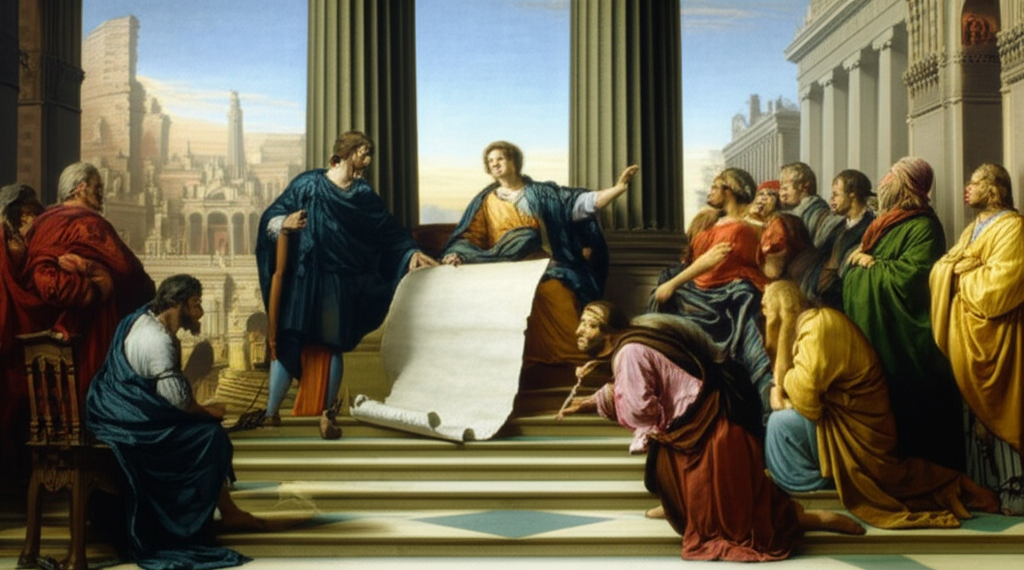
The Role of Law and Duty
Law serves as the primary mechanism through which the State governs and the Citizen interacts with that governance. It provides structure, defines rights, and enforces obligations. For the Citizen, the Duty to obey the Law is often considered paramount for the functioning of society. This Duty can stem from various sources:
- Moral Obligation: A belief that laws are inherently just or necessary for the common good.
- Pragmatic Necessity: The understanding that without Law, chaos ensues, and personal security is jeopardized.
- Social Contract: As discussed, obedience to Law is part of the agreement to live in a civil society.
However, the Citizen's Duty is not always passive obedience. In democratic frameworks, Duty extends to active participation: voting, civic engagement, and even holding the State accountable. When does a Citizen's Duty to their conscience or higher moral principles supersede their Duty to the State's Law? This question has fueled debates on civil disobedience, revolution, and the limits of state power.
Navigating Disobedience and Dissent
The Great Books also grapple with the legitimate grounds for a Citizen to resist the State. Locke's justification for revolution against tyranny, Rousseau's concept of the general will being betrayed, and even the Socratic dilemma (as depicted in Plato's Crito, where Socrates chooses to obey the unjust Law of Athens rather than flee) illustrate this complex ethical frontier. The tension between the State's claim to authority and the Citizen's conscience is a recurrent theme. While the State relies on the Citizen's Duty to uphold Law, the legitimacy of that Law and the authority of the State itself are subject to constant scrutiny and, at times, challenge.
Modern Implications and Enduring Questions
In the contemporary world, the fundamental questions about the Citizen's Relationship to the State persist. As societies become more complex, globalized, and technologically advanced, new dimensions emerge: privacy in the digital age, the balance between national security and individual liberties, and the State's role in addressing global challenges like climate change or pandemics. The core principles elucidated by the Great Books – the pursuit of justice, the balance of rights and duties, the nature of legitimate authority, and the purpose of Law – remain indispensable tools for navigating these modern dilemmas. The active, informed Citizen continues to be the bedrock upon which any legitimate State must ultimately rest.
YouTube Video Suggestions:
-
📹 Related Video: KANT ON: What is Enlightenment?
Video by: The School of Life
💡 Want different videos? Search YouTube for: ""Social Contract Theory Hobbes Locke Rousseau Explained""
2. ## 📹 Related Video: PLATO ON: The Allegory of the Cave
Video by: The School of Life
💡 Want different videos? Search YouTube for: ""Plato's Republic Summary and Analysis""