

The Labyrinth of Choice: Unpacking the Cause of Sin and Moral Error
The enduring philosophical question of why we deviate from the good, why we commit sin or make moral errors, is a profound inquiry into the very nature of human agency. At its core, the cause of sin and moral error stems primarily from a defect or misdirection of the will, an act of choosing a lesser good, or even an apparent good, over the true and ultimate good. This deviation is often rooted in a form of ignorance, a weakness in the face of passion, or a deliberate failure to adhere to one's rational duty. It is within the intricate interplay of intellect, desire, and free will that the roots of our moral failings are discovered.
Defining the Deviation: What We Mean by Sin and Moral Error
Before we can pinpoint the cause, it's essential to clarify our terms. In this discourse, "sin" is understood broadly, not exclusively in a theological sense, but as a transgression against a moral law, a rational order, or a perceived good. "Moral error," similarly, denotes a mistake in judgment or action that leads away from what is right or virtuous. Both imply a departure from an ideal, a failure to achieve what ought to be. This failure, as the great thinkers of the Western tradition have shown, is rarely simple.
Ancient Insights: Ignorance, Passion, and the Divided Soul
The earliest philosophical inquiries into moral error often pointed to a lack of knowledge.
- Socrates and Plato: For these ancient Greek philosophers, no one errs willingly. Sin was seen as a product of ignorance; if one truly knew what was good, one would inevitably choose it. The cause of wrongdoing, therefore, was a deficiency in understanding the true nature of virtue and happiness. The enlightened soul would naturally pursue the good.
- Aristotle and Akrasia: While acknowledging the role of ignorance, Aristotle introduced the concept of akrasia, or "incontinence" – the phenomenon of knowing what is good but failing to do it due to the overwhelming force of passion or desire. Here, the will is not necessarily misinformed, but rather weakened, pulled by appetites contrary to rational judgment. This highlights a conflict within the human soul, where reason’s command can be overridden by immediate gratification.
The Medieval Contribution: The Will's Freedom and the Privation of Good
With the advent of Christian philosophy, particularly through Augustine and Aquinas, the focus shifted dramatically to the central role of the will and the concept of free choice.
- Augustine of Hippo: Augustine famously argued that evil is not a positive substance but a privation or absence of good, much like darkness is the absence of light. Sin, therefore, is not caused by some evil entity, but by the will's turning away from the supreme Good (God) towards lesser, created goods. The cause of sin lies in the free will's voluntary choice to love mutable things more than the immutable. This introduced the profound idea of moral responsibility resting squarely on individual choice.
- Thomas Aquinas: Building on Augustine and Aristotle, Aquinas further elucidated the intellect's role in presenting goods to the will. However, the will retains its freedom to choose. Sin arises when the will, influenced by passion or a defective understanding, chooses a particular good that is not in conformity with right reason or divine law. The cause is a defect in the voluntary act itself, a defectus voluntatis.
The Enlightenment and Beyond: Duty, Autonomy, and the Moral Law
The modern era, particularly with Immanuel Kant, re-emphasized reason and the concept of duty as paramount in moral action.
- Immanuel Kant: For Kant, moral error occurs when the will acts not from duty – that is, out of respect for the moral law – but from inclination or self-interest. The good will is the only thing good without qualification, and it is good precisely because it acts from duty. The cause of moral error, then, is a failure of the will to act autonomously according to universalizable moral principles, choosing instead a heteronomous path dictated by external desires or consequences.
Synthesizing the Causes: A Complex Interplay
The journey through philosophical history reveals that the cause of sin and moral error is multifaceted, a complex tapestry woven from intellect, will, and emotion.
Key Contributing Factors to Sin and Moral Error:
| Factor | Description | Philosophical Roots |
|---|---|---|
| Ignorance | A lack of true knowledge regarding what is good, right, or virtuous. This can be vincible (culpable) or invincible (non-culpable). While often a contributing factor, culpable ignorance itself can be a result of a prior willful neglect. | Socrates, Plato (sin as ignorance), Aristotle (some forms of error) |
| Weakness of the Will | Also known as akrasia or incontinence. The intellect may discern the good, but the will fails to execute it due to the overwhelming force of passion, desire, or temptation. This is a struggle between rational judgment and immediate impulse. | Aristotle (akrasia), Augustine (struggle against concupiscence) |
| Misdirection of the Will | The will freely chooses a lesser good over a greater one, or an apparent good that is actually harmful. This is a positive act of turning away from the true good, often driven by self-love, pride, or attachment to worldly things. This is the core Augustinian and Thomistic understanding of the cause of sin. | Augustine (privation of good, turning from immutable to mutable), Aquinas (defectus voluntatis) |
| Failure of Duty | The will fails to act in accordance with the moral law or rational principles, choosing instead to follow inclination or external pressures. This represents a lack of respect for the moral law and a failure to exercise true moral autonomy. | Kant (acting not from duty), Stoics (living according to nature/reason) |
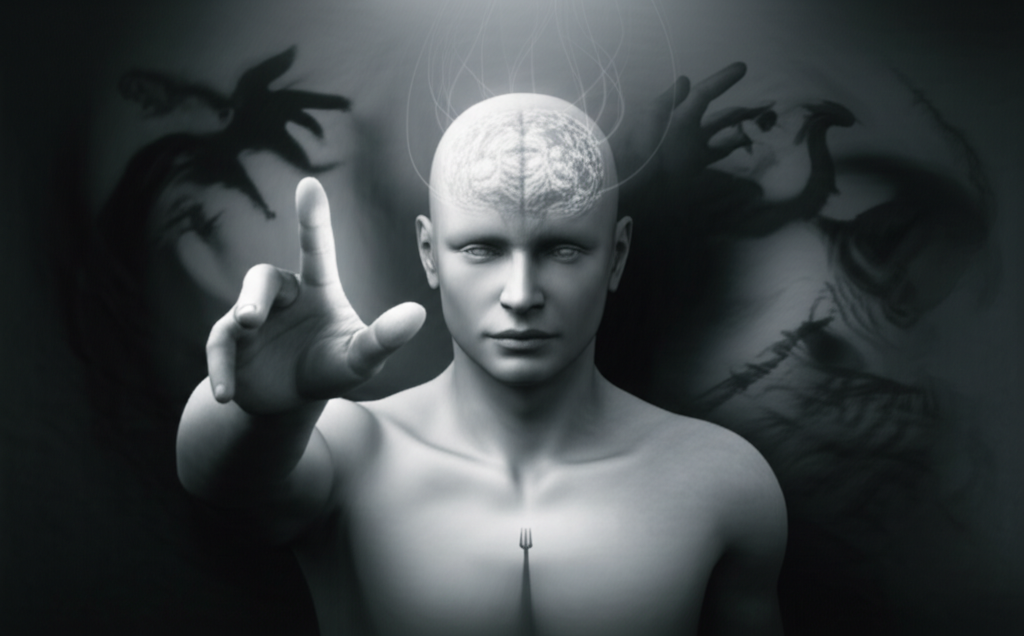
Ultimately, the cause of sin and moral error is not a simple external force but an internal dynamic. It is a defect in the human will – whether through a failure to properly inform itself (ignorance), a failure to overcome contrary desires (weakness), or a deliberate choice against the good and rational duty (misdirection). It is the tragic freedom of the human condition that allows us not only to aspire to the highest good but also to deviate from it.
Conclusion: The Enduring Challenge of Moral Freedom
The profound insights from the Great Books of the Western World converge on a singular, yet complex, understanding: the cause of sin and moral error lies within the human agent. It is the exercise, or misexercise, of our free will. This capacity for choice, while elevating us to moral beings, also burdens us with the responsibility for our deviations. To understand the cause is to grasp the perpetual challenge of aligning our will with reason, fulfilling our duty, and striving consistently towards the good, even amidst the allure of lesser paths.
YouTube Video Suggestions:
-
📹 Related Video: KANT ON: What is Enlightenment?
Video by: The School of Life
💡 Want different videos? Search YouTube for: ""Augustine on Free Will and Evil Explained""
-
📹 Related Video: KANT ON: What is Enlightenment?
Video by: The School of Life
💡 Want different videos? Search YouTube for: ""Kant's Moral Philosophy: Duty and Categorical Imperative Simply Explained""