

The Art of Poetry and Emotion: A Philosophical Inquiry
Poetry stands as one of humanity's most profound and enduring art forms, an intricate weave of language, rhythm, and imagery designed to capture and convey the deepest currents of human emotion. This pillar page embarks on a philosophical exploration of poetry, dissecting its essence not merely as an aesthetic pursuit, but as a vital conduit for understanding ourselves, our world, and the elusive nature of beauty. We will delve into how poets craft feeling into form, how emotion serves as both their muse and their medium, and how the pursuit of beauty in verse resonates with timeless philosophical questions. Join us as we uncover the intricate relationship between the spoken word and the felt experience, revealing poetry as an indispensable lens through which to examine the human condition.
The Poetic Act: Crafting Emotion into Art
At its heart, poetry is an act of creation, a deliberate shaping of language to elicit a particular response. It is an art that demands precision, intuition, and a profound sensitivity to the nuances of human experience. The poet, much like a sculptor or painter, works with a chosen medium – words – to bring forth something new, something that speaks directly to the soul.
Mimesis and the Imagination: Reflecting Reality
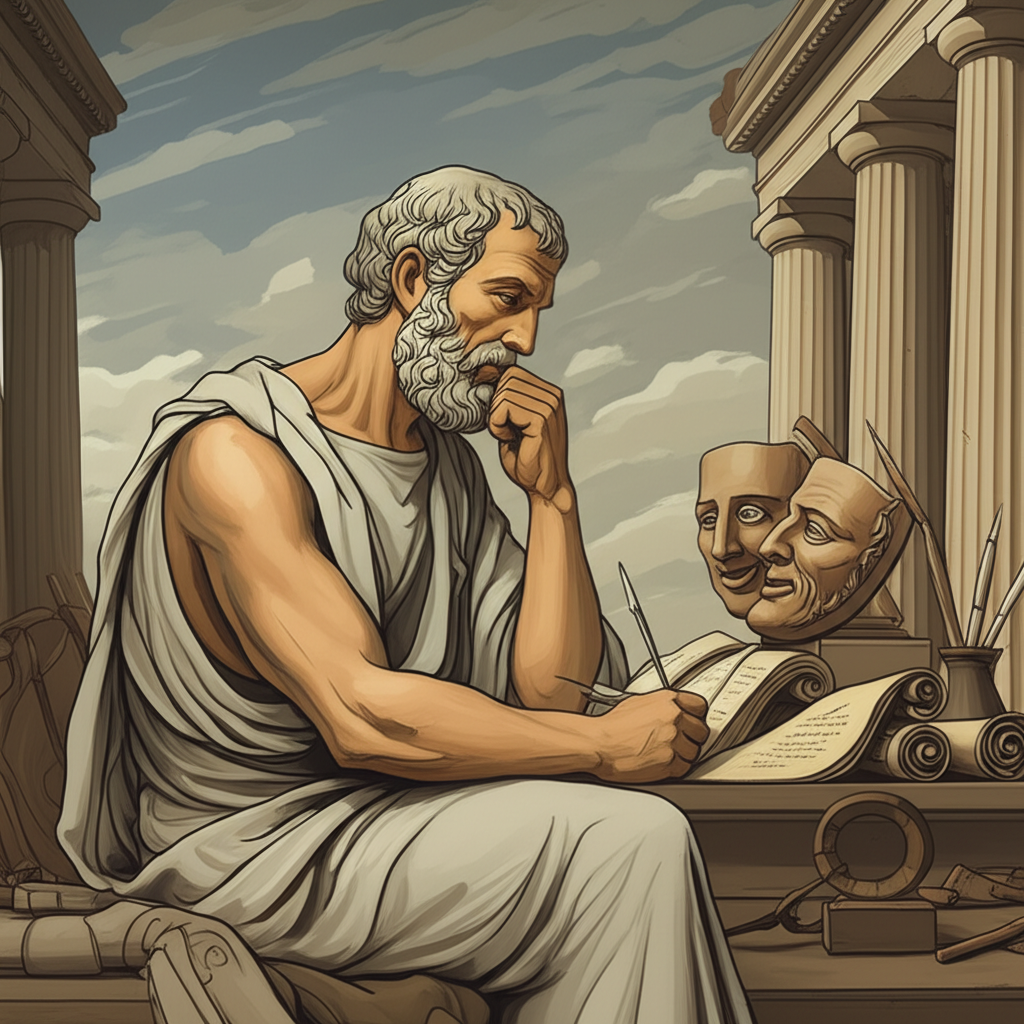
From ancient Greece, philosophers like Plato and Aristotle grappled with the concept of mimesis, or imitation. While Plato viewed poetic mimesis with suspicion, seeing it as a mere copy of a copy, Aristotle recognized its power. For Aristotle, poetry wasn't just a literal reproduction of reality, but a representation of universal truths and possibilities. The poet, through their imagination, doesn't simply describe a feeling but recreates the conditions for that feeling to be experienced by the reader. This is where the art of poetry transcends simple narrative; it distills experience to its emotional core.
The Poet as Architect of Feeling
Consider the meticulous work involved in crafting a poem. It is an act of deliberate construction, where every word, every line break, every rhythmic pulse is chosen to serve a larger emotional purpose.
| Poetic Element | Function in Evoking Emotion |
|---|---|
| Imagery | Creates vivid mental pictures, engaging sensory experience. |
| Metaphor/Simile | Connects disparate ideas, revealing new emotional truths. |
| Rhythm/Meter | Establishes a flow that mirrors emotional states (e.g., fast for excitement, slow for contemplation). |
| Sound Devices | Alliteration, assonance, consonance, and rhyme create musicality and reinforce mood. |
| Structure | Stanza breaks, line length, and form (sonnet, haiku) influence pacing and emphasis of emotion. |
Through this careful orchestration, the poet becomes an architect of feeling, guiding the reader through a landscape of emotion with expert precision. This is the art of transforming raw experience into something coherent, communicable, and deeply resonant.
Emotion as the Muse and Medium of Poetry
Emotion is not merely a subject matter for poetry; it is the very fabric from which poetry is woven. It is the initial spark, the driving force, and the ultimate destination of the poetic journey. Without emotion, poetry would be a sterile exercise in linguistics; with it, it becomes a mirror to the soul.
Catharsis and the Emotional Experience
One of the most enduring philosophical insights into the power of art comes from Aristotle's discussion of catharsis in tragedy. He posited that witnessing tragic art could lead to a "purification" or "purgation" of emotion, specifically pity and fear. This concept extends profoundly to poetry. Reading a poem about grief, for instance, doesn't necessarily make us sad in the same way as experiencing personal loss, but it allows us to engage with grief in a controlled, reflective manner, potentially leading to a deeper understanding or even a release of our own accumulated feelings. Poetry provides a safe space for the exploration and processing of intense emotion.
The Spectrum of Human Feeling in Verse
Poetry embraces the entire gamut of human emotion, giving voice to the inexpressible and form to the formless. It is in the delicate balance of these feelings that poetry finds its greatest strength and its most profound beauty.
- Love: From passionate adoration to tender affection, poetry has always been the language of the heart. Think of the sonnets of Shakespeare, exploring the many facets of romantic love and its enduring beauty.
- Grief and Loss: Poetry offers solace and articulation for the pain of bereavement, helping us navigate the desolate landscapes of sorrow.
- Joy and Celebration: Moments of elation, wonder, and gratitude find vibrant expression in verse, uplifting the spirit.
- Anger and Protest: Poetry can be a potent weapon against injustice, a vehicle for righteous indignation and a call to action.
- Awe and Wonder: Confronting the sublime in nature or the mysteries of existence often inspires poetry that seeks to capture the ineffable.
The Pursuit of Beauty in Poetic Expression
The quest for beauty is intrinsic to the art of poetry. Yet, what constitutes poetic beauty is a question that has occupied philosophers for millennia. Is it merely a pleasing arrangement of words, or does it hint at something deeper, something true?
Beauty Beyond the Aesthetic: Truth and Form
Plato, in his dialogues, often connected beauty to truth and goodness, suggesting that true beauty was a reflection of ideal forms. For him, a beautiful poem might echo a higher, more perfect reality. Later thinkers, like Immanuel Kant, explored the subjective experience of beauty, suggesting that our appreciation of beauty is a "disinterested pleasure," a feeling of delight that arises from the harmonious interplay of our cognitive faculties.
In poetry, beauty manifests not just in mellifluous language or vivid imagery, but also in the profound insights it offers. A poem can be beautiful because it reveals a hidden truth about human nature, because it perfectly articulates a complex emotion, or because its form and content are in exquisite harmony. This pursuit of beauty is not superficial; it is a profound engagement with meaning and form.
The Sublime and the Profound: Evoking Awe
Beyond mere beauty, there exists the concept of the sublime. Philosophers like Longinus, in his treatise On the Sublime, described it as that quality in art (including poetry) that transports the audience, evoking not just pleasure but awe, wonder, and a sense of vastness that can even verge on terror. The sublime in poetry challenges our conventional understanding, pushing the boundaries of what language can convey and what the human mind can grasp. It is in these moments that poetry reaches its most profound heights, connecting us to something larger than ourselves, whether it be the immensity of nature, the depth of human suffering, or the grandeur of the divine.
The Enduring Philosophical Resonance of Poetic Art
Poetry, far from being a mere decorative art, plays a crucial role in our philosophical understanding of existence. It is a unique mode of inquiry, offering perspectives that complement, and sometimes even precede, the more systematic approaches of philosophy and science.
Poetry as a Mode of Knowing
While philosophy seeks to understand the world through logical argumentation and conceptual analysis, and science through empirical observation, poetry offers a different pathway to knowledge: through intuition, empathy, and imaginative identification. A poem might not present a logical proof, but it can illuminate a truth about the human heart with an undeniable force. It allows us to feel our way into understanding, to grasp complex realities through direct emotional experience. This makes poetry an indispensable tool for exploring the subjective dimensions of reality, the inner landscape of consciousness, and the unquantifiable aspects of human experience.
The Ethical and Existential Dimensions
Poetry often confronts us with fundamental ethical dilemmas and existential questions. Through its narratives and lyrical reflections, it compels us to consider:
- Empathy: By entering into the emotional world of another, poetry cultivates empathy, broadening our moral horizons.
- Meaning and Purpose: Many poems grapple with the search for meaning in a seemingly indifferent universe, the fleeting nature of life, and the confrontation with mortality.
- Justice and Injustice: As noted earlier, poetry can be a powerful voice for protest and a call for social justice, stirring the conscience of its readers.
- Freedom and Constraint: It explores the tension between individual liberty and societal expectations, the constraints of fate, and the pursuit of self-realization.
In these ways, poetry serves not just as a mirror reflecting our world, but as a crucible in which our deepest values and most pressing questions are forged and refined.
Further Exploration: Videos on Poetry and Philosophy
📹 Related Video: ARISTOTLE ON: The Nicomachean Ethics
Video by: The School of Life
💡 Want different videos? Search YouTube for: ""Aristotle Poetics Catharsis Explained""
📹 Related Video: PLATO ON: The Allegory of the Cave
Video by: The School of Life
💡 Want different videos? Search YouTube for: ""Plato on Art and Beauty Philosophy""
Conclusion: The Indispensable Weave of Art, Poetry, and Emotion
Our journey through "The Art of Poetry and Emotion" reveals a profound and unbreakable bond. Poetry is not merely words on a page; it is a living art form that harnesses the full spectrum of human emotion to illuminate truth and pursue beauty. From the ancient echoes of mimesis to the sublime heights of existential contemplation, poetry offers a unique and irreplaceable lens through which we can understand ourselves, our shared humanity, and the intricate tapestry of existence. It reminds us that to feel deeply, to reflect thoughtfully, and to express beautifully, is to be truly human. As long as there are hearts to feel and minds to wonder, poetry will remain an essential guide in our philosophical quest. We encourage you to continue exploring the rich landscape of poetic thought, to read, to reflect, and to allow the art of poetry to stir your own emotions and deepen your appreciation for beauty.


