

The Lyrical Resonance: Exploring The Art of Poetry and Emotion
Poetry, in its purest essence, is an exquisite intersection where thought takes flight on the wings of feeling. This pillar page delves into the profound and intricate relationship between Art, Poetry, and Emotion, exploring how verse serves as both a conduit for the poet's deepest sentiments and a catalyst for the reader's most profound experiences. Drawing inspiration from the philosophical titans encapsulated within the Great Books of the Western World, we shall navigate the aesthetic landscapes where Beauty is forged in rhythm and metaphor, demonstrating how poetry not only expresses emotion but also shapes our understanding of the human condition.
The Ineffable Tapestry: Defining Art, Poetry, and Emotion
To truly appreciate the symphony of poetry, we must first attune our ears to its constituent notes. The terms Art, Poetry, and Emotion are often used interchangeably, yet each possesses a distinct philosophical weight that, when understood, illuminates their profound interconnectedness.
-
What is Art? From the ancient Greek techne, signifying skill or craft, Art has been understood as the human capacity to create, to imitate, or to express. Plato, in his Republic, viewed art (specifically mimetic art like poetry) as a copy of a copy, potentially leading us further from truth. Aristotle, conversely, in Poetics, saw art as a means of imitation that could reveal universal truths and offer profound insights into human nature. For our purposes, poetry is a specific and elevated form of artistic expression, demanding mastery of language and form.
-
What is Poetry? More than mere rhyming, Poetry is the deliberate arrangement of language to evoke a particular emotional response, convey an idea, or celebrate Beauty. Aristotle, again, provides a foundational definition, emphasizing its focus on action and character, often through meter and elevated language. It is a craft that transcends simple communication, aiming for resonance.
-
What is Emotion? The realm of Emotion has vexed philosophers for millennia. From Plato's tripartite soul, where thumos (spirit) and epithumia (appetite) contend with logos (reason), to the Stoics' call for mastery over "passions" (pathē), emotions are understood as powerful forces that drive or derail human action. In poetry, emotions are not merely described; they are enacted, felt, and transformed through the careful selection of words, imagery, and rhythm.
Poetry as the Crucible of Feeling
Poetry stands as a testament to humanity's enduring need to articulate the inexpressible. It is where the raw material of feeling is refined into something shareable, something that resonates across time and culture.
The Poet's Craft: Shaping the Unseen
The poet is a master artisan, using language as a sculptor uses clay. Through a careful orchestration of elements, they give form to the formless:
- Figurative Language: Metaphor, simile, personification – these are the tools that allow poets to draw unexpected connections, making abstract emotions tangible. A "heavy heart" or "storm of grief" are not literal, but they convey emotional states with striking clarity.
- Rhythm and Meter: The pulse of a poem, its inherent musicality, profoundly influences its emotional impact. A swift, light rhythm might evoke joy or excitement, while a slow, deliberate cadence can deepen sorrow or contemplation.
- Imagery: Vivid sensory details transport the reader into the emotional landscape of the poem, allowing them to see, hear, taste, touch, and smell the feelings being conveyed.
- Sound Devices: Alliteration, assonance, consonance, and onomatopoeia add layers of sonic texture that enhance the emotional resonance, often working subconsciously on the reader.
The Reader's Experience: Empathy and Catharsis
The true magic of poetry lies in its ability to bridge the gap between the poet's internal world and the reader's. It is an act of profound empathy.
Common Emotional Responses Evoked by Poetry:
- Joy & Exaltation: Through celebratory odes and verses of natural Beauty.
- Sorrow & Melancholy: Elegies, laments, and reflections on loss or the passage of time.
- Awe & Wonder: Poems exploring the sublime in nature, the cosmos, or spiritual revelations.
- Anger & Indignation: Satires, protest poems, or verses railing against injustice.
- Love & Longing: Sonnets, ballads, and lyrics dedicated to romantic or familial affection.
- Contemplation & Introspection: Philosophical poems inviting reflection on existence, truth, or the self.
- Catharsis: As articulated by Aristotle in Poetics, the purification or purgation of emotions (pity and fear) through the experience of tragedy, a process that can be equally powerful in lyrical poetry.
The Pursuit of Beauty: Aesthetic Experience in Verse
At the heart of the poetic endeavor lies the relentless pursuit of Beauty. This is not merely superficial prettiness, but a profound aesthetic quality that elevates and transforms the emotional experience.
-
Platonic Beauty: For Plato, true Beauty resides in the transcendent Forms, accessible only through intellectual apprehension. The beauty we perceive in the physical world, including in Art and Poetry, is merely an imperfect reflection of this ideal. Yet, this reflection can stir the soul, reminding it of its divine origin and drawing it towards higher truths. The poet, inspired by a divine madness, might glimpse these Forms and attempt to render them in verse.
-
Aristotelian Beauty: Aristotle, ever grounded in the empirical, found Beauty in order, symmetry, proportion, and definiteness. A well-constructed plot, a harmonious arrangement of words, a balanced rhythm – these elements contribute to the beauty of a poem. This kind of beauty is not just pleasing; it is intellectually satisfying, revealing the underlying order of the world and human experience.
The integration of Beauty within Poetry transforms raw Emotion into something more refined, more enduring. A poem that merely describes anger might be impactful, but one that sculpts that anger into a beautifully crafted, controlled form allows for a deeper, more reflective engagement with the emotion, offering insight rather than just expression.
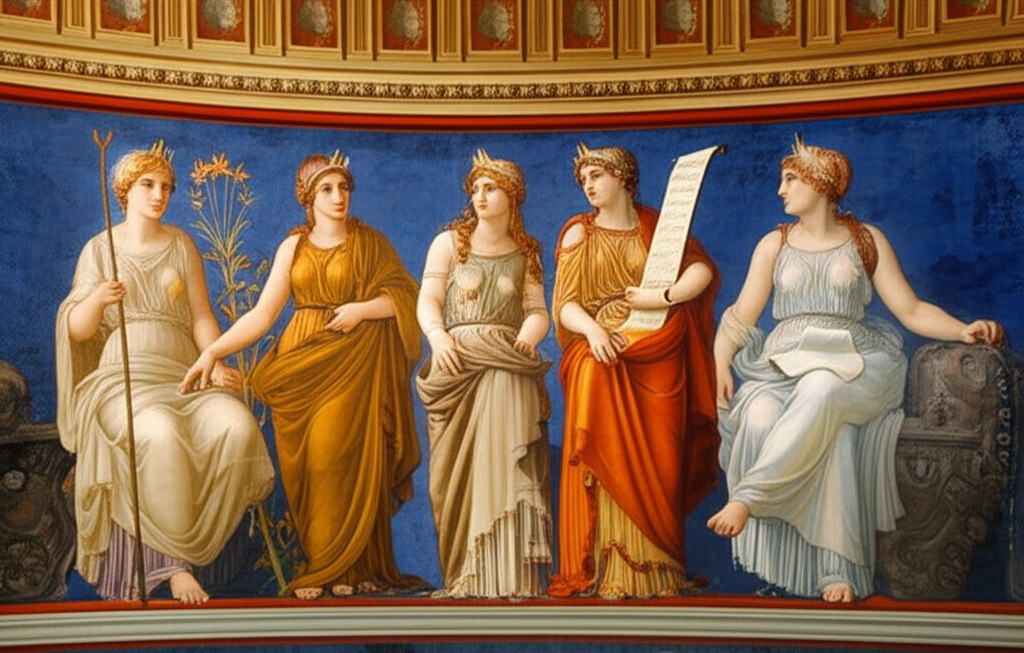 and Erato (lyric poetry), surrounded by scrolls and lyres. Their expressions are serene yet profoundly thoughtful, suggesting both divine inspiration and the intellectual rigor involved in artistic creation. The background features subtle architectural elements of an ancient library or academy, emphasizing the philosophical context.)
Philosophical Perspectives on Poetic Emotion
The relationship between Poetry and Emotion has been a contentious yet endlessly fascinating subject for philosophers, particularly those whose works form the bedrock of Western thought.
Plato's Cautionary Muse
In The Republic, Plato famously expressed reservations about Poetry, particularly its mimetic (imitative) nature. He argued that poets, by imitating emotions and actions, could stir irrational passions in citizens, potentially undermining the rational order of the ideal state. He feared that poetry's power to evoke strong Emotion could lead people away from truth and reason. Yet, in Ion, he also acknowledged the poet's divine inspiration, suggesting a state of "divine madness" where poets are conduits for something beyond themselves. This tension highlights poetry's immense power, both for good and for potential societal disruption.
Aristotle's Cathartic Insight
Aristotle, Plato's student, offered a more nuanced and positive view in his Poetics. He argued that tragedy, a form of Poetry, serves a vital function: catharsis. Through the depiction of pitiable and fearful events, the audience experiences a "purification" or "purgation" of these emotions. This isn't about suppressing feelings, but rather experiencing them in a controlled, aesthetic context, leading to a sense of relief and understanding. For Aristotle, poetry doesn't just provoke emotion; it helps us process and understand it, contributing to our moral and intellectual development. His Rhetoric further explores how emotions can be understood and even manipulated through persuasive language, a skill poets master.
Longinus and the Sublime
In On the Sublime, a work often attributed to Longinus, the focus shifts to the extraordinary power of elevated language and thought to transport the reader beyond themselves. The "sublime" in Poetry is that quality which evokes awe, ecstasy, and a sense of vastness, lifting the soul to a higher plane. This isn't merely about pleasure but about being overwhelmed by greatness, a profound emotional and spiritual experience. It demonstrates how poetry, through its artistic mastery, can tap into emotions that transcend the everyday.
The Stoic Perspective: Mastering the Passions
While Stoic philosophy often advocated for the suppression of unruly "passions" (pathē) in favor of rational self-control, it did not necessarily dismiss Art or Beauty. A Stoic might appreciate the structured Beauty and logical coherence within a poem, even as they sought to maintain equanimity in the face of the emotions it described. The disciplined craft of poetry, its adherence to form and reason, could even be seen as a reflection of the logos (universal reason) that governs the cosmos.
The Enduring Legacy: Why Poetic Emotion Matters Today
In an age saturated with information and fleeting digital stimuli, the deep, reflective engagement offered by Poetry remains profoundly relevant. It continues to serve as a vital tool for:
- Empathy and Understanding: By stepping into the emotional landscapes crafted by poets, we cultivate our capacity for empathy, understanding experiences beyond our own.
- Self-Reflection and Introspection: Poetry often holds a mirror to the soul, inviting us to explore our own emotions, fears, and aspirations.
- Preservation of Human Experience: From ancient epics to contemporary free verse, poetry chronicles the spectrum of human emotion, preserving the collective experience of joy, sorrow, love, and struggle across generations.
- Cultivation of Beauty: In a world often focused on utility, poetry reminds us of the intrinsic value of Beauty and its power to enrich life and elevate the spirit.
Philosophical Approaches to Poetic Emotion
| Philosopher/School | Core Idea on Poetic Emotion | Key Contribution |
|---|---|---|
| Plato | Poetry stirs irrational passions; potentially misleading. | Highlighted poetry's immense power and potential for societal disruption. |
| Aristotle | Catharsis: purification of emotions (pity & fear) through tragedy. | Provided a framework for understanding the psychological and social benefits of engaging with dramatic art. |
| Longinus | The "Sublime": elevated language transports the soul, evoking awe. | Emphasized poetry's capacity to transcend mere beauty and evoke profound, overwhelming emotional experiences. |
| Stoicism | Emotions (passions) to be managed by reason; appreciation for logical structure. | Offered a counterpoint, focusing on the rational engagement with artistic form rather than unbridled emotional indulgence. |
In conclusion, the Art of Poetry is far more than mere words on a page; it is a profound philosophical endeavor. It is the very crucible in which Emotion is forged into Beauty, offering us not just a glimpse into the human heart, but a pathway to understanding the deepest truths of existence. Through its lyrical resonance, poetry continues to challenge, comfort, and inspire, proving its enduring significance in the grand tapestry of human thought and feeling.
📹 Related Video: ARISTOTLE ON: The Nicomachean Ethics
Video by: The School of Life
💡 Want different videos? Search YouTube for: "Aristotle Poetics Catharsis Explained"
📹 Related Video: PLATO ON: The Allegory of the Cave
Video by: The School of Life
💡 Want different videos? Search YouTube for: "Plato on Art and Imitation"


