

The Unseen Crown: Reclaiming the Aristocratic Virtue of Honor
In an era often characterized by individualism and fluid identities, the ancient concept of honor, particularly as understood within an aristocratic framework, offers a profound lens through which to examine our collective values. Far from mere social standing or fleeting reputation, this virtue was a complex interplay of public acclaim, unwavering adherence to custom and convention, and a steadfast commitment to duty, forming the very bedrock of a noble character and a well-ordered society. It was, in essence, an unseen crown, worn by those who embodied a specific moral and social excellence.
Beyond Mere Nobility: The Architecture of Aristocratic Honor
To grasp aristocratic honor is to move beyond simplistic notions of inherited wealth or power. In its truest philosophical sense, aristocracy refers to rule by the best (from Greek aristos 'best' and kratos 'power'). Thus, aristocratic honor was not simply given; it was earned and maintained through actions that demonstrated superior virtue. It was a societal recognition of inherent worth, integrity, and a commitment to ideals larger than oneself.
This form of honor possessed both an internal and external dimension:
- Internal: A deep-seated sense of self-respect, moral integrity, and an unyielding commitment to one's principles. It was the internal compass guiding behavior.
- External: The public acknowledgement and esteem garnered from one's community, earned through virtuous acts, courage, and adherence to societal expectations. It was the reflection of one's internal state in the eyes of others.
The loss of honor, therefore, was not merely a personal slight but a public disgrace, a stain on one's lineage and a forfeiture of trust within the community.
Custom and Convention: The Social Fabric of Honor
The maintenance of honor was inextricably linked to custom and convention—the unwritten rules, traditions, and established norms that governed aristocratic society. These social contracts dictated appropriate behavior, defined transgressions, and prescribed the means by which honor could be defended or redeemed.
Consider the intricate dances of ancient Greek society, where public discourse, athletic contests, and even warfare were arenas for demonstrating and defending one's honor. A challenge to one's honor was a challenge to one's very being, often requiring a public response to uphold one's standing. These conventions were not arbitrary; they served to maintain social order, encourage virtuous conduct, and provide clear guidelines for interaction within the elite. The fear of shame (aidos) and the pursuit of glory (kleos) were powerful motivators, ensuring adherence to the established code of honor.
Duty's Imperative: The Moral Weight of Honor
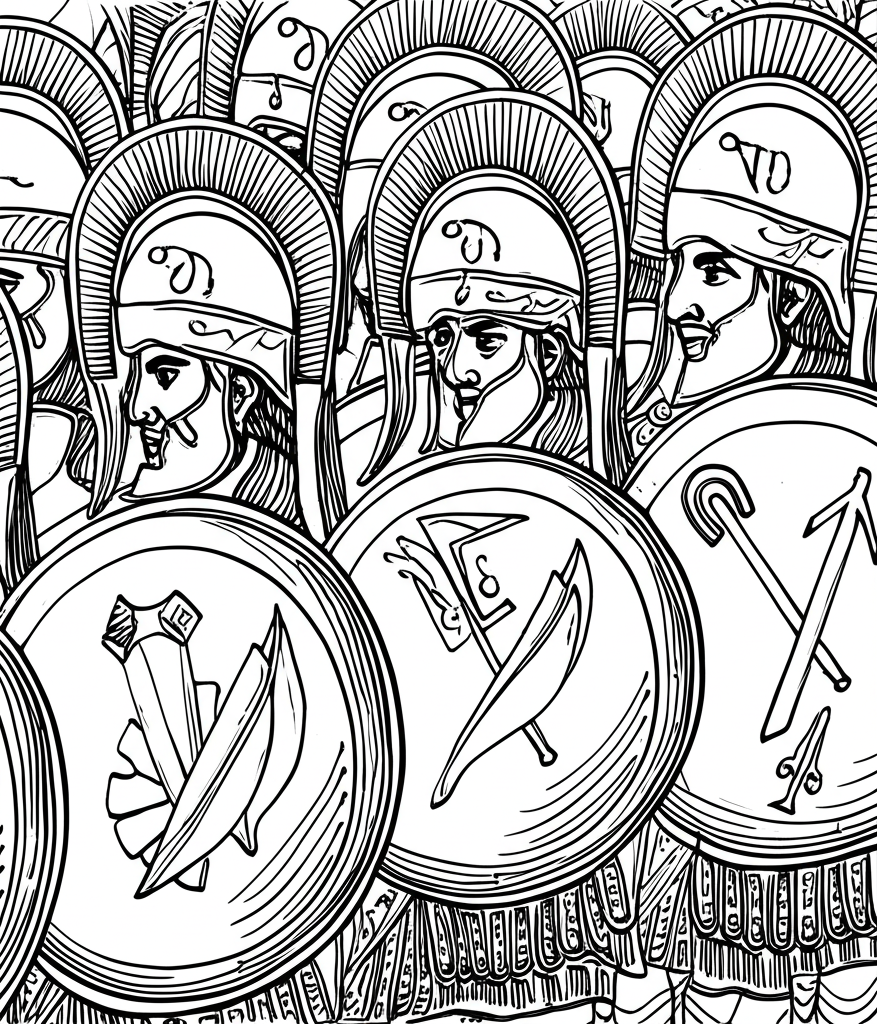
At the heart of aristocratic honor lay an profound sense of duty. This was not a burdensome obligation but a moral imperative, a responsibility to one's family, one's city-state, the gods, and ultimately, to the high standards of one's own character.
For the ancient Greek heroes, as portrayed in the Great Books of the Western World, honor compelled them to acts of incredible bravery and sacrifice. Achilles' struggle, for instance, is a profound exploration of honor, duty, and their tragic conflicts. Similarly, Roman patricians understood their duties (officia) to the Republic as paramount, their honor tied directly to their service and sacrifice.
This connection between honor and duty manifested in several key areas:
- Duty to Family: Upholding the family name, protecting its legacy, and ensuring its prosperity.
- Duty to Community/State: Serving in governance, military, or civic roles, prioritizing the common good.
- Duty to Self: Living up to one's own potential, maintaining integrity, and demonstrating courage and wisdom.
To shirk one's duties was to abandon honor, leading to social ostracization and a profound sense of internal failure.
A Legacy in Flux: From Ancient Ideals to Modern Reflections
The concept of aristocratic honor, while perhaps alien in its specific manifestations today, offers enduring insights. While modern societies largely reject the hierarchical structures of aristocracy, the underlying principles of integrity, responsibility, and the pursuit of excellence still resonate.
Consider these shifts:
| Aspect | Ancient Aristocratic Honor | Modern Interpretations of "Honor" |
|---|---|---|
| Primary Locus | Public reputation, collective esteem, family legacy | Personal integrity, individual conscience, self-respect |
| Enforcement | Social pressure, custom and convention, fear of shame, duels | Internal moral compass, legal systems, personal accountability |
| Motivation | Glory (kleos), avoiding disgrace (aidos), fulfilling duty | Authenticity, self-fulfillment, ethical conduct |
| Relationship to Duty | Inextricably linked; honor is fulfilling one's duty | Often separate; one can be honorable without specific societal duties |
While the specific code of honor has evolved, the core human desire for respect, integrity, and meaningful contribution remains. Perhaps by revisiting the profound interconnectedness of self, society, and duty that characterized aristocratic honor, we can glean lessons for fostering a more responsible and virtuous contemporary existence.
The Enduring Echo
The aristocratic virtue of honor, deeply rooted in custom and convention and inextricably linked to duty, offers a rich philosophical tapestry. It reminds us that true worth extends beyond individual achievement, embracing a public dimension of responsibility and respect. While the world of ancient aristocracy may be long past, the profound questions it posed about character, integrity, and the pursuit of excellence continue to echo, inviting us to reflect on what it truly means to live a life worthy of esteem.
Further Exploration:
📹 Related Video: ARISTOTLE ON: The Nicomachean Ethics
Video by: The School of Life
💡 Want different videos? Search YouTube for: ""Aristotle Nicomachean Ethics virtue honor""
📹 Related Video: KANT ON: What is Enlightenment?
Video by: The School of Life
💡 Want different videos? Search YouTube for: ""Homer Iliad honor duty shame""