

The Weight of Worth: Exploring the Aristocratic View of Honor
A Summary of Noble Aspirations
The aristocratic view of honor, as profoundly explored in the Great Books of the Western World, is a complex tapestry woven from virtue, social standing, and strict adherence to custom and convention. Far from a mere sentiment, honor for the aristocracy was a tangible, often fiercely defended, public recognition of one's inherent excellence and moral rectitude, serving as a powerful motivator to avoid vice and uphold the highest ideals of their class. It was an external validation of an internal commitment to arete—excellence—that shaped not only individual conduct but also the very structure of society.
Defining the Aristocrat and the Pursuit of Arete
To understand aristocratic honor, one must first grasp the concept of "aristocracy" itself, not merely as a class defined by birthright, but as a system ideally ruled by "the best" (from Greek aristoi). These "best" were expected to embody superior qualities, both moral and intellectual, and their social standing was, in theory, a reflection of their inherent worth. For such individuals, honor was not simply a social nicety; it was the public acknowledgment of their arete—their virtue, courage, wisdom, and justice. This pursuit of excellence, often demanding significant sacrifice and adherence to rigorous standards, was the very bedrock upon which their claim to leadership and respect was built.
The Dual Pillars: Virtue and Vice as Measures of Honor
At the heart of aristocratic honor lay the profound distinction between virtue and vice. For thinkers like Aristotle and Plato, honor was inextricably linked to the cultivation of specific moral excellences.
Aristotle on Magnanimity and the Highest Good
In his Nicomachean Ethics, Aristotle describes honor as an external good, often sought by the politically active. However, he carefully distinguishes it from true virtue, arguing that while honor is a sign of virtue, virtue itself is the higher good. The truly honorable person, for Aristotle, possesses magnanimity (greatness of soul), a virtue that entails a proper sense of one's own worth and a deservingness of great honors. Such a person acts virtuously not primarily for the sake of honor, but because it is the right thing to do, though honor will naturally follow. Dishonor, conversely, was the consequence of vice—cowardice, injustice, or folly—which undermined one's claim to arete and thus, one's social standing.
Plato's Ideal and the Soul's Harmony
Plato, in the Republic, also grapples with the concept of honor. While he elevates justice as the supreme virtue, he recognizes the role of thymos (spirit or spiritedness) in the soul, which drives individuals to seek recognition and avoid shame. In his ideal state, the guardian class, akin to an aristocracy, would be trained to embody courage and wisdom, earning honor through their selfless service and adherence to philosophical truths. Vice, for Plato, was a disharmony of the soul, leading to actions unworthy of honor and ultimately undermining the individual's and the state's well-being.
Bound by Tradition: Custom and Convention in the Fabric of Honor
Beyond individual virtue, aristocratic honor was deeply embedded in the prevailing custom and convention of society. These unwritten rules, traditions, and expectations dictated what constituted honorable conduct and what brought shame.
Homeric Heroes and the Public Gaze
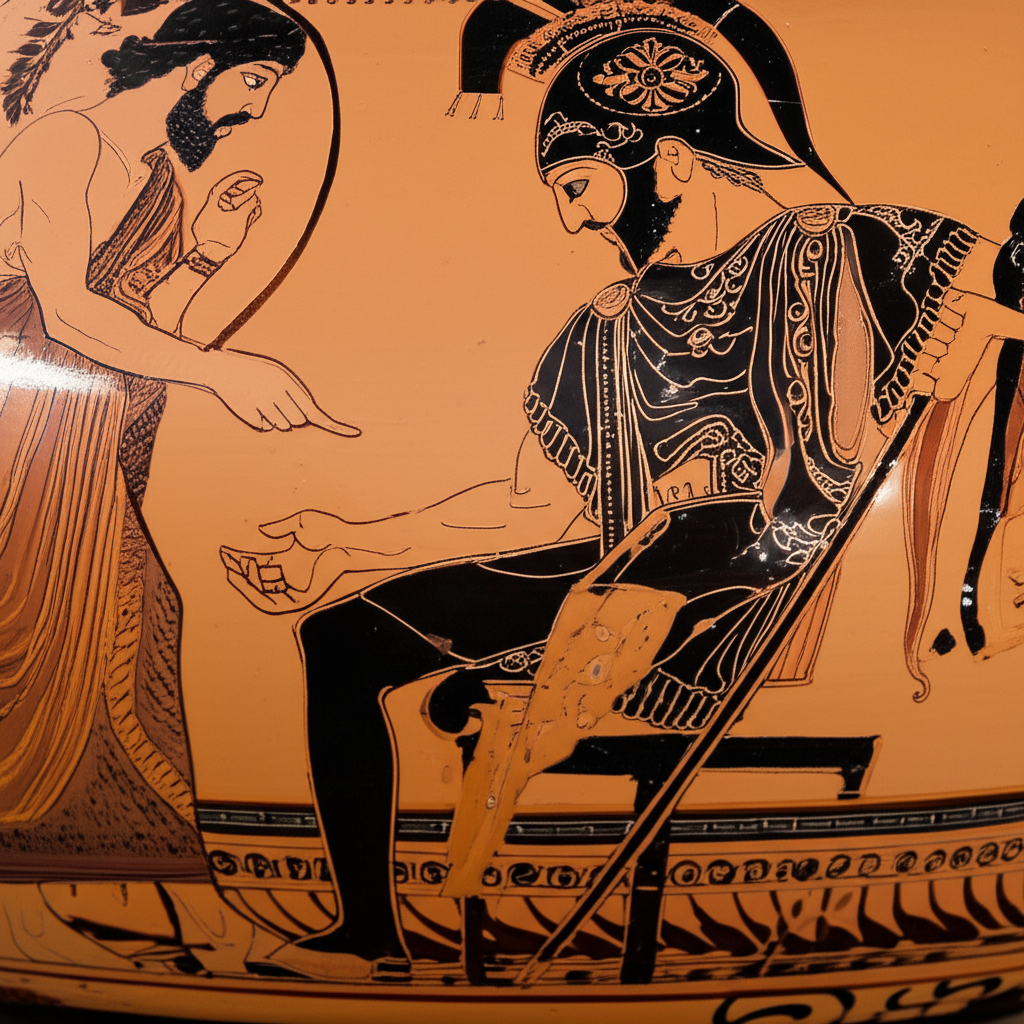
The Homeric epics, particularly the Iliad, offer a vivid portrayal of this. Heroes like Achilles are driven by kleos (glory or renown), which is achieved through valor in battle and public recognition. Honor is a public commodity, often fiercely defended, as seen in Achilles' rage when his honor is slighted by Agamemnon. The custom and convention of the heroic age demanded a warrior's prowess, loyalty to his peers, and adherence to specific codes of conduct; failure in these areas brought aidos (shame), a fate worse than death for many.
Roman Senators and the Weight of Duty
In the Roman Republic, figures like Cicero, in De Officiis, illustrate how honor was tied to dignitas (dignity), gravitas (seriousness), and virtus (manly excellence). For the Roman aristocracy, honor was earned through public service, military prowess, rhetorical skill, and unwavering adherence to the laws and traditions of the Republic. Their customs and conventions demanded a commitment to the state, family, and public morality. To neglect one's duties or to act in a way that brought disrepute to one's family or the Republic was to suffer a loss of honor, a blow to one's public standing and legacy.
The Social Calculus of Esteem: Reputation and Public Recognition
The aristocratic view of honor was inherently social. It was not enough to merely possess virtue; one's virtue had to be recognized and acknowledged by one's peers and the wider community. Reputation was paramount, and actions were often weighed by their potential to enhance or diminish one's public esteem.
Here’s a simplified comparison of how honor was perceived:
| Aspect | Aristocratic Honor (Ancient) | Modern (General) Honor |
|---|---|---|
| Primary Source | Public recognition of arete (virtue) and social standing | Internal integrity, personal conscience, respect for others |
| Driving Force | Desire for glory (kleos), avoiding shame (aidos) | Self-respect, moral duty, authenticity |
| Measurement | Deeds, lineage, adherence to custom and convention | Individual choices, consistency with personal values |
| Consequences of Loss | Public disgrace, social ostracization, diminished influence | Guilt, loss of self-respect, damaged personal relationships |
| Scope | Often tied to a specific social class or role | Universal, applies to all individuals |
This external validation meant that an aristocrat's life was often lived under intense scrutiny, with every action and decision having implications for their honor and that of their lineage.
The Enduring Legacy of an Elite Ideal
The aristocratic view of honor, while rooted in specific historical and social contexts, offers profound insights into the human desire for recognition, excellence, and the role of social norms in shaping individual conduct. While modern societies may eschew the hierarchical implications of such a system, the underlying principles—the pursuit of virtue, the importance of reputation, and the influence of custom and convention—continue to resonate in contemporary discussions about ethics, leadership, and personal integrity. It reminds us that the quest for a life of worth is an ancient one, deeply entwined with how we are perceived by others and, ultimately, by ourselves.
Further Exploration
For those wishing to delve deeper into the philosophical underpinnings of honor and its multifaceted expressions:
- **## 📹 Related Video: ARISTOTLE ON: The Nicomachean Ethics
Video by: The School of Life
💡 Want different videos? Search YouTube for: "Aristotle Nicomachean Ethics honor"**
- **## 📹 Related Video: PLATO ON: The Allegory of the Cave
Video by: The School of Life
💡 Want different videos? Search YouTube for: "Plato Republic virtue aristocracy"**