

The Weight of a Name: Unpacking the Aristocratic View of Honor
The concept of honor has long been a cornerstone of human societies, yet its meaning shifts dramatically across cultures and epochs. For the Aristocracy, honor was not merely a social ornament but the very bedrock of identity, legitimacy, and moral authority. This article delves into the intricate philosophical underpinnings of aristocratic honor, exploring its genesis in virtue, its regulation by custom, and its profound implications for individual and collective life, drawing insights from the enduring wisdom of the Great Books of the Western World. It was a complex construct, demanding both internal moral rectitude and external recognition, a constant negotiation between personal character and public perception.
I. The Essence of Aristocracy: Honor as a Social and Moral Imperative
For the aristocratic class, honor was more than a descriptor; it was an active force, a guiding principle that dictated behavior, shaped aspirations, and defined one's place within the social hierarchy. It was intrinsically linked to lineage, a birthright to be upheld, yet simultaneously a personal burden to be constantly earned and defended through exemplary conduct. This dual nature — inherited status combined with achieved excellence — lies at the heart of the aristocratic ideal.
-
Beyond Mere Status: A Public and Private Virtue
Aristocratic honor was never solely about wealth or power, though these often accompanied it. Instead, it was fundamentally about reputation and character. A noble might possess vast lands, but without honor, their influence would wane, and their legacy would be tarnished. This honor was cultivated not just in grand deeds but in the minutiae of daily life, in upholding promises, displaying courage, and exercising judgment. It was a public declaration of one's worth and a private commitment to a higher standard. -
The Great Books Perspective: Ancient Ideals of Excellence
The philosophical roots of aristocratic honor are deeply embedded in ancient thought. Plato, in his Republic, explores the concept of the "guardian" class, an elite trained from birth not for personal gain but for the welfare of the state, embodying virtues like wisdom and courage. For Aristotle, particularly in his Nicomachean Ethics, the "magnanimous man" (or great-souled man) is the epitome of virtue, a figure who is conscious of his own worth and strives for great things, deserving of honor precisely because of his moral excellence. This classical emphasis on virtue as the foundation of true worth profoundly influenced later aristocratic codes.
II. Virtue and Vice: The Moral Compass of the Elite
The aristocratic view of honor was inextricably linked to a specific understanding of Virtue and Vice. To be honorable was to embody certain virtues; to be dishonorable was to succumb to specific vices. This moral framework was not merely theoretical but practical, forming the very blueprint for a noble life.
-
Defining the Aristocratic Virtues
While specific virtues might vary slightly by era or culture, a core set consistently emerged as paramount for the aristocracy:- Courage (Fortitude): Essential for leadership in battle, for defending one's name, and for upholding principles even in the face of danger.
- Magnanimity (Greatness of Soul): A virtue described by Aristotle, encompassing a proper pride in one's achievements, a readiness to bestow benefits rather than receive them, and a disdain for petty matters.
- Justice: Fairness in dealings, upholding the law, and protecting the vulnerable within one's sphere of influence.
- Prudence (Practical Wisdom): The ability to make sound judgments and discern the appropriate course of action in complex situations.
- Generosity (Liberality): Open-handedness, particularly in supporting arts, sciences, and the less fortunate, demonstrating a lack of attachment to material wealth.
- Integrity: Unwavering adherence to moral and ethical principles, especially honesty and trustworthiness.
-
The Peril of Vice: Actions that Tarnish the Soul and Name
Conversely, certain vices were seen as direct assaults on honor, capable of destroying a noble's reputation and stripping them of their social standing. These included:- Cowardice: A fundamental failure in the face of danger, often leading to public disgrace.
- Dishonesty/Deceit: Breaking one's word or engaging in duplicity, undermining the trust essential for aristocratic relations.
- Petty-mindedness/Meanness: A lack of generosity, an obsession with trivialities, or a vengeful spirit, antithetical to magnanimity.
- Cruelty/Tyranny: Abusing power or inflicting undue suffering, demonstrating a lack of justice and compassion.
- Boastfulness/Arrogance without Substance: Claiming virtues or achievements not genuinely possessed.
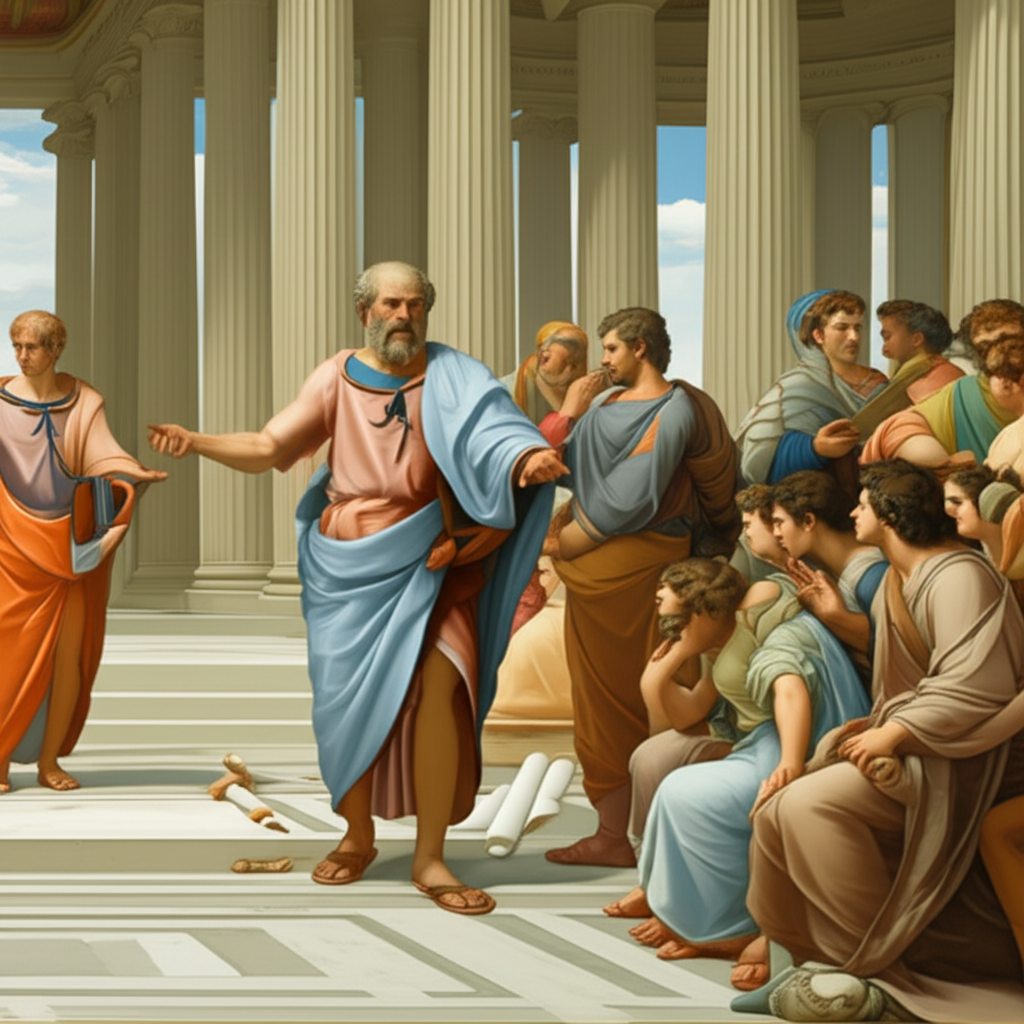
III. Custom and Convention: The Unseen Architect of Honor
Beyond internal virtues, aristocratic honor was rigorously policed by Custom and Convention. These unwritten rules, evolved over generations, dictated how honor was maintained, challenged, and restored. Public perception and adherence to social rituals were as crucial as personal character.
-
The Social Fabric: Rituals, Etiquette, and Reputation
Aristocratic societies were characterized by elaborate social codes. Etiquette, dress, speech, and even leisure activities were governed by specific expectations designed to reinforce status and demonstrate adherence to honorable conduct. A breach of these conventions, even a minor one, could be interpreted as a slight, a lack of breeding, or even a challenge to one's honor. Reputation, carefully constructed over a lifetime, could be shattered by a single misstep or a well-placed rumor. Public shaming was a potent deterrent against dishonorable behavior. -
The Code Duello and the Public Eye: Maintaining Face
Perhaps the most dramatic manifestation of custom's grip on honor was the duel. While often seen as a crude act of violence, the code duello was a highly ritualized system for resolving disputes of honor. It was not merely about winning; it was about demonstrating courage, upholding one's word, and refusing to tolerate insult. The willingness to risk one's life for one's honor, even in the face of death, was the ultimate public affirmation of one's worth within aristocratic circles. The public eye, the judgment of one's peers, was the ultimate arbiter, making the maintenance of "face" paramount.
IV. The Enduring Echoes: Legacy and Critique of Aristocratic Honor
The aristocratic view of honor, while rooted in specific historical contexts, leaves a complex legacy. It championed ideals of self-mastery, public service (at least within its own class), and the pursuit of excellence. However, it also fostered exclusivity, rigidity, and often a violent defense of status that could overlook universal moral principles.
- From Ancient Polis to Modern Thought: A Shifting Paradigm
As societies evolved, the strictures of aristocratic honor began to wane. The rise of democratic ideals, the emphasis on individual rights over inherited status, and changing economic structures gradually diminished its direct influence. Yet, vestiges remain in concepts like professional ethics, personal integrity, and the desire for a good reputation. Modern philosophy often critiques the aristocratic model for its inherent elitism and its potential to prioritize social standing over genuine moral action.
📹 Related Video: ARISTOTLE ON: The Nicomachean Ethics
Video by: The School of Life
💡 Want different videos? Search YouTube for: ""Aristotle Nicomachean Ethics Magnanimity" and "History of Honor Codes and Duels""
Conclusion: A Noble Pursuit, Imperfectly Rendered
The aristocratic view of Honor presents a fascinating and complex chapter in philosophical thought. It was a rigorous framework, forged by the intersection of Aristocracy, deeply informed by a specific understanding of Virtue and Vice, and meticulously regulated by Custom and Convention. While its exclusivity and often violent manifestations are rightly scrutinized today, it undeniably fostered a powerful ideal of personal excellence, courage, and a profound sense of responsibility for one's name and legacy. Understanding this historical conception of honor offers valuable insights into the enduring human quest for meaning, reputation, and a life lived with purpose.