

The Cultivation of Excellence: An Aristocratic Vision of Education
The concept of education has evolved dramatically throughout history, yet certain foundational ideas persist, challenging our modern assumptions. Among these, the aristocratic view of education stands as a profound counterpoint to contemporary mass schooling, positing that the true purpose of learning is not universal utility or economic advancement, but the meticulous cultivation of human excellence, virtue, and leadership within a select few. This perspective, deeply rooted in the philosophical traditions preserved in the Great Books of the Western World, emphasizes character formation, the pursuit of honor, and the transmission of a rich cultural heritage through custom and convention, rather than mere technical proficiency. It's a vision where education is an initiation into a way of life, preparing individuals not just to earn a living, but to live well and to lead.
The Philosophical Genesis: Education for Virtue and Leadership
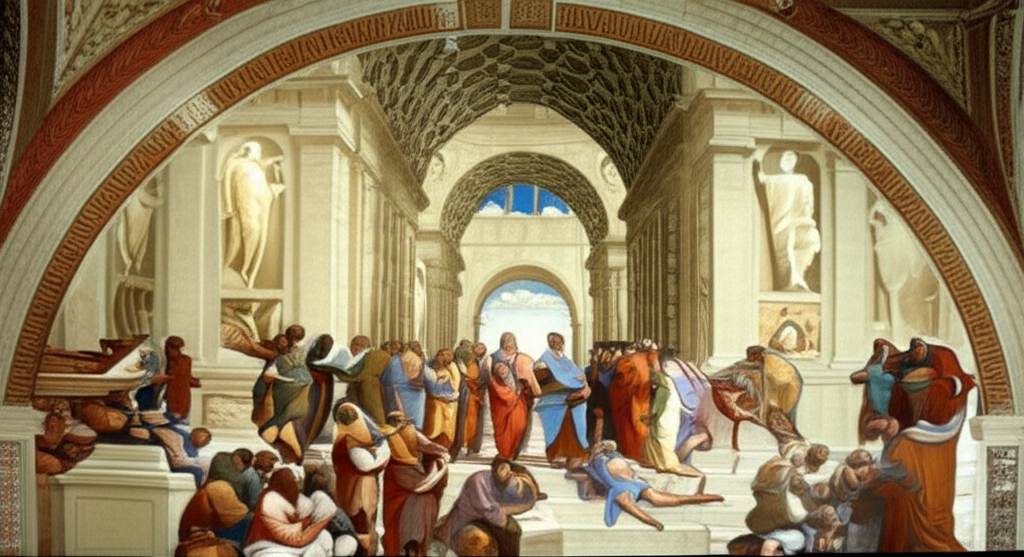
To understand the aristocratic ideal, one must turn to the intellectual cradle of Western thought. For figures like Plato and Aristotle, education was inextricably linked to the well-being of the aristocracy – not necessarily a birthright, but a meritocracy of the best, the aristos. Plato's Republic famously outlines a rigorous educational program for his guardian class and philosopher-kings, designed to sift individuals by their innate capacities and train them in music, gymnastics, mathematics, and dialectic. The goal was not merely knowledge, but wisdom and the development of a just soul capable of governing both self and state.
Aristotle, in his Politics and Nicomachean Ethics, further elaborates on this, arguing that the highest form of human life, eudaimonia (flourishing), is achieved through the exercise of virtue, which requires extensive moral and intellectual training. For the citizen-elite, education was a prerequisite for participating in the political life of the polis, demanding a comprehensive understanding of ethics, rhetoric, and governance. This was an education for leisure, not labor – leisure understood as the freedom from necessity to pursue higher intellectual and moral goods.
A Curriculum for Character: Beyond Mere Skill
The aristocratic curriculum was never about vocational training. Instead, it was a holistic endeavor aimed at shaping the entire person. The subjects deemed worthy of study were the liberal arts, designed to liberate the mind and soul:
- Philosophy and Logic: To cultivate critical thinking, reasoning, and the pursuit of truth.
- Rhetoric and Oratory: Essential for public deliberation, persuasion, and articulate expression in civic life.
- History and Literature: To understand the human condition, learn from past successes and failures, and imbibe moral exemplars.
- Poetry and Music: To refine taste, cultivate the emotions, and appreciate beauty and harmony.
- Gymnastics and Military Arts: To instill physical discipline, courage, and a readiness for defense, directly tied to the concept of honor.
The pursuit of honor was a central animating force. Education instilled a sense of duty, a desire for excellence, and a deep concern for one's reputation and legacy. To act honorably meant to live up to the highest standards of one's class and to serve the common good. This was not a passive learning experience but an active process of becoming, guided by the examples of heroes and sages.
The Weight of Custom and Convention
Beyond formal instruction, the aristocratic view of education placed immense value on custom and convention. Learning was deeply embedded within the social fabric. Children were raised within families and communities that embodied specific traditions, moral codes, and social expectations. Education was, in essence, an initiation into this established order, transmitting not just facts, but a way of seeing the world, a set of values, and a code of conduct.
This transmission occurred through:
- Mentorship: Older, experienced individuals guiding the young, often through personal example and shared experiences.
- Rituals and Ceremonies: Marking transitions and reinforcing communal identity and values.
- Social Norms: The unspoken rules of etiquette, decorum, and interaction that defined the aristocratic ethos.
- Narratives and Myths: Stories that encapsulated the virtues, vices, and historical consciousness of the community.
These informal yet powerful mechanisms ensured that the educated individual was not just intellectually acute but also culturally literate and morally grounded within their societal context. The emphasis was on continuity, on preserving and refining the best of what had been inherited.
Distinguishing Features of the Aristocratic Model
| Feature | Aristocratic View of Education | Modern Mass Education (General) |
|---|---|---|
| Primary Purpose | Cultivation of virtue, character, leadership, wisdom | Skill acquisition, economic utility, social mobility |
| Target Audience | A select few (the "best" or future leaders) | The entire populace |
| Curriculum Focus | Liberal arts, philosophy, ethics, rhetoric, history | Specialized subjects, STEM, vocational training |
| Goal of Learning | Holistic development, eudaimonia, civic participation | Job readiness, personal achievement, standardized testing |
| Key Values | Honor, excellence, tradition, civic duty, leisure for thought | Efficiency, equity, innovation, individual choice, practical outcomes |
Enduring Echoes and Modern Reflections
While the aristocratic model of education, with its inherent exclusivity, is largely incompatible with modern democratic ideals, its core tenets offer valuable insights. The emphasis on character, the pursuit of honor as an internal compass, the holistic development of the individual, and the critical role of custom and convention in transmitting culture remain potent challenges to purely utilitarian or skills-based approaches to learning. Even today, the enduring appeal of a "liberal arts" education, which seeks to cultivate critical thinkers and well-rounded individuals, can be seen as a diluted echo of this ancient aristocratic vision. It reminds us that education, at its highest, is not just about what we know, but who we become.
📹 Related Video: PLATO ON: The Allegory of the Cave
Video by: The School of Life
💡 Want different videos? Search YouTube for: ""Plato's Republic Education" or "Aristotle on Virtue and Education""
📹 Related Video: What is Philosophy?
Video by: The School of Life
💡 Want different videos? Search YouTube for: ""Great Books of the Western World philosophy overview""