

The Aristocratic View of Education: Cultivating the Soul of the Polis
The aristocratic view of education, often misunderstood in our egalitarian age, is not merely about privilege or inherited wealth. At its core, as illuminated by the profound thinkers within the Great Books of the Western World, it is a philosophy concerned with the cultivation of excellence – of arete – in individuals for the greater good of the community. This perspective posits that education's primary purpose is to form virtuous leaders, individuals capable of wise governance, moral judgment, and the pursuit of truth, thereby ensuring the flourishing of the polis. It is an education steeped in custom and convention, designed to instill a profound sense of duty towards society, preparing the "best" (the aristos) not just to lead, but to serve with wisdom and integrity.
Foundations in Classical Thought
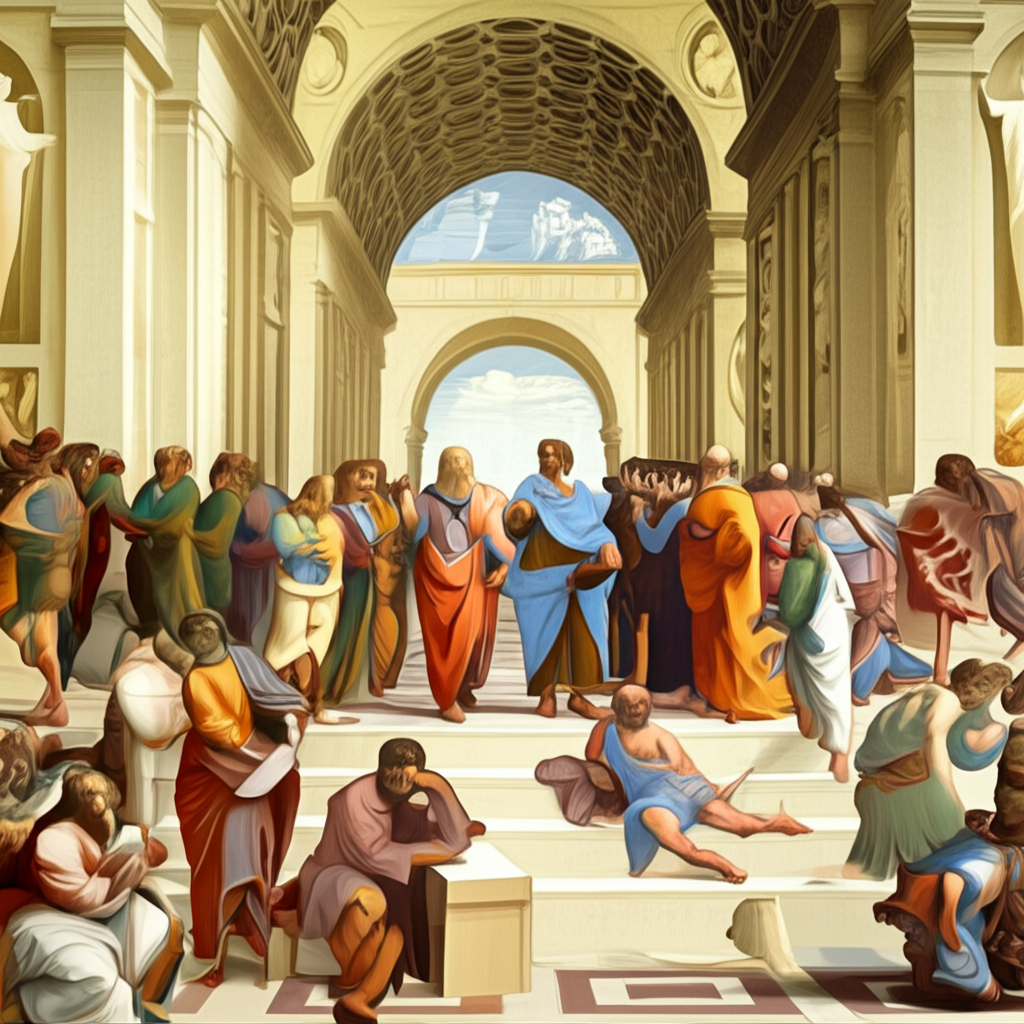
From Plato's ideal Republic to Aristotle's treatises on ethics and politics, the classical world laid the groundwork for this educational paradigm. It was understood that the health of the state depended critically on the character of its citizens, especially those destined for leadership.
- Plato's Philosopher-Kings: In The Republic, Plato outlines a rigorous educational program for his guardians, culminating in the "philosopher-kings." This education transcends mere vocational training, aiming instead to develop reason, justice, and a deep understanding of the Forms, particularly the Good. It is an ascent from the shadows of the cave to the light of truth, preparing individuals to govern not out of self-interest, but out of wisdom and a duty to the state.
- Aristotle on Virtue and the Good Life: Aristotle, in works like Nicomachean Ethics and Politics, emphasizes the formation of character through habituation and rational instruction. Education, for Aristotle, is instrumental in achieving eudaimonia – human flourishing – which is intrinsically linked to living a virtuous life within a well-ordered society. He contends that the state has a duty to oversee education to ensure citizens are properly trained in virtue and reason, capable of participating effectively in the political life of the polis.
Pillars of an Aristocratic Education
An education crafted for the aristos was never solely about acquiring information; it was about the formation of the soul. It aimed to forge individuals who were not only intellectually acute but also morally upright, aesthetically sensitive, and physically disciplined.
Key Components:
- Liberal Arts (Artes Liberales): Emphasizing subjects that "free" the mind, rather than those that serve a practical trade. This included:
- Grammar, Rhetoric, Logic (Trivium): For clear thought, persuasive communication, and sound reasoning.
- Arithmetic, Geometry, Astronomy, Music (Quadrivium): For understanding order, harmony, and the structure of the cosmos.
- Philosophy: The pursuit of wisdom, ethics, metaphysics, and political theory.
- History and Literature: To learn from the past, understand human nature, and appreciate exemplary lives.
- Physical Training (Gymnastike): To develop courage, discipline, and a healthy body, seen as the vessel for a healthy mind.
- Moral and Civic Instruction: Through the study of law, ethics, and the contemplation of virtuous examples, instilling a strong sense of duty and responsibility towards the community.
The Role of Custom and Convention
The aristocratic view of education is deeply intertwined with custom and convention. It acknowledges that individuals are shaped not only by formal instruction but also by the cultural milieu, the traditions, and the societal expectations into which they are born and raised. Education, in this sense, is the deliberate transmission of these inherited values and practices, ensuring continuity and stability.
- Habituation to Virtue: Aristotle believed that virtue is acquired through habit. Children are taught to act justly, temperately, and courageously, even before they fully understand the rational basis for these actions. This habituation, guided by societal custom and convention, forms the bedrock of character.
- Guardians of Tradition: The educated aristos are seen as the guardians of the state's traditions, its laws, and its moral fabric. Their education equips them to understand the wisdom embedded in these conventions and to uphold them, ensuring the long-term health of the polis.
- Defining Excellence: What constitutes "excellence" is often defined by the prevailing custom and convention of a society. An aristocratic education aims to cultivate individuals who embody these ideals, setting a standard for others.
The Weight of Duty
Perhaps the most defining characteristic of the aristocratic educational ideal is the profound sense of duty it seeks to instill. Unlike a purely individualistic pursuit of knowledge or success, this education is predicated on the understanding that privilege, whether intellectual or social, comes with inherent responsibilities.
| Aspect of Duty | Description |
|---|---|
| Duty to the State | To govern wisely, justly, and for the common good; to defend its values and institutions. |
| Duty to Self | To cultivate one's own character, reason, and virtue, realizing one's full human potential (eudaimonia). |
| Duty to Others | To serve as an exemplar of virtue, to educate and guide those less enlightened, and to contribute to the moral upliftment of society. |
| Duty to Truth | To pursue knowledge and understanding relentlessly, to discern reality from illusion, and to apply this wisdom in all spheres of life. |
This duty is not a burden but a calling, an intrinsic part of what it means to be a truly educated and excellent human being. It transforms education from a personal acquisition into a public trust.
Conclusion
The aristocratic view of education, as presented in the Great Books of the Western World, offers a compelling vision for the formation of individuals committed to excellence, virtue, and service. It reminds us that true education extends beyond the accumulation of facts, delving into the very essence of character, the wisdom of custom and convention, and the profound weight of duty. While its methods and exclusivity may be debated in modern times, its enduring emphasis on the cultivation of the "best" within us for the betterment of the whole remains a powerful and perhaps necessary challenge to contemporary educational paradigms.
YouTube Video Suggestions:
-
📹 Related Video: PLATO ON: The Allegory of the Cave
Video by: The School of Life
💡 Want different videos? Search YouTube for: "Plato's Republic Education Philosophy"
2. ## 📹 Related Video: ARISTOTLE ON: The Nicomachean Ethics
Video by: The School of Life
💡 Want different videos? Search YouTube for: "Aristotle Virtue Ethics Education"