

The Aristocratic Idea of the Good Life: A Pursuit of Excellence
The concept of the "good life" has captivated philosophers for millennia, yet few interpretations are as enduringly fascinating as the Aristocratic Idea. Far from being solely about inherited privilege or social standing, this philosophical construct, deeply rooted in the "Great Books of the Western World," posits that the good life is a state of flourishing achieved through the cultivation of virtue, reason, and excellence. It's an Idea that transcends mere material wealth, emphasizing the pursuit of the "best" – the aristos – in human potential, leading to genuine Happiness and a profound understanding of Good and Evil.
Defining Aristocracy Beyond Birthright
When we speak of the Aristocratic Idea in philosophy, particularly in the context of ancient Greek thought, we must divorce it from its modern connotations of inherited nobility. The term aristokratia (ἀριστοκρατία) literally means "rule of the best." For thinkers like Plato, an aristocracy was a government led by those most capable and virtuous – his famous philosopher-kings. This wasn't a claim based on lineage, but on merit, wisdom, and a profound understanding of the Forms, particularly the Form of the Good.
The essence of this Aristocracy is therefore qualitative: it refers to the highest human potential and the aspiration to embody it. It's an internal standard of excellence, a striving to be the "best" version of oneself, not in competition with others, but in alignment with one's rational nature. This pursuit is the bedrock of the aristocratic good life.
The Good Life as Eudaimonia: Flourishing Through Virtue
At the heart of the aristocratic ideal lies Aristotle's concept of eudaimonia (εὐδαιμονία), often translated as Happiness, but more accurately understood as human flourishing or living well. For Aristotle, the good life isn't a passive state or a fleeting emotion; it's an activity of the soul in accordance with virtue. It's about performing one's function (as a human being, which is rational activity) excellently.
This means that to live the good life is to engage in virtuous actions consistently throughout one's life. It's a journey of self-cultivation, where reason guides our desires and actions, leading to a balanced and fulfilling existence. The aristocratic individual, in this sense, is one who actively shapes their character and life towards this flourishing, understanding that true Happiness is an earned state, not a given one.
Characteristics of the Eudaimonic Life:
- Rational Activity: The highest human good involves the exercise of reason.
- Virtuous Action: Living in accordance with moral and intellectual virtues.
- Completeness: A good life is one that is lived fully, over a complete lifespan.
- Self-Sufficiency: While communal, it possesses an internal completeness.
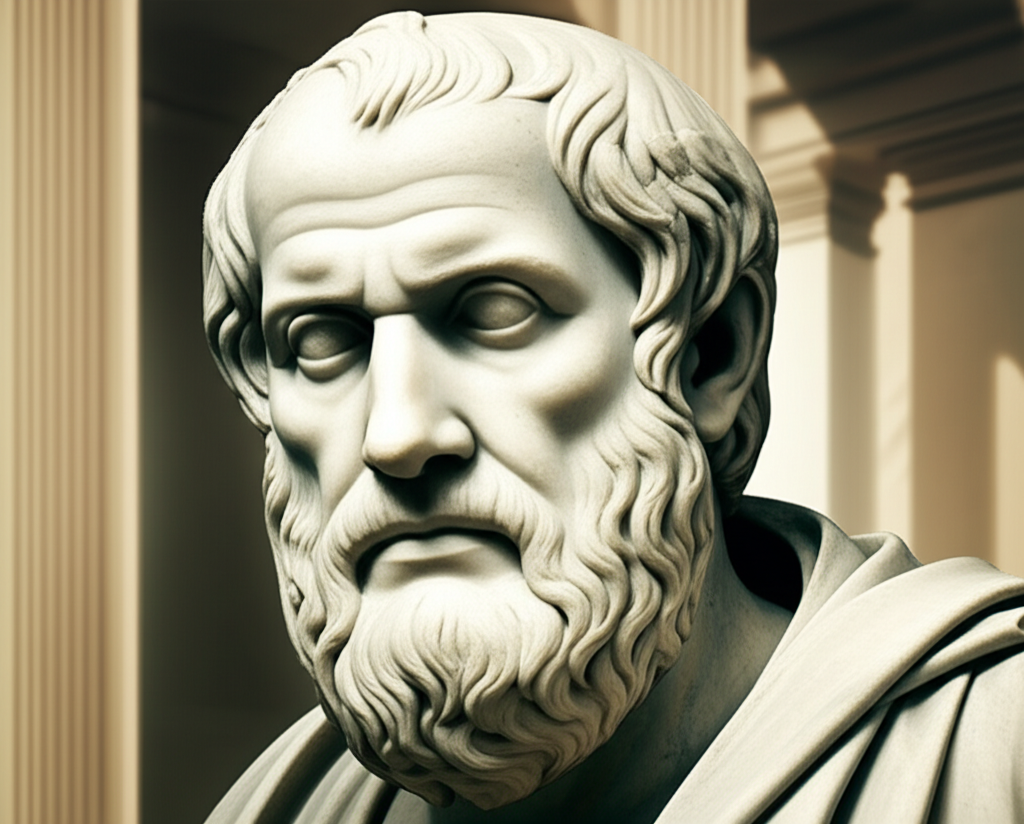
Virtue, Excellence, and the Distinction of Good and Evil
The aristocratic idea of the good life is fundamentally ethical. It necessitates a clear distinction between Good and Evil, and a conscious choice towards the former. Virtues, such as courage, temperance, justice, and wisdom, are not merely desirable traits; they are the very building blocks of a flourishing life. Vice, conversely, represents a deviation from reason and an impediment to Happiness.
For the aristocratic individual, excellence (aretē) is not just about skill but about moral character. It means finding the "mean" between extremes – courage between recklessness and cowardice, generosity between extravagance and stinginess. This constant striving for the mean, informed by practical wisdom (phronesis), is what elevates one's existence. It's a rigorous self-discipline that recognizes the intrinsic value of moral uprightness.
The Social Dimension: Leading by Example
While deeply personal, the aristocratic good life also possesses a social dimension. The individual who achieves eudaimonia through virtue doesn't do so in isolation. Their excellence naturally serves as a model for the community, contributing to the overall well-being of the polis. Plato's philosopher-kings, for instance, were not simply wise for their own sake but for the just governance of the state.
This isn't about imposing one's will, but about embodying ideals that elevate society. The pursuit of the good life, in this aristocratic sense, implies a responsibility to contribute to the common good, to foster an environment where others can also strive for their own flourishing. It's an ideal of leadership through exemplary living, where the pursuit of personal excellence ultimately serves a broader, collective purpose.
In conclusion, the Aristocratic Idea of the good life is a powerful philosophical framework. It challenges us to look beyond superficial markers of success and instead cultivate an internal Aristocracy of character, reason, and virtue. It's a timeless call to understand Good and Evil, to pursue true Happiness through excellence, and ultimately, to live a life that is not just good, but the best we can possibly achieve.
YouTube Video Suggestions:
-
📹 Related Video: ARISTOTLE ON: The Nicomachean Ethics
Video by: The School of Life
💡 Want different videos? Search YouTube for: "Aristotle Nicomachean Ethics Eudaimonia"
-
📹 Related Video: PLATO ON: The Allegory of the Cave
Video by: The School of Life
💡 Want different videos? Search YouTube for: "Plato Republic Philosopher Kings Explained"