

The Aristocratic Idea of the Good Life: A Pursuit of Excellence
The "aristocratic idea of the good life" isn't merely about inherited wealth or social status; it's a profound philosophical concept rooted in the pursuit of excellence and virtue. Drawing heavily from the philosophical traditions preserved in the Great Books of the Western World, this idea posits that a truly good life is one lived in accordance with the highest human potential, guided by reason, and dedicated to the flourishing of both the individual and the community. It's an Idea that connects individual happiness to a rigorous ethical framework, often distinguishing itself from lives focused solely on pleasure or material gain, and offering a unique perspective on Good and Evil.
Unpacking "Aristocracy": Beyond Birthright
When we speak of the aristocratic idea, we must first clarify our terms. Philosophically, "aristocracy" derives from the Greek aristoi (the best) and kratos (rule), literally meaning "rule by the best." This isn't necessarily about lineage but about those individuals who possess superior moral, intellectual, and civic virtues.
Historically, this concept found its most articulate proponents in ancient Greece:
- Plato's Ideal State: In his Republic, Plato envisioned an ideal state governed by "philosopher-kings" – individuals trained to understand the Idea of the Good itself, capable of ruling with wisdom and justice. These are the aristoi not by birth, but by their cultivated reason and virtue.
- Aristotle's Virtuous Citizen: Aristotle, in his Nicomachean Ethics, focused on the individual pursuit of eudaimonia (often translated as "human flourishing" or "happiness"). For him, the good life was one lived in accordance with virtue, with the "magnanimous man" serving as an exemplar of aristocratic excellence.
This philosophical understanding of aristocracy sets the stage for a conception of the good life that demands more than mere existence; it demands a life of deliberate, virtuous action.
The Philosophical Pillars of Excellence
The aristocratic idea of the good life is built upon several core philosophical tenets:
1. The Primacy of Virtue (Arete)
For both Plato and Aristotle, arete (virtue or excellence) is not an optional extra but the very essence of a well-lived life.
- Plato: Believed that individual virtues (wisdom, courage, temperance, justice) correspond to the harmonious functioning of the soul, mirroring the just state. To live virtuously is to align oneself with the ultimate Idea of the Good.
- Aristotle: Argued that virtues are character traits that enable an individual to live well. They are cultivated through habit and lead to eudaimonia. The good life is the virtuous life, and vices are deviations from this path.
2. The Pursuit of Eudaimonia (Happiness)
Eudaimonia is the ultimate goal in the aristocratic idea of the good life. It's not fleeting pleasure but a state of flourishing achieved through rational activity in accordance with virtue.
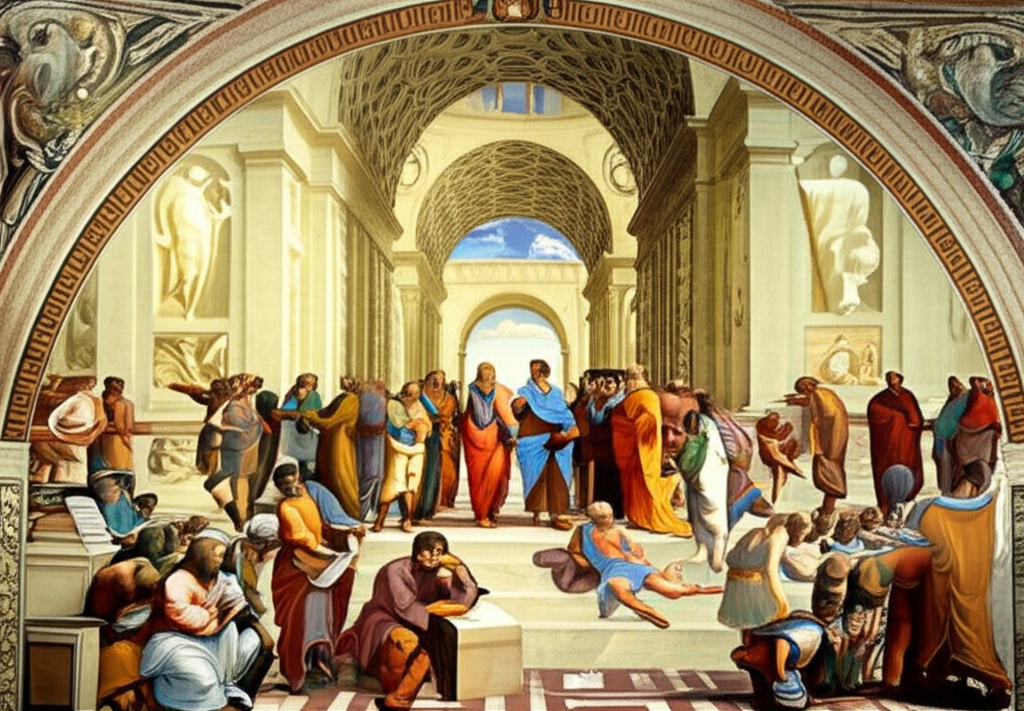
3. The Role of Reason and Contemplation
Both philosophers emphasized the unique human capacity for reason.
- Plato: The philosopher-king's ability to grasp the Forms, especially the Idea of the Good, comes from rigorous intellectual training and rational contemplation.
- Aristotle: Identified contemplative activity (the life of the mind) as the highest form of human happiness, as it most closely aligns with divine activity and fully exercises our rational faculty.
Good and Evil: An Aristocratic Distinction
Within this framework, the concepts of Good and Evil are intimately tied to the cultivation or neglect of virtue and reason.
- The Good:
- Living a life of virtue and excellence.
- Exercising reason to understand the world and one's place in it.
- Fulfilling one's unique human potential (eudaimonia).
- Contributing to the well-being and justice of the polis (community).
- Aligning oneself with the ultimate Idea of the Good (Plato).
- Evil:
- Living a life dominated by vice, irrationality, and base desires.
- Failing to cultivate one's virtues and intellectual capacities.
- Pursuing fleeting pleasures over lasting happiness and flourishing.
- Acting unjustly or undermining the common good.
This distinction is not merely prescriptive; it's descriptive of the very nature of a flourishing vs. a degraded human existence.
Key Characteristics of the Aristocratic Good Life
Let's summarize the defining features of this philosophical Idea:
| Feature | Description |
|---|---|
| Virtue (Arete) | Excellence in character, cultivated through habit and reason (e.g., courage, temperance, justice, wisdom). |
| Reason (Logos) | The guiding principle for understanding the good and making ethical choices. |
| Happiness (Eudaimonia) | A state of human flourishing, not merely pleasure, achieved through virtuous activity. |
| Self-Sufficiency | The ability to live a complete life through one's own virtues, though not in isolation. |
| Civic Engagement | Contribution to the community's well-being, as the individual's good is linked to the common good. |
| Contemplation | The highest form of rational activity, leading to profound understanding and intellectual joy. |
Enduring Relevance and Modern Interpretations
While the term "aristocratic" might evoke images of outdated social hierarchies, the philosophical Idea of the good life it represents remains profoundly relevant. It challenges us to consider:
- What does it truly mean to live a life of excellence?
- Are we prioritizing fleeting pleasures over genuine happiness and flourishing?
- How do we cultivate virtues in an increasingly complex world?
- What is our responsibility to the common good, and how does that shape our individual pursuit of the good life?
The classical aristocratic idea of the good life invites us to look beyond superficial markers of success and instead focus on the cultivation of character, the pursuit of wisdom, and the ethical engagement with the world around us. It's a timeless call to live up to the highest human potential, making it an enduring subject for philosophical inquiry.
📹 Related Video: ARISTOTLE ON: The Nicomachean Ethics
Video by: The School of Life
💡 Want different videos? Search YouTube for: "Aristotle Nicomachean Ethics Eudaimonia"
📹 Related Video: PLATO ON: The Allegory of the Cave
Video by: The School of Life
💡 Want different videos? Search YouTube for: "Plato Republic Idea of the Good"