

The Aristocratic Idea of the Good Life: A Pursuit of Excellence
The concept of the "good life" has captivated philosophers for millennia, yet few interpretations are as distinct and historically influential as the aristocratic idea. Far from merely equating to material wealth or inherited status, this philosophical framework, deeply rooted in the Western tradition, posits a life defined by the rigorous pursuit of virtue, excellence, and a particular form of happiness. It's an idea that elevates character and intellectual achievement above all else, seeing the truly good life as one lived according to the highest human potential.
Philosophical Foundations: Plato, Aristotle, and the Pursuit of Arete
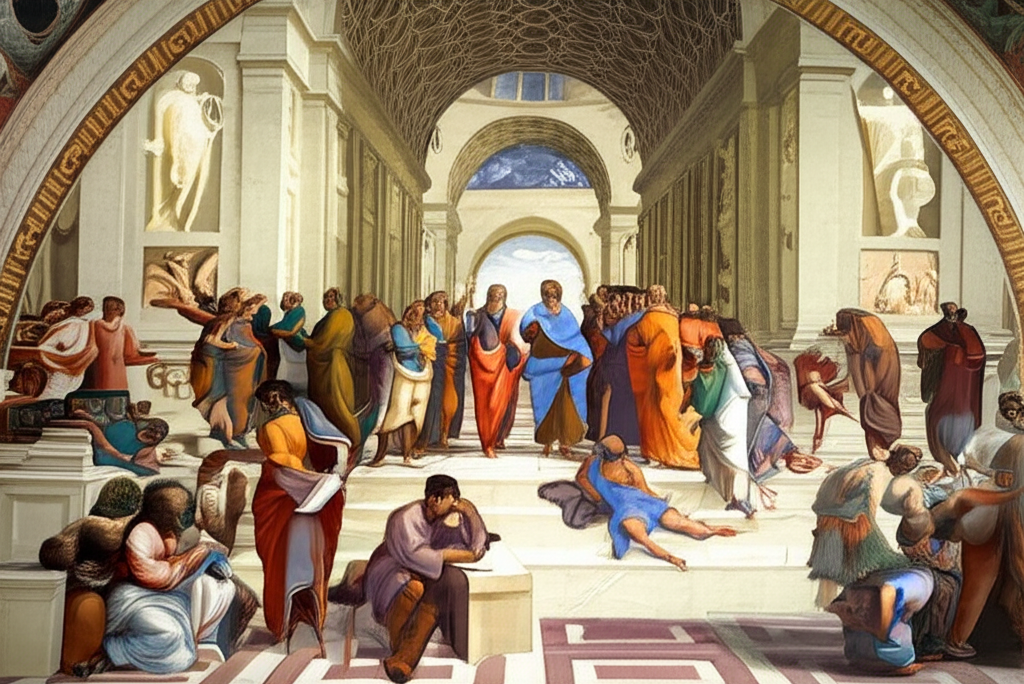
To understand the aristocratic ideal, we must journey back to ancient Greece, where its most profound articulations emerged. Philosophers like Plato and Aristotle, whose works are cornerstones of the Great Books of the Western World, laid the groundwork for this sophisticated vision.
-
Plato's Republic and the Philosopher-King: For Plato, the ideal society (and by extension, the ideal individual) is one ordered by reason and justice. The "aristocrats" in his sense are not born into power but are those aristos – the best – who possess wisdom and virtue, capable of leading the state towards the Good. Their good life is one of contemplation, self-mastery, and service, embodying the cardinal virtues:
- Wisdom: Residing in the rational part of the soul.
- Courage: Residing in the spirited part of the soul.
- Moderation: Harmony across all parts.
- Justice: The proper ordering of the soul's elements.
Plato's vision of the good life for the aristocratic soul is inextricably linked to understanding and living by these eternal Forms.
-
Aristotle's Eudaimonia and Virtue Ethics: Aristotle, in his Nicomachean Ethics, offers perhaps the most comprehensive account of the good life as eudaimonia – often translated as flourishing or true happiness. This is not a fleeting emotion but a state of being achieved through the consistent exercise of arete (virtue or excellence). For Aristotle, the highest form of eudaimonia is found in:
- Intellectual Contemplation: The exercise of our highest faculty, reason.
- Moral Virtue: Living justly, courageously, temperately, and generously.
The aristocratic individual, in this view, is one who has the leisure and capacity to cultivate these virtues, engaging in rational activity and civic life, thereby achieving a life of profound fulfillment.
Defining "Good" and "Evil": An Ethical Compass
Within the aristocratic framework, the distinction between Good and Evil is sharply drawn, centered less on divine commandments and more on human potential and character.
-
The Good:
- Virtue (Arete): Excellence in character and action. This includes courage, justice, temperance, wisdom, magnanimity, and intellectual acumen.
- Nobility (Kalokagathia): A fusion of moral goodness and physical beauty, reflecting an inner harmony and external grace.
- Self-Sufficiency: Not merely economic, but the capacity for intellectual and moral independence.
- Rational Activity: The highest human function, leading to understanding and truth.
-
The Evil:
- Vice: The opposite of virtue – cowardice, injustice, intemperance, ignorance.
- Mediocrity: A life lived without striving for excellence, settling for the mundane or vulgar.
- Vulgarity: A lack of refinement, taste, and moral discernment.
- Ignorance: A failure to cultivate reason and seek truth.
The aristocratic ideal champions a life lived with purpose, striving for the highest human achievements, both intellectual and moral. It sees the greatest evil not as a transgression against a deity, but as a failure to realize one's full potential, a surrender to base desires or intellectual laziness.
The Pursuit of Happiness: Beyond Pleasure
The happiness sought by the aristocratic individual is fundamentally different from a fleeting sense of pleasure or contentment. It is eudaimonia, a deep, abiding state of flourishing that results from a life well-lived, in accordance with reason and virtue.
Key Characteristics of Aristocratic Happiness:
- Activity, Not Passivity: Happiness is not something that happens to you; it is an active state achieved through virtuous deeds and intellectual engagement.
- Self-Sufficiency: While external goods (health, wealth, friends) are helpful, true happiness stems from internal moral and intellectual resources.
- Contemplation: For Aristotle, the highest form of happiness is found in philosophical contemplation, the exercise of the rational faculty.
- Moral Excellence: Living virtuously is not merely a means to an end; it is an integral part of what constitutes happiness itself.
| Aspect of the Good Life | Aristocratic Interpretation | Contrast with Common Views |
|---|---|---|
| Primary Goal | Eudaimonia (Flourishing through Virtue & Reason) | Hedonism (Pleasure), Material Wealth, Social Status |
| Defining "Good" | Virtue, Excellence, Nobility | Obedience to rules, Self-interest, Utility |
| Defining "Evil" | Vice, Mediocrity, Ignorance | Sin, Harm to others, Breaking laws |
| Key Activities | Contemplation, Civic Engagement, Cultivation of Character | Accumulation, Entertainment, Survival |
Enduring Relevance and Contemporary Reflections
While the historical context of "aristocracy" often evokes images of inherited privilege and social hierarchy, the philosophical idea of the aristocratic good life transcends these literal interpretations. It remains a powerful framework for understanding a life dedicated to excellence, intellectual rigor, and moral integrity. It challenges us to consider what it truly means to live "well," not just comfortably, and to cultivate the virtues that lead to genuine human flourishing.
The aristocratic ideal compels us to ask: Are we striving for the best versions of ourselves? Are we pursuing knowledge and wisdom? Are we acting with courage, justice, and temperance? In a world often preoccupied with immediate gratification, this ancient idea offers a profound counter-narrative, urging us towards a more demanding, yet ultimately more fulfilling, path to the good life.
📹 Related Video: ARISTOTLE ON: The Nicomachean Ethics
Video by: The School of Life
💡 Want different videos? Search YouTube for: "Aristotle Nicomachean Ethics Eudaimonia"
📹 Related Video: PLATO ON: The Allegory of the Cave
Video by: The School of Life
💡 Want different videos? Search YouTube for: "Plato Republic Philosopher King"