

The Aesthetics of Quantity and Form: An Exploration of Beauty's Blueprint
Summary: The essence of beauty, a concept pondered by philosophers for millennia, is not merely an elusive subjective feeling but often a profound interplay between quantity and form. From the ancient Greeks who sought ideal proportions in their architecture and sculpture, to medieval thinkers discerning divine order in the cosmos, and Enlightenment philosophers grappling with the overwhelming grandeur of the sublime, the aesthetic experience is consistently shaped by how much there is of something and how that 'much' is organized. This article delves into the philosophical journey through the Great Books of the Western World, exploring how quantity and form become the fundamental building blocks of our perception of beauty.
The Ancient Roots of Aesthetic Proportion
To truly appreciate the intricate relationship between quantity and form, one must first cast their gaze back to the philosophical cradles of the Western tradition. Here, we find the nascent ideas that would shape millennia of aesthetic discourse.
-
Plato's Ideal Forms and the Geometry of Beauty
For Plato, as articulated in dialogues like the Timaeus and the Republic, true Beauty resided not in the transient, imperfect physical world, but in the realm of immutable, perfect Forms. A beautiful object, be it a vase or a just society, derived its beauty from its participation in, or approximation of, these ideal Forms. This concept inherently links to both quantity and form: the form is the blueprint of perfection, and quantity can refer to the specific, harmonious ratios and proportions that manifest this ideal in the physical world. Consider the geometric precision Plato attributed to the cosmos itself; a universe ordered by mathematical relationships is, by its very nature, beautiful. -
Aristotle's Measurable Excellence: Unity and Magnitude
While Plato soared to the transcendent, his student Aristotle grounded his aesthetics more in the observable world. In his Poetics, Aristotle discusses the elements of tragedy, emphasizing the importance of a unified plot and a "proper magnitude." A beautiful plot, he argues, must have a discernible beginning, middle, and end, and its length (a quantity) must be neither too short to be understood nor too long to be remembered as a whole. This is a direct linkage: the form of the narrative demands a specific quantity for its optimal aesthetic effect. Too much or too little, and the form itself is compromised, diminishing its beauty and impact.
From Divine Order to Human Perception: Medieval and Renaissance Perspectives
The philosophical landscape shifted, but the fundamental inquiry into beauty's structure persisted, often imbued with new theological or scientific lenses.
-
Medieval Harmony: Aquinas and the Attributes of Beauty
Saint Thomas Aquinas, synthesizing Aristotelian philosophy with Christian theology in his Summa Theologica, articulated three essential attributes for beauty: integritas, consonantia, and claritas.- Integritas (Wholeness or Perfection): An object must be complete, lacking nothing essential to its nature. This speaks to a holistic form.
- Consonantia (Proportion or Harmony): The parts of the object must be suitably arranged in relation to each other and to the whole. This is a direct invocation of quantity – specific ratios, symmetries, and balances – that defines the object's form.
- Claritas (Radiance or Brightness): The object must possess a certain luminosity or vividness that makes its form manifest and intelligible.
Aquinas's consonantia is a powerful testament to the idea that beauty is deeply embedded in the quantitative relationships that constitute a thing's form.
-
The Renaissance Revival: Art, Science, and Perspective
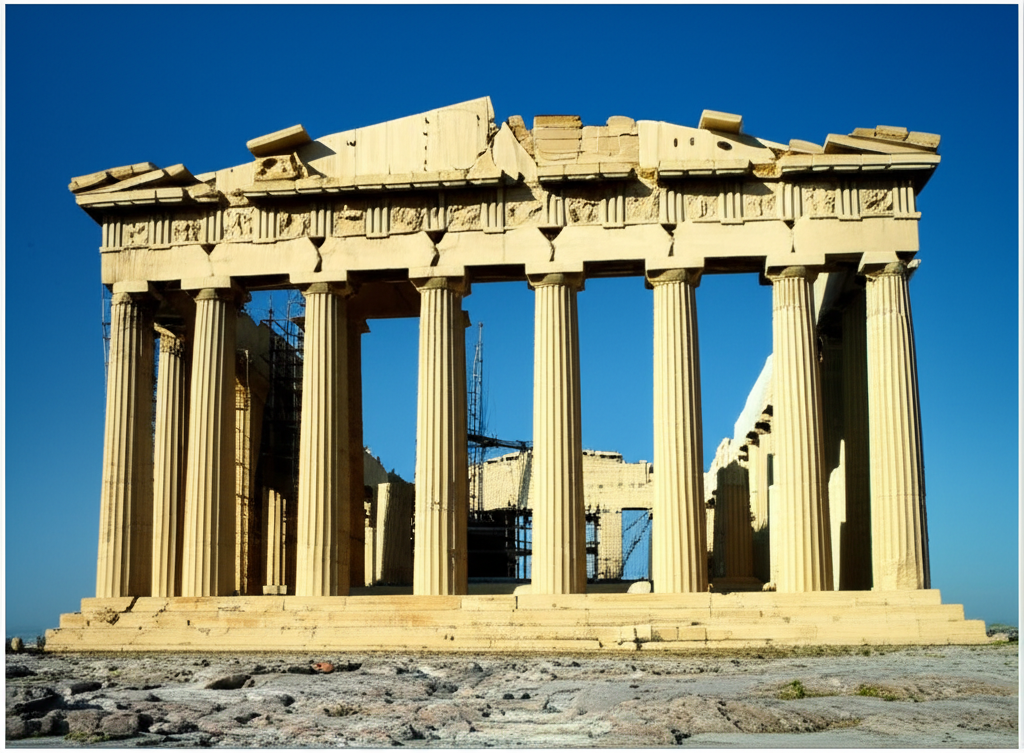
The Renaissance, a period of profound artistic and scientific innovation, saw a renewed emphasis on classical ideals of proportion. Artists and architects, drawing inspiration from Vitruvius and rediscovered classical texts, explicitly employed mathematical principles—such as the Golden Ratio and linear perspective—to achieve aesthetic perfection. Leonardo da Vinci's anatomical studies and architectural drawings, or the harmonious designs of Filippo Brunelleschi's domes, are prime examples of how the precise quantity of lines, spaces, and angles were meticulously crafted to produce compelling and beautiful forms.
The Enlightenment's Subjective Turn: Kant and the Sublime
With the Enlightenment, the focus began to shift from objective qualities of the beautiful object to the subjective experience of the perceiver, culminating in the profound insights of Immanuel Kant.
-
Kant's Disinterested Judgment and the Sublime
In his Critique of Judgment, Kant famously distinguished between the beautiful and the sublime. Beauty, for Kant, is associated with a "disinterested satisfaction" derived from the harmonious play of our cognitive faculties when apprehending a well-formed object. It often involves a sense of purposiveness without an explicit purpose, where the object's form seems perfectly suited to our understanding.However, it is in the concept of the sublime that the aesthetics of quantity takes center stage. The sublime arises when we encounter something immeasurable or overwhelmingly vast—an immense ocean, towering mountains, the starry night sky. Here, quantity is so great that it exceeds our capacity to comprehend it fully. Our imagination strains, yet our reason points to an even greater, ungraspable totality. This experience, while initially overwhelming or even terrifying, ultimately elevates us, reminding us of our own rational capacity to transcend mere sensory limitation. The sublime is thus an aesthetic experience where the sheer quantity of something breaks the bounds of ordinary form, pointing to a deeper, more profound order.
The Dynamic Interplay: Quantity in Form, Form of Quantity
The philosophical journey reveals that quantity and form are not separate entities in aesthetics but are deeply interwoven, each influencing and defining the other.
-
Beyond Mere Measurement: The Qualitative Aspect of Quantity
It's not simply "how much" but "how that much is arranged" that matters. A vast, chaotic pile of bricks holds little aesthetic appeal, but the same quantity of bricks, meticulously arranged into the intricate form of a Gothic cathedral, becomes a breathtaking spectacle of beauty. Here, quantity is disciplined by form, and form is given substance by quantity. The sheer number of elements contributes to the grandeur, but their specific arrangement is what elevates it to art. -
The Aesthetics of Scale: From Microcosm to Macrocosm
Our aesthetic judgment is profoundly affected by scale. A miniature, perfectly crafted in every detail, can evoke delight, its beauty lying in its condensed, precise form. Conversely, a panoramic landscape, a vast and sprawling quantity of natural elements, can inspire awe, its beauty lying in the expansive, often wild, form it presents. Both extremes demonstrate how the magnitude of an object or scene, and the way that magnitude is shaped, are crucial to our aesthetic response.
Ultimately, the aesthetics of quantity and form invites us to look beyond superficial appearances and delve into the structural underpinnings of beauty. Whether we are contemplating the geometric precision of a classical temple, the resonant harmony of a musical composition, or the awe-inspiring immensity of the natural world, we are engaging with a profound philosophical truth: that beauty often emerges from the deliberate, sometimes divine, orchestration of measure and shape.
📹 Related Video: PLATO ON: The Allegory of the Cave
Video by: The School of Life
💡 Want different videos? Search YouTube for: ""Plato Aristotle Aesthetics Proportion""
📹 Related Video: KANT ON: What is Enlightenment?
Video by: The School of Life
💡 Want different videos? Search YouTube for: ""Kant Sublime Beauty Explained""