

The Enduring Resonance: Unpacking Sign and Symbol in Religious Ritual
Summary: Religious rituals are profoundly shaped by the interplay of signs and symbols, which transcend mere actions to become vessels of profound meaning. This article explores the critical distinction between signs, which point to something else, and symbols, which participate in the meaning they convey, often evoking ineffable truths. We delve into how custom and convention solidify these meanings within religious practice, and how language serves as the indispensable medium for their articulation and interpretation. Understanding the semiotics of religion reveals the enduring power of these elements to connect individuals to the sacred, the communal, and the transcendent.
In the vast tapestry of human experience, few domains are as rich with meaning and layered interpretation as religion. From ancient rites to modern observances, the sacred is almost invariably encountered through tangible expressions that demand contemplation beyond their surface appearance. At the heart of this engagement lies the fundamental distinction and intricate relationship between the sign and symbol – concepts that, while often used interchangeably, represent distinct modes of conveying reality within religious ritual. To truly grasp the essence of faith, one must first learn to read its inherent grammar, a grammar built upon these foundational elements.
Differentiating the Sacred Semiotics: Sign vs. Symbol
To begin our philosophical inquiry, we must establish a clear demarcation between a sign and a symbol. This distinction, pondered by thinkers across the ages, from the early Church Fathers to modern phenomenologists, is crucial for understanding religious phenomena.
-
A sign is generally understood as something that points to or refers to something else in a direct, often conventional way. It is largely arbitrary in its connection to what it signifies, and its meaning is often singular and unambiguous. Think of a traffic sign indicating a stop, or an alarm bell signifying danger. Its efficacy lies in its clarity and immediate referential function. In a religious context, a specific gesture or a word spoken might function as a sign, indicating a particular moment in a ritual or a specific divine attribute.
-
A symbol, conversely, is something that participates in the reality it represents, evoking a deeper, often multi-layered meaning that transcends its literal form. It is not merely a pointer but a container of significance, often tapping into collective unconsciousness, historical memory, and profound spiritual truths. Symbols often have an inherent connection to what they symbolize, or their meaning is established through long-standing custom and convention, becoming deeply ingrained in the psyche of a community. The cross, the lotus, the menorah – these are not just indicators; they are charged with meaning, history, and spiritual resonance. As Augustine explored in On Christian Doctrine, while words and sacraments function as signs, some signs possess a depth that approaches the symbolic, revealing rather than merely pointing. Thomas Aquinas, in the Summa Theologica, further elaborates on sacraments as efficacious signs – signs that not only signify grace but also confer it, blurring the line between mere indication and active participation in the divine.
| Feature | Sign | Symbol |
|---|---|---|
| Function | Points to, refers directly to | Evokes, participates in, represents deeply |
| Meaning | Often singular, unambiguous, conventional | Multi-layered, rich, often ambiguous, transcends |
| Connection | Arbitrary or conventional, external | Inherent, established by tradition, internal, profound |
| Impact | Informative, directive | Transformative, evocative, unifying |
| Example | A church bell ringing for service (signal) | The cross in Christianity, the Om in Hinduism |
Ritual as Embodied Meaning: Custom and Convention in Action
Religious rituals are not merely sets of prescribed actions; they are dynamic enactments of symbolic truths. The efficacy and meaning of these rituals are overwhelmingly determined by custom and convention. Through generations, specific gestures, words, objects, and sequences of actions become imbued with collective meaning, transforming them from mundane acts into sacred performances.
Consider the act of communion in Christianity, or the circumambulation of the Kaaba in Islam, or the elaborate tea ceremony in certain Buddhist traditions. These are not random acts. Their power derives from centuries of shared practice, communal understanding, and the belief that through these conventional actions, participants can access or express deeper spiritual realities. The repetitive nature of ritual reinforces these meanings, embedding them deeply within the individual and collective consciousness. The very fabric of religious life is woven from these threads of custom and convention, making the symbolic language of faith intelligible and profoundly impactful.
The Language of the Divine: Articulation and Interpretation
The primary vehicle for the transmission, understanding, and interpretation of religious sign and symbol is language. Whether spoken, written, or sung, language gives form to the ineffable, articulates doctrine, records sacred narratives, and structures prayer. Sacred texts, from the Vedas to the Bible, the Quran to the Tao Te Ching, are not merely historical documents; they are repositories of symbolic language, parables, metaphors, and allegories that require careful interpretation to unlock their profound truths.
Religious ceremonies themselves are often rich with specific liturgical language, chants, and invocations, each word chosen for its symbolic weight and historical resonance. The precise phrasing of a blessing, the ancient cadence of a prayer, or the symbolic naming of a deity all serve to articulate and reinforce the spiritual reality being invoked. Without language, the complex, multi-layered meanings of religious symbols would remain inaccessible, untaught, and ultimately, unable to unify a community around shared beliefs and practices.
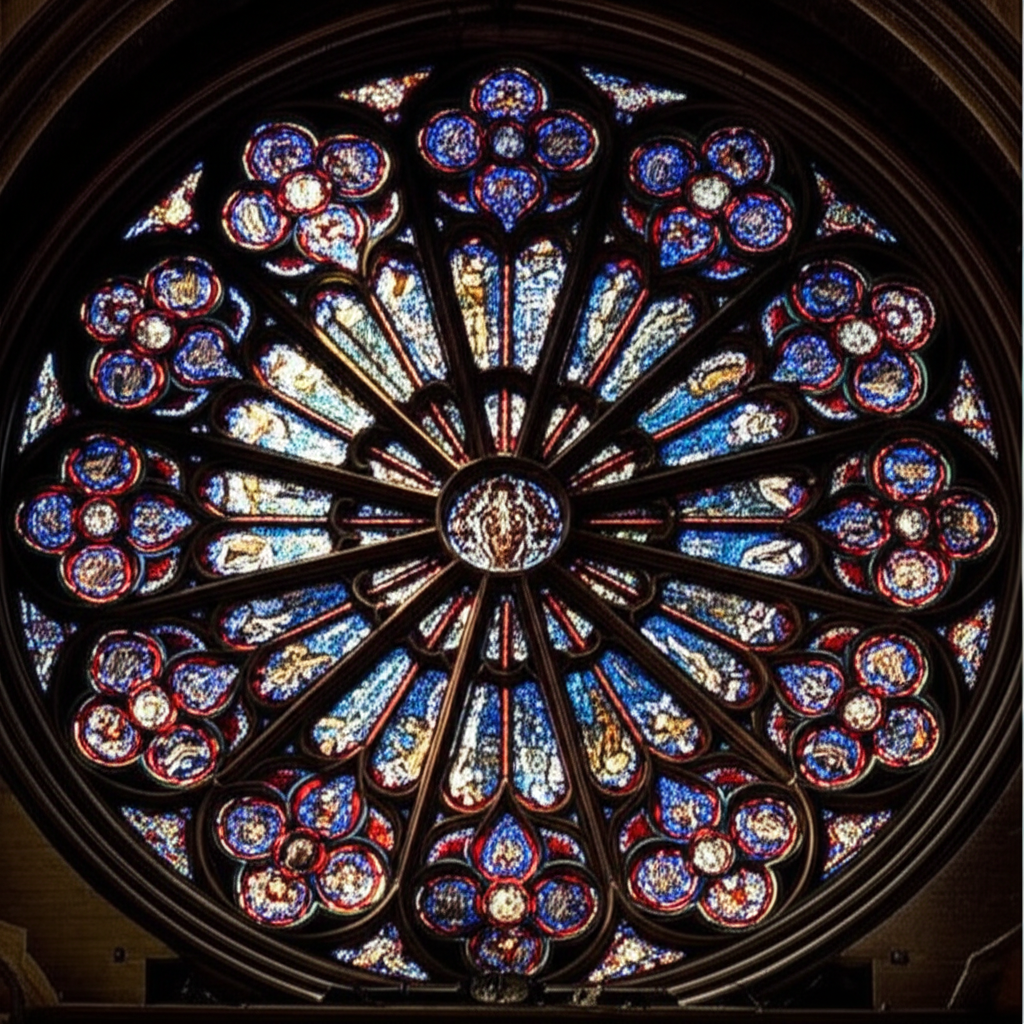
The Profound Power of Symbolic Resonance
The enduring power of sign and symbol in religion lies in their capacity to transcend the rational and touch the deeply human. Symbols do not merely inform; they transform. They connect the individual to a lineage of faith, to a collective memory that spans millennia, and to a perceived transcendent reality. A symbol can evoke feelings of awe, comfort, belonging, or challenge, often without the need for explicit verbal explanation, simply through its presence and the layers of meaning accumulated through custom and convention.
Ultimately, understanding the intricate dance between signs and symbols in religious ritual is essential for anyone seeking to comprehend the depth and universality of human spiritual expression. They are the shorthand of the soul, the language of the sacred, and the enduring architecture of faith.
YouTube: "Augustine on Signs and Things Philosophy"
YouTube: "Symbolism in World Religions Explained"
📹 Related Video: What is Philosophy?
Video by: The School of Life
💡 Want different videos? Search YouTube for: "Sign and Symbol in Religious Ritual philosophy"