

The Sacred Lexicon: Unpacking Sign and Symbol in Religious Ritual
Religious ritual, at its core, is an intricate dance of meaning, where the intangible often finds expression through the tangible. Central to this profound articulation are the concepts of sign and symbol. This article delves into how these distinct yet intertwined elements function within religious practice, serving not merely as decorative embellishments but as fundamental conduits for understanding, experiencing, and transmitting spiritual truths. From ancient rites to contemporary observances, signs and symbols establish a unique language that transcends mere words, binding communities through shared custom and convention and offering a window into the ineffable.
The Fundamental Distinction: Sign vs. Symbol
While often used interchangeably in common parlance, philosophy and semiotics draw a crucial distinction between a sign and a symbol, a difference profoundly relevant to our understanding of religion.
- Sign: A sign typically points to something else in a direct, often singular, and conventional way. Its meaning is largely denotative and often immediate. Think of a road sign indicating "stop" or a smoke signal indicating "fire." The connection is usually arbitrary but agreed upon, or directly causal.
- Symbol: A symbol, by contrast, possesses a depth and multivalence that transcends a simple one-to-one correspondence. It participates in the reality it represents, evoking layers of meaning, emotion, and association. A symbol doesn't just point; it suggests, reveals, and transforms. Its power lies in its capacity to condense complex ideas, historical narratives, and spiritual states into a single, potent form.
In the context of religious ritual, this distinction is vital. A prayer gesture might be a sign of reverence, but the crucifix or the Star of David are profound symbols, embodying entire theological systems, historical struggles, and cosmic narratives.
The Architecture of Meaning in Ritual
Religious rituals are elaborate structures built upon a foundation of signs and symbols. They are the grammar and vocabulary of faith, enabling communities to articulate, remember, and enact their core beliefs.
1. Communicating the Ineffable
One of the primary functions of signs and symbols in religion is to communicate aspects of the divine that defy ordinary language. How does one speak of eternity, absolute love, or ultimate truth? Through symbolic acts and objects.
| Element | Function as Sign | Function as Symbol | Example |
|---|---|---|---|
| Water | Indicates cleanliness, physical need | Signifies purification, rebirth, divine grace | Baptism, ablutions |
| Light/Fire | Signals warmth, illumination, danger | Represents divine presence, truth, spiritual enlightenment | Candles in worship, sacred flames |
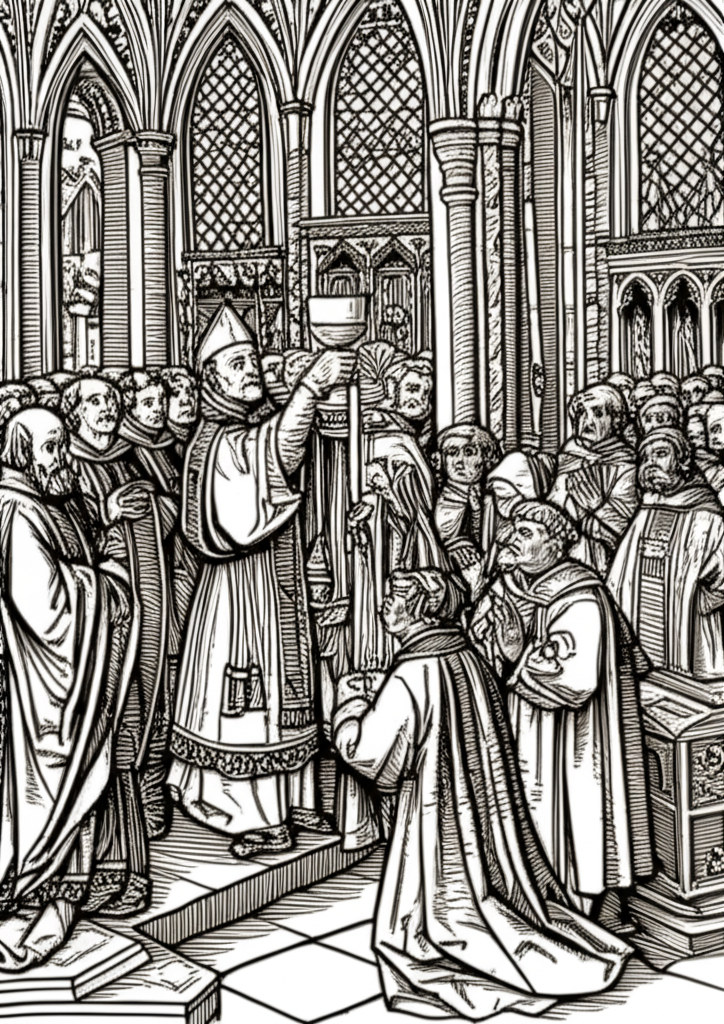
| Bread/Wine | Sustenance, celebration | Embodies sacrifice, communion, spiritual sustenance | Eucharist, Passover Seder |
| Gesture | Expresses immediate emotion (e.g., waving hello) | Conveys reverence, submission, blessing, spiritual state | Prostration, genuflection, mudras |
2. Shaping Experience and Identity
Religious symbols are not merely intellectual constructs; they are experiential. They engage the senses, emotions, and memory, fostering a profound sense of connection to the sacred. Through repeated exposure and participation in rituals, these symbols shape the individual's spiritual landscape and reinforce collective identity. The shared understanding of these potent forms creates a bond among adherents, solidifying communal custom and convention.
3. Ritual as Symbolic Action
Every action within a religious ritual, from the intonation of a chant to the specific placement of an object, is imbued with symbolic significance. These actions are not arbitrary; they are carefully choreographed to reenact sacred narratives, invite divine presence, or facilitate spiritual transformation. The ritual itself becomes a living symbol, a performance that bridges the human and the divine.
Custom, Convention, and the Language of Faith
The power of religious signs and symbols is not inherent in the material itself but is vested in them through shared custom and convention. Over generations, communities agree upon and reinforce the meanings attached to specific forms. This communal agreement transforms an ordinary object or gesture into a potent symbol, understood and revered by those within the tradition.
Consider the role of language here. Just as spoken language relies on agreed-upon meanings for words and grammar, the symbolic language of religion relies on a shared lexicon of signs and symbols. This lexicon is taught, learned, and experienced, becoming an integral part of religious literacy. Without this shared understanding, the ritual would lose its transformative power, becoming a series of meaningless acts. The "Great Books of the Western World" often explore how societal agreements and traditional practices (custom and convention) shape our understanding of reality and morality, a principle profoundly evident in the development and maintenance of religious symbolic systems.
Philosophical Reflections on Symbolic Power
Philosophers, from Plato's forms to Kant's noumena, have grappled with the relationship between appearance and reality, and how we access deeper truths. Religious symbols offer a unique lens for this inquiry. They are the phenomenal expressions that aim to reveal the noumenal.
- Platonic Echoes: One might see symbols as earthly reflections or participants in higher, divine realities, much like Plato's forms. The symbol is not the truth itself, but a pathway to it.
- Augustine's Signs: St. Augustine, deeply influential in the Great Books tradition, extensively discussed signs (signa) in relation to divine communication. For him, signs were crucial for understanding scripture and the sacraments, bridging the gap between God's truth and human comprehension.
- The Problem of Interpretation: Yet, the very richness of symbols also introduces complexity. Their polysemic nature means they can be interpreted in multiple ways, leading to diverse theological schools and sometimes, conflict. This highlights the ongoing need for guidance, tradition, and communal dialogue in understanding religious language.
Conclusion: The Enduring Resonance of the Sacred
Signs and symbols are not mere accessories to religious ritual; they are its very breath and blood. They provide the framework through which individuals and communities engage with the sacred, transforming abstract doctrines into lived experiences. Through their nuanced interplay, guided by centuries of custom and convention, they forge a powerful language that transcends the limitations of verbal communication, making the ineffable accessible and the divine profoundly real. Understanding their profound distinction and interconnectedness is key to unlocking the enduring power and mystery of religious practice.
📹 Related Video: What is Philosophy?
Video by: The School of Life
💡 Want different videos? Search YouTube for: ""The Philosophy of Symbols and Meaning""
📹 Related Video: KANT ON: What is Enlightenment?
Video by: The School of Life
💡 Want different videos? Search YouTube for: ""Ritual and Belief: Anthropological Perspectives""