

The Unseen Language: Sign and Symbol in Religious Ritual
Religious rituals, at their core, are intricate tapestries woven from signs and symbols. These fundamental elements serve not merely as markers or simple representations, but as profound conduits to transcendent meaning, shaping collective experience, expressing ultimate truths, and binding communities. Understanding the nuanced distinction and interplay between signs—direct, conventional indicators—and symbols—multi-layered, evocative embodiments of deeper realities—is crucial for appreciating the depth and enduring power of religious practice, revealing how humanity navigates the sacred through a shared language of the visible and the unseen.
The Language of the Sacred: Bridging the Mundane and the Mystical
How do we grasp the ineffable? How do we communicate the divine, the ultimate, the transcendent? Throughout history, Religion has consistently relied on a sophisticated system of communication that extends far beyond mere propositional statements: the profound realm of Sign and Symbol. These are the very fabric of religious life, providing a framework for belief, shaping practice, and facilitating the transmission of spiritual knowledge across generations. From the simplest gesture to the most elaborate ceremony, signs and symbols infuse the sacred with meaning, making the abstract tangible and the eternal accessible.
Distinguishing Sign from Symbol: A Philosophical Lens
While often used interchangeably in common parlance, a philosophical examination reveals a crucial distinction between Sign and Symbol, particularly within the context of religious ritual. This distinction, explored by thinkers across the "Great Books of the Western World," illuminates how meaning is constructed and experienced in the sacred.
-
Signs:
A sign functions primarily as a direct, unambiguous indicator. Its meaning is typically fixed by custom and convention, serving as a clear signal or directive. In religious ritual, signs are precise and often prescriptive.- Examples: The ringing of a bell signaling a specific part of a liturgy, a particular color of vestment denoting a liturgical season, a specific hand gesture during a prayer that signifies a particular intention. These are actions or objects whose meaning is largely external and conventionally agreed upon. Much like language itself, where a word is a signifier pointing to a specific concept, signs in ritual are efficient tools for communication and instruction.
-
Symbols:
A symbol, by contrast, is complex, multi-layered, and deeply evocative. It does not merely point to a meaning; it participates in the reality it represents, embodying a truth that often transcends rational articulation. Its meaning is often fluid, open to interpretation, and resonates on emotional, intellectual, and spiritual levels.- Examples: A cross, a mandala, a sacred flame, an ancient icon. These are not just indicators; they are charged with profound meaning, connecting the worshipper to ultimate truths, cosmological ideas, or spiritual states. They invite contemplation, evoke feelings, and can hold contradictory meanings simultaneously, reflecting the paradoxical nature of the divine. Philosophers from Plato, with his forms, to later psychological thinkers like Jung, with his archetypes, have grappled with the idea that certain images or concepts hold universal, deep meaning, often touching upon the symbolic.
This duality is essential for understanding how religious rituals operate. While signs provide structure and conventional understanding, symbols open pathways to deeper, transformative experiences.
The Duality of Meaning: Sign vs. Symbol in Religious Ritual
| Feature | Sign | Symbol |
|---|---|---|
| Function | Points to, indicates, directs | Embodies, evokes, participates in |
| Meaning | Fixed, conventional, often arbitrary | Multi-layered, resonant, often non-arbitrary |
| Interpretation | Direct, literal, unambiguous | Indirect, metaphorical, open to depth |
| Relationship | Representational (A stands for B) | Presentational (A is B on a deeper level) |
| Impact | Cognitive, instructional | Affective, transformative, spiritual |
Religion, Custom, and Convention: Shaping Sacred Language
Religious rituals are steeped in Custom and Convention. These established traditions are not arbitrary; they are the very mechanisms through which signs and symbols acquire and maintain their specific power and meaning. A specific prayer gesture, a sacred chant, the architecture of a holy space – these elements gain their profound significance through generations of communal practice, shared understanding, and repeated enactment.
This adherence to Custom and Convention fosters a deep sense of community and ensures the continuity of belief and practice. It creates a shared language that transcends individual interpretation, binding adherents to a collective history and a common spiritual path. Without the bedrock of tradition, many religious signs would lose their potency, becoming mere actions devoid of deeper resonance, and symbols might devolve into mere curiosities rather than conduits to the sacred.
Language as a Bridge to the Symbolic
Language itself is fundamentally a system of signs. Words, phonemes, and grammatical structures are conventional signs that allow for communication in the everyday world. However, religious discourse often transcends the literal, employing language symbolically to convey truths that cannot be expressed through straightforward, propositional statements.
Sacred texts across various traditions are rich with parables, metaphors, allegories, and poetry, all of which utilize language symbolically. The parables of the Gospels, the allegories of Dante in The Divine Comedy, or the rich poetic imagery of the Upanishads are not meant to be taken solely at face value. Instead, they invite readers into a deeper engagement, prompting reflection on ultimate realities, moral truths, and the nature of the divine. In this way, language becomes a powerful bridge, guiding the mind from the concrete to the conceptual, from the literal to the symbolic, enabling a profound apprehension of spiritual truths.
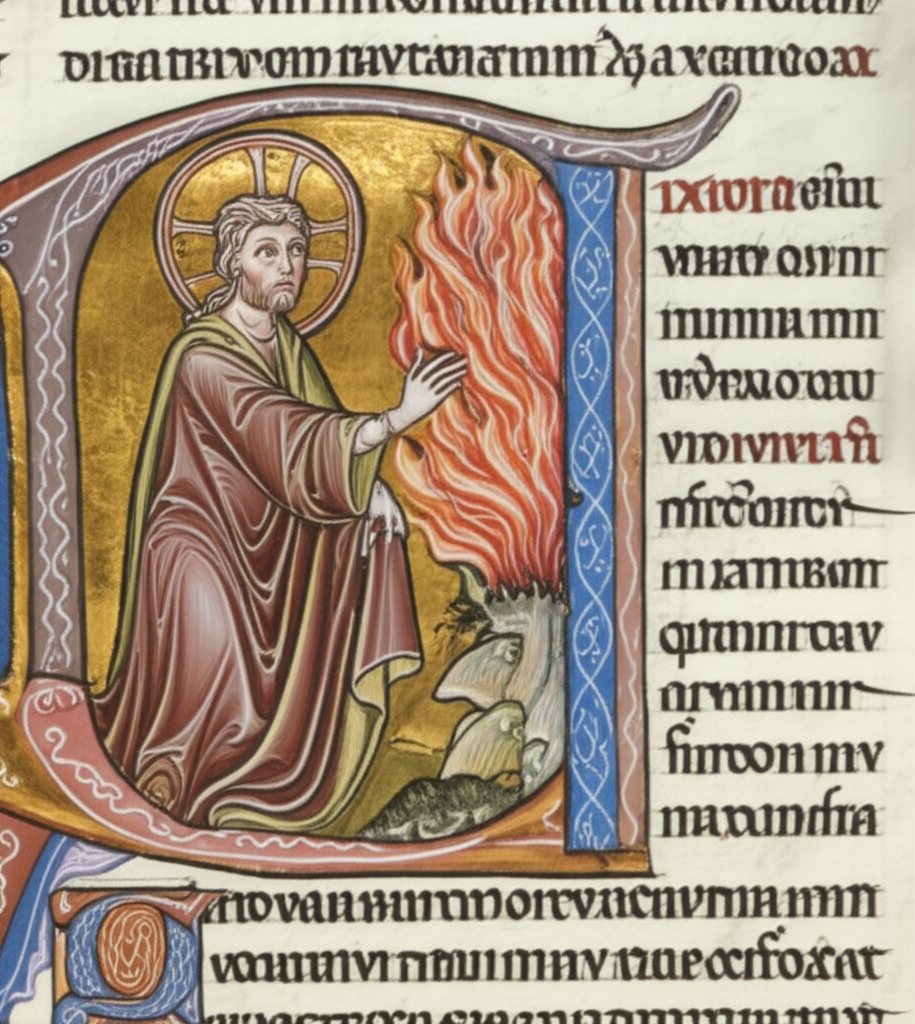 and a profound symbol of divine presence, revelation, or humanity's choice. Surrounding elements, such as stylized flora, celestial bodies, or specific animal motifs, further contribute to the symbolic language, inviting contemplation beyond their literal representation. The entire composition is framed by intricate borders adorned with geometric patterns and mythical creatures, themselves a sign of artistic custom and a symbol of sacred enclosure, emphasizing the sacredness of the depicted narrative.)
The Enduring Resonance of Sacred Symbols
In conclusion, Sign and Symbol are not mere accessories to Religion; they are its very heartbeat, the essential conduits through which the spiritual world is made manifest and comprehensible to human beings. They provide a means to articulate the ineffable, to connect with the divine, and to build shared meaning within a community that spans generations.
Through their intricate interplay, reinforced by Custom and Convention, religious rituals transform mundane actions into sacred acts, linking the temporal to the eternal. They offer humanity a profound language for its deepest spiritual aspirations, allowing individuals and communities to touch the transcendent and find meaning in a world often characterized by the ephemeral.
YouTube Video Suggestions:
-
📹 Related Video: PLATO ON: The Allegory of the Cave
Video by: The School of Life
💡 Want different videos? Search YouTube for: ""Carl Jung Symbolism Religion Archetypes""
-
📹 Related Video: KANT ON: What is Enlightenment?
Video by: The School of Life
💡 Want different videos? Search YouTube for: ""Mircea Eliade Sacred Profane Ritual Meaning""